
Pillar 3: Culture
Power of Culture
Listen to this chapter · 54 min, narrated by David Jenyns
“Example is not the main thing in influencing others. It is the only thing.” — Albert Schweitzer, Nobel Peace Prize laureate
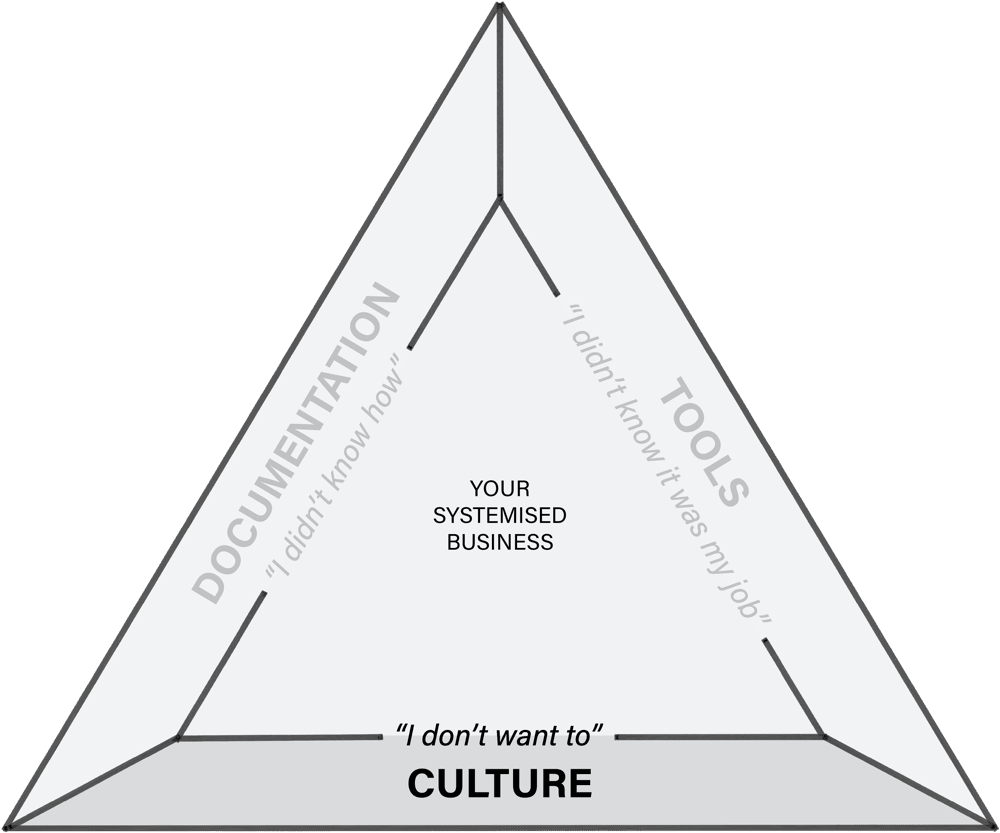
Okay, you’ve reached the final boss!
You’ve created clear documentation and placed it exactly where your team needs it, eliminating the “I didn’t know how” excuse. You’ve implemented the right tools for transparency and accountability, removing the “I didn’t know it was my job” objection.
But now the biggest challenge of them all … “I don’t want to.” How do we get people to want to follow systems?
First things first, I’m going to get you to watch something. Head over to SystemsChampion.com/dancingman and spend three minutes watching what might be one of the most powerful illustrations of how to build a movement. I’ll wait.
Okay, now let’s break down what you just watched.
It’s a perfect summer afternoon at the 2009 Sasquatch! Music Festival. The Gorge Amphitheatre stretches out like a natural colosseum, its rolling hills dotted with hundreds of festivalgoers lounging on blankets. The spectacular Columbia River winds below, creating a backdrop that makes even the most cynical attendee pause in wonder.
In this setting, something extraordinary is about to unfold. A lone figure rises from the crowd. He’s shirtless, confident and about to challenge every social norm on that hillside. As Santigold’s “Unstoppable” drifts from the main stage, the man begins to dance. His movements are a curious blend of tribal rhythm and modern freestyle: unconventional, authentic and utterly uninhibited. It takes guts to stand alone and look ridiculous, but what he’s doing is simple, almost instructional – a crucial quality when you want others to follow.
The crowd’s reaction is predictable. Some point and laugh. Others avert their eyes. For a short while, he remains alone in his dance, defying the comfortable inertia of the crowd.
But this is when the magic begins. A second young man joins, and rather than make it about himself, the dancer welcomes his first follower as an equal partner. Together, they create something new – not a performance but a shared experience. It’s no longer about the leader. It’s about them, plural.
Within the first minute, the third person joins – a critical turning point. When people see others doing something, they become significantly more likely to join in themselves. Two more join, and then almost immediately after, another group of three. Each new participant lowers the psychological barrier for others, transforming scepticism into curiosity, and curiosity into participation. Now new followers copy the other followers, not the leader.
By the one-and-a-half-minute mark, people aren’t just joining, they’re running to join. What marketers call FOMO (Fear of Missing Out) becomes visible energy. The movement hits its tipping point. Joining is no longer risky: it’s the safe choice. In the final minute, the hillside that had been a passive audience becomes a pulsing mass of hundreds of dancers. The original “crazy dancing guy” is no longer visible. The movement has transcended its founder.
Your business owner is that first dancer
Your business owner has taken the bold step of standing on the figurative hillside and declaring, “We’re becoming a systems-first business.” Like that shirtless dancer, they’re challenging the comfortable inertia of “That’s how we’ve always done things.”
And you? You’re that vital first follower. The person who transforms a solo act into a movement. Your role isn’t just about implementing systems. It’s about showing others that this new way of working isn’t just safe: it’s revolutionary! You’ll show your team how to embrace this new way of working, make it accessible and celebrate those who join the movement.
This is how you’ll build your systems culture. Not through mandate, but through momentum. Building a systems culture addresses the core “I don’t want to” resistance. People are motivated more powerfully by social belonging than by almost any other force. When you successfully transform “how we do things here”, you create an environment where following systems becomes the path of least resistance rather than the exception.
Let me share with you the three steps to start a cultural movement, starting with what might surprise you as the most crucial element … you.
Step 1: Commit to your beliefs
Here’s something unexpected I’ve discovered when working with Systems Champions. Technical skill isn’t the primary predictor of success. Neither is experience. The most successful Systems Champions share something far more fundamental: they deeply believe in what they’re doing.
When you landed your new role and agreed to be paid for your systemisation work, you committed to the process. But it doesn’t automatically follow that you believe in it and can actively defend it. You don’t really believe in something unless you can defend it. And you can’t defend something with any conviction unless you properly comprehend it.
The culture that exists within a workplace is able to trump just about everything else a business does to try to change things. You can run all the workshops and initiatives you like, but if the underlying culture doesn’t change, then everything will keep snapping back into the old way of doing things. If you’re going to change the culture to one that believes in and fully embraces systemisation, you must first believe in it yourself.
Let me share the core beliefs I’ve seen in the most remarkable Systems Champions – the beliefs that drive true transformation.
- Systems are building blocks: Every successful and profitable business is built on systems and processes. They’re not optional extras. They’re the fundamental elements that help you find and keep customers, eliminate waste and dominate your market.
- Every problem is a systems problem: When something goes wrong, you don’t look for someone to blame: you look at the system. Late deliveries aren’t about lazy team members – they’re about scheduling systems that need improvement. This perspective transforms finger-pointing into collaborative problem-solving.
- Systems make your work easier: Systems aren’t about adding complexity. They’re about radical simplification. Structure creates freedom. When everyone knows exactly how things work, they can focus their energy on innovation and improvement.
- Systems make you more valuable: Systemising a role doesn’t make you replaceable; it makes you irreplaceable. By creating clear, transferrable systems, you demonstrate your ability to think strategically and elevate entire processes. This is your path to becoming indispensable.
- Systems development is ongoing: Systems aren’t a one-and-done project. The most effective organisations don’t chase perfection – they pursue evolution. Small improvements, made consistently, compound over time to create breakthrough results.
- Every business is a school: When you’re building systems, you’re creating learning opportunities. As Michael E. Gerber taught me, businesses aren’t just commercial enterprises – they’re learning platforms. Every system you build is a lesson plan that teaches new team members how to add value.
Reading these beliefs isn’t enough. There’s a leap of faith required: you won’t truly buy into them until you’ve acted on them and seen the results for yourself. Take the second belief, “every problem is a systems problem”. When a problem occurs, tackle it from the perspective that the issue is a system issue, even if you instinctively feel the error is down to a human failing. Then, once you see the results, you’ll build confidence in these core beliefs based on your own experience.
And when you truly believe, something remarkable happens. Your body language shifts. Your tone changes. You respond to challenges with quiet confidence. Your actions become a seamless extension of your beliefs.
Step 2: Find your supporters
That shirtless dancer didn’t win over the entire hillside at once. He started with just one person, then another. Each new dancer made it easier for the next person to join.
Here’s the hard truth: not everyone will be excited about systems right away. And that’s okay. Your job isn’t to convince the sceptics or argue with the resisters. Your job is to find your fellow dancers. Who in your organisation naturally gravitates toward order and improvement? Who lights up when you talk about making work easier? These are your first followers. Start with them.
- Make it easy: Break down system adoption into small, achievable steps. Give them simple wins they can achieve quickly. If adopting a system takes more than two steps, simplify it. Make following the system the path of least resistance.
- Make it obvious: Design your workspaces to trigger system use. Place system documentation exactly where it’s needed. Make system use so obvious that it would feel strange not to do it.
- Make it fun: Yes, fun. Celebrate wins, showcase improvements and make progress visible. Turn system adoption into a positive experience that people want to be part of. We repeat behaviours that make us feel good.
And here’s my best advice: don’t waste energy trying to convince the resisters. Not yet anyway. Movements start with the willing. As you work with your supporters and celebrate their successes, other team members start noticing. This is the showcase effect, and it’s more powerful than any argument you could make. The question changes from “Why should we do this?” to “How can I join in?” Movements aren’t built by converting critics. They’re built by nurturing supporters.
Step 3: Build your proof
Picture yourself in a courtroom. The judge asks, “Can you prove, beyond a shadow of doubt, that your company is truly systems-driven?” By reading this book and embarking on this journey, you’ve already started building your case: you’ve been selected as a Systems Champion, documented key processes, started installing new tools, run a couple of workshops, engaged your first followers and celebrated some early wins.
But winning cases requires overwhelming evidence. So keep building it. Share system wins in your company chat. Make systems part of every team meeting agenda. Document your systems journey with before-and-after results. Give everyone a copy of this book. Host celebrations as you hit milestones. Publicly track your progress and turn systemisation into a game. Include system metrics in performance reviews. Build system mastery into career paths. Add systems-thinking as a company value.
How long should you keep building proof? There’s no precise finish line. Making SYSTEMology part of the business culture is the only way to ensure all the hard work you’re putting in stays around for the long term. It needs to become so ingrained that whenever anyone tackles a new project or problem, their first thought is how they can develop or adjust a system to reach their goal.
A new culture’s main enemy is always the existing culture. There’s a stultifying phrase that makes integrating systems so challenging: “That’s just how we do things around here.” Your goal is to flip it — to reach a point where everyone instinctively uses and develops systems because they know … “This is how we do things here.”
You can’t force this change. You’ll have a day where it feels like every knowledgeable worker is grumpy about the project. A manager bumps your training session back a month. Even the owner gets distracted by a new opportunity. You can’t be discouraged by this. Expect it. Be ready for it. And push on regardless. Be patient with the team but be unwavering and resolute.
What success looks like
Remember Shannon Smit at Smart Business Solutions? There’s another part to her story that illustrates what it looks like when you build a culture of systemisation. On a recent visit to their office, I noticed something remarkable. There was no heavy-handed enforcement, no constant reminders about following protocols. Instead, when a team member encountered a question, their instinctive response was, “Is it in the system?” When someone discovered a better way to do something, they immediately updated the system, excited to share their improvement. New team members stepped into an environment where systems thinking was as natural as breathing.
It’s about creating an environment where using systems becomes the path of least resistance, where working systematically feels as natural as driving on the correct side of the road. When you’re driving, you don’t consciously think about staying in your lane. It’s just … how things are done. That’s the level of cultural embedding we’re aiming for.