Could you explain how your business actually works on the back of a napkin?
Most business owners can’t. They know what they sell and who they serve. But when it comes to showing the full picture of how a prospect becomes a paying client, things get fuzzy fast. That’s where business flow mapping comes in.
It’s a simple exercise that puts your entire operation on a single page. In this guide, you’ll learn the three-step framework thousands of business owners have used to get clarity, spot bottlenecks, and figure out which systems to build first.
Key Takeaways
- Business flow mapping gives you a one-page view of how clients move through your business, from first contact to completed delivery.
- The Critical Client Flow identifies the 7 to 12 systems that matter most. You don’t need hundreds of documented processes to see results.
- Start with one client, one product, and 20 minutes. The gaps in your map show you exactly where to focus first.
Why Most Business Owners Get Stuck
Most owners who try to document their business systems make the same mistake: they try to capture everything at once. Every workflow, every edge case, every department.
It feels productive. But it’s a fast track to overwhelm. Within a week, the project stalls and the half-finished documents end up forgotten.
The 80/20 rule applies here. Just 20% of your systems deliver 80% of your results. You don’t need to map everything. You need to map the right things.
How much is it costing you NOT to systemise?
Use our free Cost of Chaos Calculator to put a dollar figure on the time, mistakes, and missed growth your business loses every year without documented systems.
What Is Business Flow Mapping?
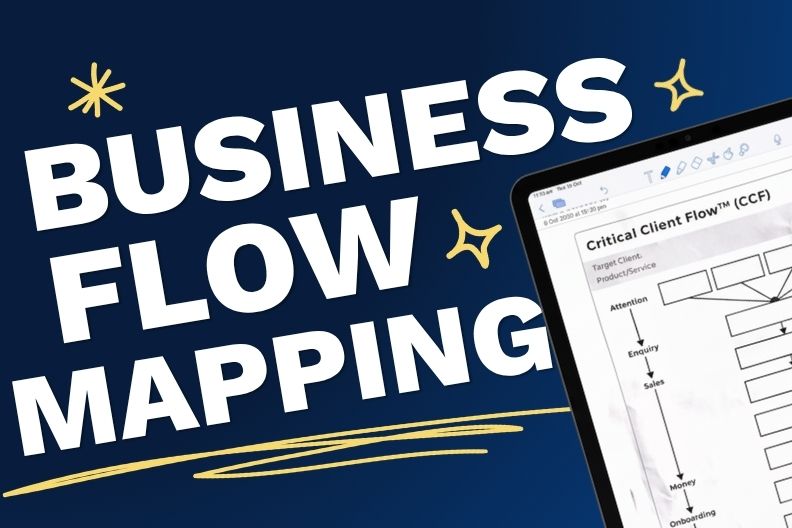
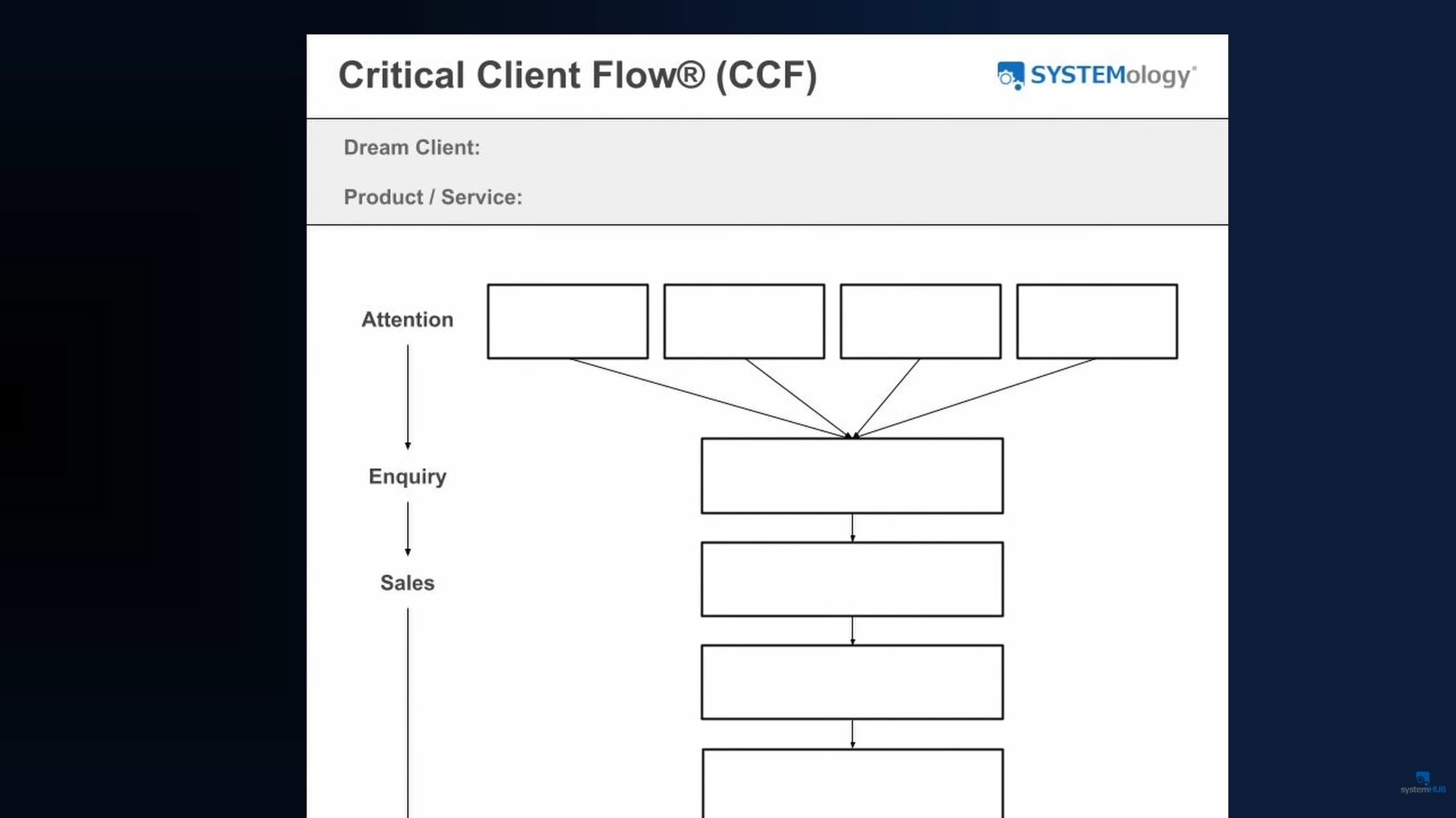
Business flow mapping is the process of creating a one-page overview of how your business works. It traces the path a client takes from the moment they find you, all the way through to delivery and follow-up.
In SYSTEMology, this framework is called the Critical Client Flow (CCF). It’s different from traditional process mapping (technical, diagram-heavy, built for enterprises) and customer journey mapping (focused only on the client’s experience).
The CCF captures both sides: how clients move through your business and what your team does at each stage.
How to Map Your Business Flow in 3 Steps
Step 1: Pick One Client and One Product
This feels counterintuitive, but it’s the key to the whole exercise. Narrow your focus to one dream client and one primary product or service.
Think about the clients you enjoy working with most. The ones who pay your prices and refer their friends. A bookkeeper might choose farmers and a financial audit. A digital agency might pick franchisors and website builds. One client. One product. One journey.
Step 2: Map the Linear Flow
Walk through the stages your client and business go through: Attention, Engagement, Enquiry, Sales, Onboarding, Delivery, and Retention. Label each step in two or three words.
Only map what you’re actually doing right now. Not what you wish you were doing. The gaps between what exists and what’s missing are where the biggest insights live.
Gary McMahon of Ecosystem Solutions followed this exact process. After mapping his Critical Client Flow, his team could finally see where bottlenecks were hiding. Profitability increased approximately 80%. And Gary took his first three-week family holiday in his entire working life.
Step 3: Test It With an Outsider
Show your completed map to someone outside your business. If they can understand it without a detailed walkthrough, you’re in good shape. If they look confused, simplify further.
Ready to map your business?
Download the free Critical Client Flow template and complete your one-page business map in 20 minutes.
Common Mistakes to Avoid
Trying to map everything at once. Stick to one client, one product, one journey. You can repeat the process for other lines later.
Going into too much detail. Two or three words per step is all you need. You’re creating a high-level overview, not writing SOPs yet.
Mapping what you wish you were doing. Only capture what’s happening today. The gaps are where the real value shows up.
Skipping the outsider test. If someone outside your business can’t follow your map, it’s too complicated. Simplify until it clicks.
What Happens After You Map Your Flow?
Once your map is complete, look for the pain points. Where are things breaking down? Where do you personally get pulled in? Where does quality depend on who’s handling the work?
Those answers point to your biggest business bottleneck. That’s your starting point.
The CCF typically reveals 10 to 15 critical systems. Focus on those and you’ll see the biggest return for the least effort. When you’re ready to turn them into documentation, start creating your first SOP using the knowledge your best team members already have.

Frequently Asked Questions
How long does business flow mapping take?
About 20 minutes for your first draft. It doesn’t need to be perfect. It just needs to exist.
Do I need special software?
No. A printed template or whiteboard works fine. When you’re ready to store and share documented systems, systemHUB keeps everything organised for your team.
What if my business has multiple products?
Start with one. Map it well. You can create additional flows later. For help working through the simplifying process, begin with the product that makes a great margin and attracts your best clients.
Start With One Page
You don’t need to systemise your entire business today. You just need to see it clearly. One page. One client. Twenty minutes. That single exercise will show you exactly where to focus first.
Start documenting what matters most.
systemHUB gives you 100+ ready-made SOP templates so you can turn your business flow map into real, working systems your team follows every day.