Short answer: EOS is a leadership operating system. SYSTEMology is a process documentation system. EOS keeps the leadership team aligned and accountable. SYSTEMology gets the daily work out of people’s heads and into repeatable systems. Most 30+ person businesses eventually need both.
On this page
- What is EOS?
- What is SYSTEMology?
- EOS vs SYSTEMology: side by side
- Where the frameworks overlap
- Where they diverge (and why it matters)
- Why EOS teams choose SYSTEMology
- A real Systems Champion in action
- Systems Champion vs Integrator
- Gino Wickman endorses Systems Champion
- Which should you start with?
- How to run them together
- FAQ
If you are asking “should I pick EOS or SYSTEMology?” you are asking the wrong question. The right question is which one to start with, and then whether you need both.
The two frameworks solve different problems at different levels of the business. EOS (Entrepreneurial Operating System) runs at the leadership layer. SYSTEMology runs at the operational layer. Confusing them is the reason so many EOS teams stall at the “Process” component, and why so many founders who have read SYSTEMology still feel like the leadership team is out of sync.
This page is the honest comparison. No “our framework wins, theirs loses”. Just what each one actually does, who each is for, and how the best operators run them together.
How an emergency services staffing business used SYSTEMology to finally nail the process layer of their business.
What is EOS?
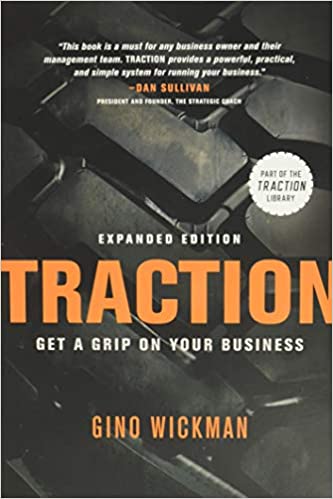
EOS is the Entrepreneurial Operating System, created by Gino Wickman and introduced in the 2007 book Traction. It gives leadership teams a simple, repeatable operating model built around six components: Vision, People, Data, Issues, Process, and Traction.
In practice, EOS shows up in a business as a set of weekly and quarterly rituals:
- Level 10 Meeting — a structured 90-minute weekly leadership meeting
- Rocks — 90-day priorities, usually three to seven per person
- Scorecard — a weekly dashboard of 5 to 15 key metrics
- Accountability Chart — who owns what, stripped of ego
- Vision Traction Organiser (V/TO) — a two-page company vision document
- Integrator — the role that harmonises the leadership team’s execution
EOS is used by around 250,000 companies worldwide and has become the default operating system for mid-sized business leadership teams.
Best for: businesses with 10 to 250 staff, especially once the team passes 30 people and the founder can no longer keep the leadership layer aligned by presence alone.
What is SYSTEMology?
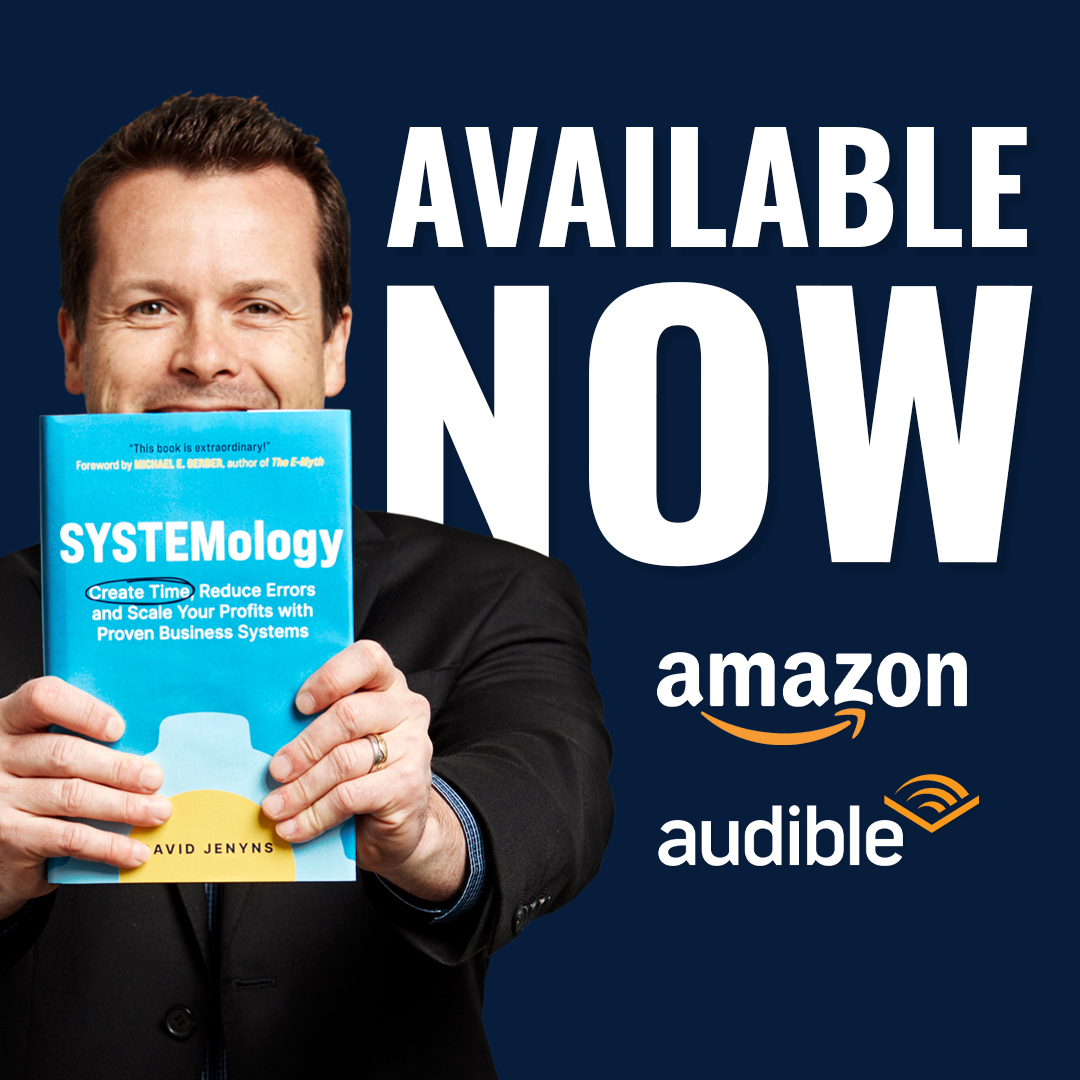
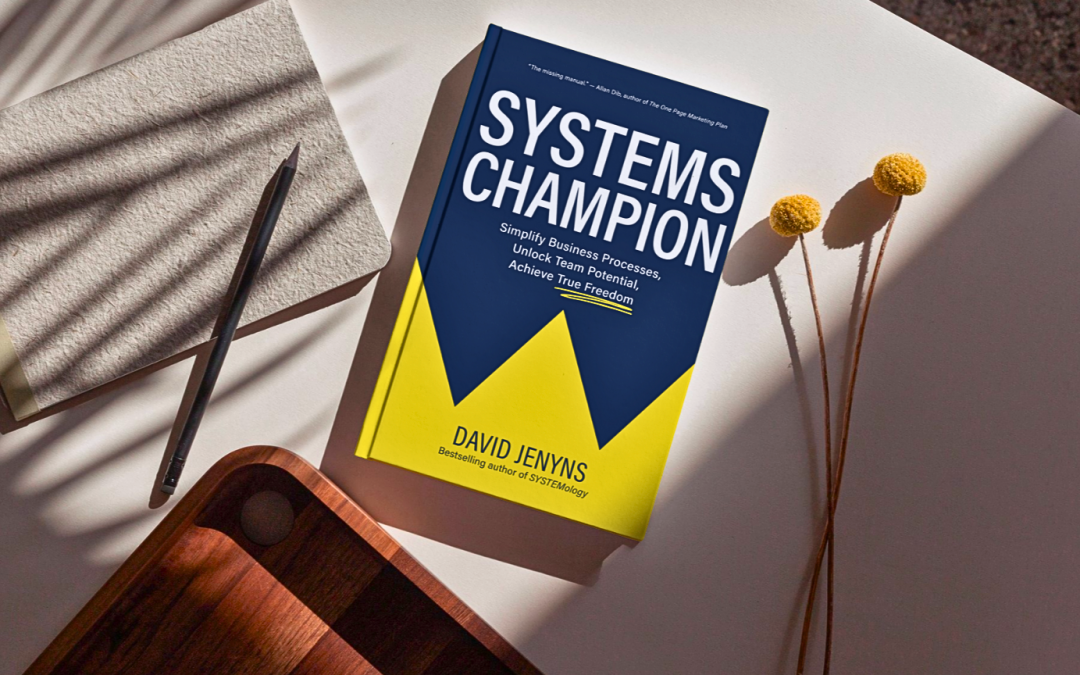
SYSTEMology is the process documentation system created by David Jenyns, introduced in the 2020 book SYSTEMology and expanded in the 2026 sequel Systems Champion. Where EOS focuses on leadership, SYSTEMology focuses on getting the daily operational work out of people’s heads and into repeatable, documented systems the team can follow.
SYSTEMology shows up in a business as a set of frameworks and roles designed to make operations less dependent on the founder:
- Critical Client Flow (CCF) — a one-page map of the 10 to 15 systems that attract, convert, and deliver your primary offer
- Minimum Viable Systems (MVS) — the 7-per-department rule that gets the whole business documented without overwhelming the team
- System for Creating Systems 2.0 — the AI-assisted method for documenting a process in minutes rather than hours
- Systems Champion — the dedicated role that owns the systems function, so the founder and leadership team do not have to
- Scoreboard — the visible tracker that turns systemisation into a game the team can actually finish
Best for: businesses at any stage that need to get the owner out of the daily operational work and make the business runnable without them.
EOS vs SYSTEMology: Side by Side
| Dimension | EOS | SYSTEMology |
|---|---|---|
| Primary focus | Leadership alignment + execution rhythm | Process capture + documentation |
| Operating level | Leadership team / executive layer | Every role, every department |
| Time horizon | Quarterly rocks, weekly L10s | Ongoing per-system cycle, 90-day MVS sprints |
| Key question | “Are we pulling in the same direction?” | “Can this work happen without the founder?” |
| Main roles | Visionary, Integrator, leadership team | Systems Champion, knowledgeable workers, department heads |
| Team size sweet spot | 30 to 250 staff | Any, especially 5 to 100 staff |
| Primary outputs | Accountability chart, V/TO, rocks, scorecard | CCF, MVS, documented SOPs, scoreboard |
| Cadence | Weekly L10, quarterly planning | Weekly documentation sprints, quarterly reviews |
| Cost of adoption | Full implementer-led rollout, 2 years to mastery | Framework + books + systemHUB, 90-day first pass |
Where the frameworks overlap
Both frameworks want the same outcome at the end of the line: a business that works without the owner, run by a team that knows what it is doing. Both emphasise the importance of documented processes. Both see consistency and repeatability as the foundation of real scale. Both use dashboards and scoreboards to keep teams engaged.
The overlap is biggest around the “Process” component of EOS. EOS identifies process as one of its Six Key Components and tells teams to document their core processes. But it does not go deep into how.
Where they diverge (and why it matters)
EOS is strategic. SYSTEMology is operational. That is the honest distinction.
EOS spends most of its energy on the top of the org chart. It gets the leadership team meeting weekly, running quarterly planning, holding each other accountable, and pointing the business in the same direction. That is serious value for any growing team, and it is why a quarter of a million companies have adopted it.
SYSTEMology spends most of its energy on what happens once the leadership team has pointed the business in that direction. How does the actual work get done, by whom, using what process, without the founder being involved? That is the layer where most businesses stall, including plenty of EOS businesses.
The Process component in EOS is where this shows up most clearly. Leadership teams sit in L10 meetings discussing rocks and scorecards, all while knowing that core processes still live only in the heads of the three or four people who have always done them. Tribal knowledge, not documented knowledge.
SYSTEMology fixes that layer. It changes how the team captures, documents, and deploys processes, with tools purpose-built for the job and a dedicated role to own it.
Why EOS teams choose SYSTEMology
This is the pattern we see constantly. A business adopts EOS. The leadership team starts running L10s. Quarterly planning gets rhythm. The team feels more aligned. And then, six or twelve months in, someone points out that the Process component still has not really been done. The rocks list always has “document core processes” somewhere on it, and it keeps rolling over quarter after quarter.
It is not a discipline problem. It is a method problem. EOS does not hand teams a repeatable way to capture and document processes. SYSTEMology does. That is why so many EOS operators end up running SYSTEMology alongside, with the Systems Champion taking the Process component off the Integrator’s plate.
Once that happens, everyone wins. The Integrator gets to stop carrying documentation as a secondary responsibility. The leadership team starts to see real progress on process health. The founder finally steps out of the daily work. The Process component of EOS gets ticked off not with a forced quarterly push, but with a real engine running it.
A Real Systems Champion in Action
To make this concrete, here is Callie Saulsburry talking about how Crow Estate Planning, a growing US law firm, scaled with documented systems. Notice the common pattern: the owner felt like the business could not run without them, the team held tribal knowledge that never made it to paper, and the turning point was giving someone dedicated ownership of the systems function.
Full Crow Estate Planning case study.
Systems Champion vs Integrator: The Roles Do Not Compete
One of the most common questions we get is whether a Systems Champion replaces an EOS Integrator. They do not. They occupy different layers of the business.
The Integrator is the senior leader who unites the major functions of the business, drives execution across departments, and harmonises the leadership team. Think of them as the operating conductor of the whole orchestra.
The Systems Champion is the person who owns the systems function specifically. They document, refine, and embed operational processes across every department. They report up to the Integrator (or, in smaller teams, directly to the Visionary). Think of them as the head of a systems department, the same way your sales manager is head of sales and your marketing manager is head of marketing.
Or, in David’s words when explaining the distinction to Gino Wickman during the endorsement process for Systems Champion:
“The Integrator, as you define, is the person who harmoniously unites the major functions of the business, drives execution, and works closely with the Visionary. The Systems Champion is a distinct and more specialised role. Their primary focus is on the implementation and ongoing management of systems and processes — essentially the ‘how’ rather than the ‘what’ or ‘why’. In many businesses, the Integrator is already overwhelmed with high-level execution and leadership responsibilities.”
Having a Systems Champion actually makes the Integrator more effective. It moves documentation out of the Integrator’s workload and into the hands of someone purpose-built for it. The Integrator stays focused on integration. The Systems Champion stays focused on systems. The business wins on both dimensions.
Gino Wickman Endorses Systems Champion
This is the clearest possible signal that EOS and SYSTEMology belong together. Gino Wickman, creator of EOS and author of Traction, does not endorse lightly. He reviewed Systems Champion carefully (including a back-and-forth with David about the Integrator distinction) before providing this endorsement:
“Systems Champion delivers exactly what every business owner needs. David Jenyns has created a practical framework that removes the owner from systems creation process and puts that responsibility where it belongs — with a dedicated function called ‘Systems Champion’. This book will revolutionize how you think about and implement systems in your business.”
— Gino Wickman, Author of Traction & Shine, Creator of EOS®
Gino endorses SYSTEMology because he sees the same gap we do. EOS solves leadership. SYSTEMology solves systems. Run both and you get the full picture.
Which Should You Start With?
Not sure where you are stuck? Take 2 minutes with one of these free tools.
- Owner Dependency Score — the “4-week holiday test”, quantified
- Systems Strength Test — 9-dimension diagnostic of your systemisation maturity
- Owner Time Audit — how many hours you are losing to low-value work
- Cost of Chaos Calculator — annual dollar cost of operating without systems
- Business Valuation Calculator — what systemisation is worth in sale multiple
Start with SYSTEMology if:
- You are still founder-dependent, the business cannot run without you for a week
- You have under 30 staff
- You have tried to document processes before and stalled
- Your “leadership team” is mostly just you
- You feel stuck in the daily operational work
Start with EOS if:
- You already have a functioning leadership team (more than just the founder)
- You are struggling with team alignment, not operational execution
- You have 20 to 50+ staff
- Quarterly planning is chaotic or non-existent
- You cannot tell if the team is actually executing on priorities
Run both if:
- You are doing EOS but the Process component is the one that never quite gets finished
- You are past 30-50 people and need leadership rhythm on top of your process foundation
- Your Integrator is drowning in documentation work that should belong to someone else
Watch: an EOS practitioner running the full leadership rhythm
Theory only gets you so far. Here is Ben Stickland — founder of an Australian tech firm running an EOS-style operation — walking through exactly how he structures his leadership team, core values, weekly meeting, and rock review. This is what the EOS layer actually looks like in a real business on a real Wednesday morning.
Jump points: leadership team at 8:02, core values at 15:00, weekly meeting breakdown at 35:30, rock review mechanics at 38:39.
“It starts at 8:55 on a Wednesday morning, and it ends at 10:25. And it’s that specific. If it is 8:55 and you’re not in the room, I’m on my mobile phone going, Where are you? This is our special time.”
— Ben Stickland, on the discipline of the weekly leadership meeting
That ritual cadence is EOS at its best. It aligns direction, surfaces issues, and holds the leadership team accountable to the 90-day rocks. What you notice watching Ben is that every agenda item assumes the work underneath it is already happening: customer service is handled, sales is running, delivery is consistent. That is the gap SYSTEMology fills. Without documented processes underneath the leadership rhythm, the weekly meeting becomes a status check for broken work instead of a strategic decision forum.
How to Run Them Together (The Practical Setup)
If you decide both frameworks belong in your business, here is the setup that works:
- EOS sits at the leadership level. L10s, rocks, scorecards, quarterly planning, V/TO. This is where direction gets set and accountability lives.
- SYSTEMology sits at the operational level. CCF, MVS, documented systems, scoreboard, Systems Champion role. This is where the actual work gets captured.
- The Integrator owns EOS adoption. They run the L10s and hold the leadership team accountable.
- The Systems Champion owns SYSTEMology adoption. They run the documentation sprints and hold the departments accountable for their MVS.
- Reporting lines: Integrator reports to Visionary. Systems Champion reports to Integrator (or Visionary in smaller teams).
- Artifacts pair naturally: the EOS Accountability Chart tells you who owns each department. The SYSTEMology MVS tells you what critical systems each department must have documented. Together they tell you the who and the how of every function in the business.
When both frameworks are running, leadership stops being a bottleneck for execution and operations stop being a bottleneck for the founder. That is what real scalable business looks like. For hands-on help bringing the operational layer to life, the SYSTEMologist Academy trains and certifies the people who run systemisation projects inside real businesses.
Systemise Your Business In Weeks, Not Years.
Whether you run EOS, are about to start, or have no leadership framework at all, SYSTEMology plugs straight into your operations layer. systemHUB is where your documented systems live and run. Free trial, no credit card.
EOS vs SYSTEMology FAQ
Do I have to pick between EOS and SYSTEMology?
No. They solve different problems at different levels of the business. Most serious operators past 30 staff eventually run both.
Does Gino Wickman endorse SYSTEMology?
Yes. Gino Wickman, creator of EOS, provided a direct endorsement of Systems Champion (the sequel to SYSTEMology). See the full endorsement above.
Is the Systems Champion the same as the EOS Integrator?
No. The Integrator harmonises the entire leadership team and drives execution across all departments. The Systems Champion owns the systems function specifically and reports to the Integrator (or to the Visionary in smaller teams). They complement each other, not replace.
Can a small business use both EOS and SYSTEMology?
Under 20 people, probably overkill on the EOS side. Start with SYSTEMology. Add EOS once your leadership team has more than just you.
Does EOS cover process documentation?
EOS includes Process as one of its Six Key Components, but it does not prescribe how to capture, document, or deploy processes in practice. That is the gap SYSTEMology fills.
Which book should I read first: Traction or SYSTEMology?
Read SYSTEMology first if you are a founder still doing daily operational work. Read Traction first if you already have a leadership team and need to align it.
Can SYSTEMology work without EOS?
Yes. Most SYSTEMology clients are not running EOS. SYSTEMology is a complete framework on its own.
Can EOS work without SYSTEMology?
Yes, but the Process component usually ends up under-implemented. That is why so many EOS teams eventually add SYSTEMology alongside.
I already run EOS. How do I add SYSTEMology?
Hire or appoint a Systems Champion. Hand them the Process component of EOS. Run the SYSTEMology framework (CCF, then MVS, then System for Creating Systems 2.0) alongside your existing L10s and rocks. The Systems Champion reports to your Integrator.
What Real Business Owners Say About SYSTEMology
This reel collects short clips from business owners, authors, and thought leaders who have run the SYSTEMology framework inside their own businesses. Watch a few and you will hear the same pattern repeatedly: the owner finally stopped being the bottleneck, the team finally gained real ownership, and the business finally started running without them.
Key Takeaways
- EOS and SYSTEMology solve different problems. EOS runs leadership. SYSTEMology runs operations.
- The Integrator and Systems Champion are not the same role. They operate at different layers and complement each other.
- Gino Wickman endorses SYSTEMology — the strongest possible signal the frameworks belong together.
- EOS’s weakest component is usually Process. SYSTEMology is purpose-built to fix that.
- Most businesses past 30 people eventually need both. Start with whichever solves your biggest current problem and add the other when the gap becomes clear.