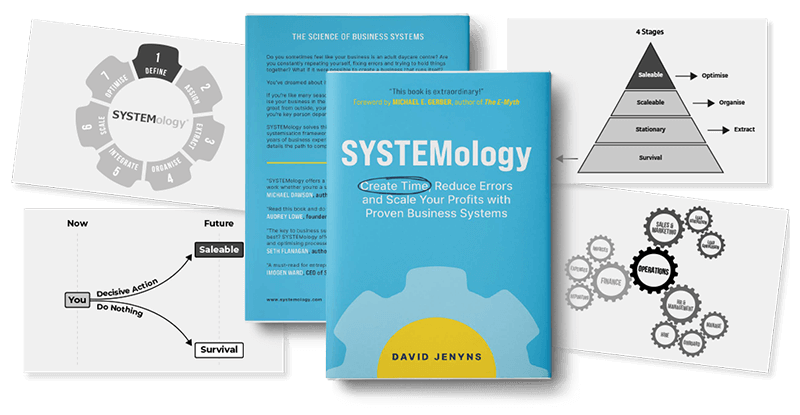
Short answer: The E-Myth named the problem that every small business owner faces. SYSTEMology is the modern implementation guide that shows you exactly how to solve it, with the tools, training, software, and community E-Myth readers have been looking for since 1986.
On this page
- What is The E-Myth?
- What is SYSTEMology?
- E-Myth vs SYSTEMology: side by side
- From philosophy to playbook
- The time I worked with Michael Gerber
- Gerber wrote the foreword for SYSTEMology
- Why SYSTEMology is an ecosystem, not just a framework
- Real example: Gary McMahon’s business transformation
- Which should you read first?
- FAQ
Michael E. Gerber, author of The E-Myth, introduces SYSTEMology.
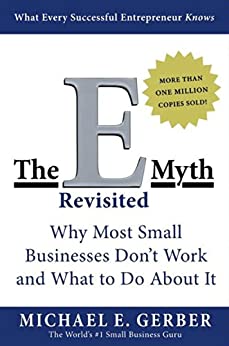
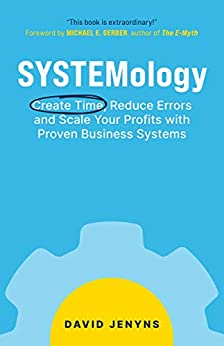
If you have ever read Michael E. Gerber’s The E-Myth Revisited, you have probably had the same thought a few million other business owners have had: he is right about everything, but now what?
E-Myth named the problem. It explained why most small businesses start with a technician who is good at the craft, why the owner ends up working IN the business instead of ON it, and why the only real solution is to build the business as if you were going to franchise it. Millions of copies in print across thirty-plus languages over forty years tell you just how deeply that diagnosis landed.
SYSTEMology is the next step. It is the modern-era implementation guide of the E-Myth. Gerber’s philosophy, translated into a repeatable playbook, AI-assisted documentation tools, a full software stack, a certified practitioner network, and an active community. Not a replacement for the E-Myth. The practical system that finally lets you put its ideas to work.
Read on for the honest comparison. What each does, how they fit together, and the personal story of how Michael Gerber himself came to endorse SYSTEMology.
What is The E-Myth?
The E-Myth (short for “entrepreneurial myth”) is a book and philosophy by Michael E. Gerber, first published in 1986 and revised in 1995 as The E-Myth Revisited. Across more than 29 books in the E-Myth series, Gerber has taught a single, transformative idea:
Most small businesses are started by technicians — people who are good at their craft but have never been trained to run a business. The plumber starts a plumbing company. The hairdresser opens a salon. The graphic designer starts an agency. They are excellent at the work, but being good at the work is not the same as running the business that does the work.
To scale, Gerber argues, every owner must learn to wear three hats in balance:
- The Technician — does the actual work of the business
- The Manager — organises, plans, and keeps order
- The Entrepreneur — imagines the future and drives change
The E-Myth also introduces what Gerber calls the franchise prototype. Build your business as if you were going to franchise it, even if you never will. That mindset forces you to document processes, define roles, and make the business work without depending on any one person — especially not you.
What E-Myth is great at: naming the problem, giving owners the vocabulary for what is actually going wrong, and shifting the mental model from “I am the business” to “the business must run without me”.
What E-Myth deliberately does not do: give you a step-by-step modern playbook for how to actually execute. The E-Myth is philosophy, not method. Gerber would be the first to say so, and that is exactly why SYSTEMology exists.
What is SYSTEMology?
SYSTEMology is the modern implementation guide for the ideas Gerber introduced. Built by David Jenyns in Australia, tested across thousands of businesses worldwide since 2020, it takes the franchise prototype philosophy and turns it into a practical seven-stage framework that a real small business can actually execute in 90 days.
Where E-Myth gives you the why, SYSTEMology gives you the how:
- Critical Client Flow (CCF) — a one-page map of the 10 to 15 systems that attract, convert, and deliver your primary offer
- Minimum Viable Systems (MVS) — the 7-per-department rule for documenting the whole business without overwhelming the team
- System for Creating Systems 2.0 — the AI-assisted method for writing SOPs in minutes rather than hours
- Systems Champion — the dedicated role that owns systemisation, so the business owner does not have to
- Scoreboard gamification — the tool that turns systemisation into a game the team can actually finish
But the framework is only half the story. The other half is the ecosystem that surrounds it, which we come back to below.
E-Myth vs SYSTEMology: Side by Side
| Dimension | The E-Myth | SYSTEMology |
|---|---|---|
| What it is | Philosophy + diagnosis | Method + implementation guide |
| Answers the question | Why does my business depend on me? | How do I build a business that does not? |
| Key concepts | Technician/Manager/Entrepreneur, franchise prototype, business format vs job | Critical Client Flow, Minimum Viable Systems, Systems Champion, scoreboard |
| Modality | Books, coaching, community | Books + software + training + certified practitioners + community |
| Era | Pre-digital through early digital (1986 onwards) | AI-native (AI-assisted SOPs, software-first stack) |
| Primary outputs | Mindset shift, franchise prototype thinking | Documented systems, scoreboard, trained Systems Champion, repeatable operations |
| Best starting point for | Business owners who have never thought of their work as “a business that needs systems” | Business owners ready to actually do the documentation and build the operations |
| Founder | Michael E. Gerber | David Jenyns |
From Philosophy to Playbook
If E-Myth is the diagnosis, SYSTEMology is the treatment plan. The two are inseparable in spirit, complementary in practice.
Every piece of SYSTEMology is built on something Gerber first said. The idea that systems should run the business and people should run the systems — that is E-Myth. The idea that the work of the business is documented, not held in the founder’s head — that is E-Myth. The idea that the business itself is a product to be designed — that is E-Myth.
What SYSTEMology adds is forty years of tooling, technology, and lived experience watching thousands of businesses implement the ideas. The E-Myth was written before widely available internet, before cloud software, before AI. SYSTEMology is built for the world where every small business has access to both the language to describe what needs to be done and the tools to actually do it.
Put bluntly: E-Myth told the small business owner what to aim for. SYSTEMology shows them, week by week, how to get there.
The Time I Worked With Michael Gerber on His 29th Book
This is the part of the story that not many people know.
In 2023 I received a phone call from someone named Luz Delia Gerber. I did not recognise the full name, but I recognised the surname. A few minutes into the call it became clear. She was Michael E. Gerber’s wife, and Michael wanted to talk to me. He had come across SYSTEMology and wanted to explore working together.

For me, this was surreal. I had been a huge fan of Gerber’s work since reading The E-Myth Revisited years earlier. It had shaped how I thought about every business I built. Now the man himself was on the phone, at eighty years old, wanting help on his 29th and final work in the E-Myth series.
I spent the next three months working closely with Michael on the project. I wrote thousands of words, sat through hours of calls, absorbed his feedback, and learned things I could only have learned at his elbow. One lesson in particular stuck with me — a line that has since found its way into Systems Champion:
“Every life a legacy, every business a school. Businesses are not just commercial enterprises. They are learning platforms. Every system you build is a lesson plan that teaches new team members how to add value to your organisation.”
That reframe — that every documented system is a lesson — changed how I thought about the work of SYSTEMology itself. It is not just process documentation. It is how a business teaches its people to deliver value consistently.
Along the way, I sent Michael an early manuscript of the SYSTEMology book. He read it carefully and gave me candid, generous feedback. He liked it enough to write the foreword.
Gerber Wrote the Foreword for SYSTEMology
This is the most direct possible signal that the two works belong together. Michael Gerber, who has spent forty years writing books about what small businesses need, chose to put his name on SYSTEMology by introducing it personally. Not an endorsement quote on the cover. The actual foreword, in the actual book.
“What Michael started with The E-Myth decades ago, David continues today. SYSTEMology is the modern recipe for building their business playbook.”
— Michael E. Gerber, author of The E-Myth Revisited and The E-Myth Books (paraphrased from the foreword and introduction to SYSTEMology)
If you want to watch Michael introduce the work in his own words:
Michael Gerber’s full endorsement of the SYSTEMologist Academy (18 minutes).
And a shorter introduction from the two of us together:
Michael Gerber and David Jenyns on the SYSTEMology approach (1 minute).
Why SYSTEMology Is an Ecosystem, Not Just a Framework
This is the difference that makes SYSTEMology work where other approaches stall. Reading a book changes your mind. An ecosystem changes your business.
The books
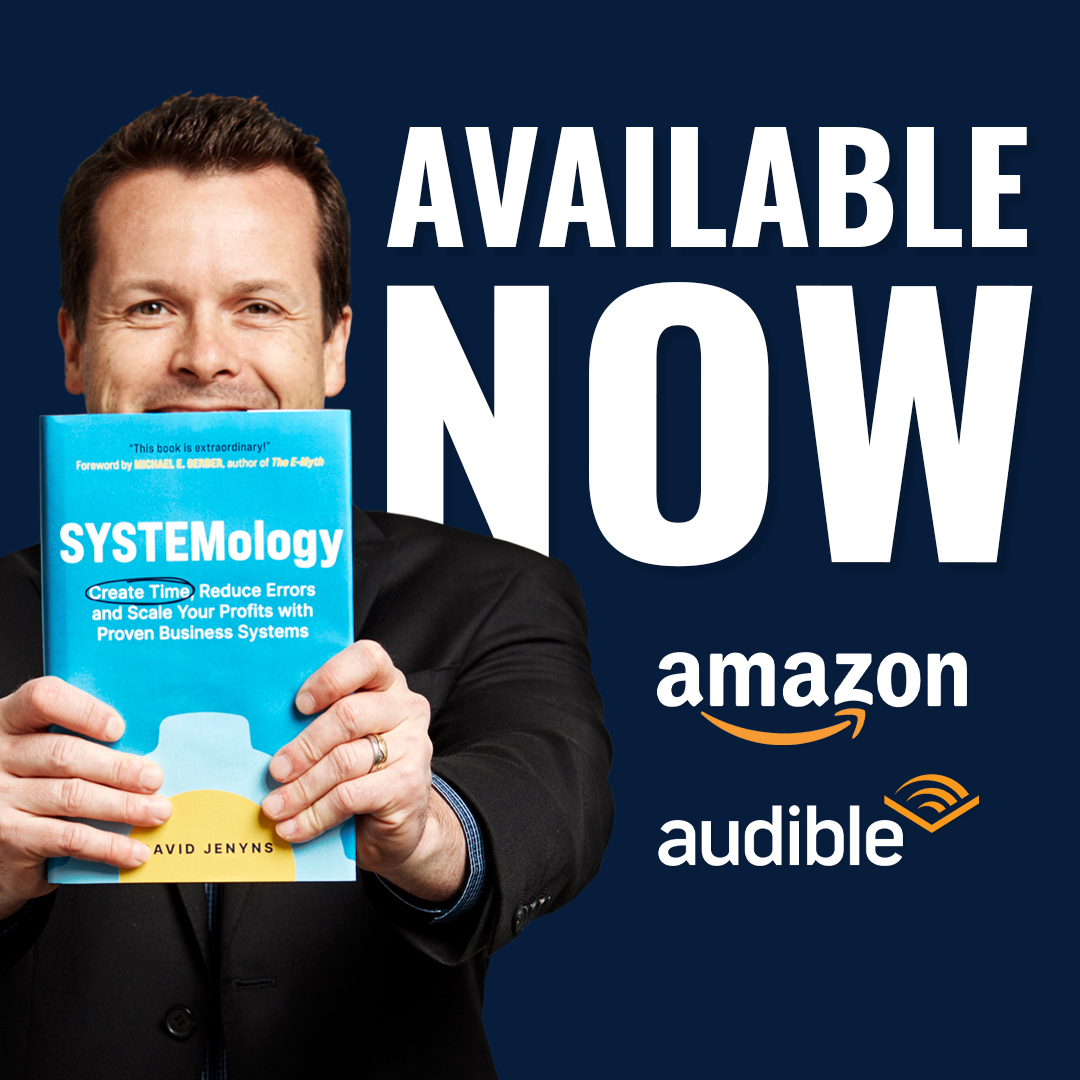
SYSTEMology gives you the seven-stage framework. Systems Champion shows you how to hire and empower the person who will actually run it.
The software
systemHUB is the purpose-built platform where systems are captured, stored, trained, and improved. AI-assisted SOP drafting included.
The training
The SYSTEMologist Academy certifies people who can implement the framework in real businesses.
The community
An active Circle community of certified SYSTEMologists and business owners running the work, comparing notes, and improving the method week over week.
The practitioners
A growing network of certified SYSTEMologists who can be hired to implement the framework in your business if you do not have the time or inclination to do it yourself.
The tools and templates
Free tools (Owner Dependency Score, Cost of Chaos Calculator, Systems Strength Test), templates, and a library of real example systems you can adapt.
This ecosystem is why SYSTEMology produces measurable, repeatable results across every industry. Reading The E-Myth plants the seed. Running SYSTEMology inside the full ecosystem is how that seed actually grows into a business that runs without you.
Authors, entrepreneurs & thought leaders endorse SYSTEMology
Podcast appearances and counting
Industry — plumbing, law, accounting, trades, agencies, SaaS, health
Real Example: Gary McMahon’s Business Transformation
Here is what the E-Myth-to-SYSTEMology transition looks like in practice. Gary McMahon runs Ecosystem Solutions. Classic E-Myth starting position: technician who built a business around his expertise, then found himself trapped inside it. Long hours. Team that could not operate without him. Growth capped by his own bandwidth.
Running SYSTEMology changed that. In this recent interview Gary walks through the before-and-after, including what he got wrong, what finally clicked, and the specific moment he knew the business could run without him.
See the full results catalogue for more businesses that have made this transition.
Which Should You Read First?
Honest advice without self-serving framing:
- Read The E-Myth Revisited first if you have never thought of your business as something that should run without you. The book will change how you see the problem. You need that shift before the method has anywhere to land.
- Read SYSTEMology next once you have that mental model and you are ready to do the actual work. SYSTEMology will give you the seven stages, the frameworks, and the roadmap for the next 90 days.
- Read Systems Champion after SYSTEMology when you are ready to identify, hire, or empower the person who will own systemisation inside your business. You cannot do this work alone, and Systems Champion is the book about the person who takes it off your plate.
If you are already familiar with The E-Myth and you are ready to act, start with SYSTEMology today. That is the fastest path from understanding the problem to doing something about it.
Tools to help you decide where you are stuck
Before you start, take ten minutes with one of these free diagnostics. They will tell you which part of the SYSTEMology framework to start with.
- Owner Dependency Score — the “4-week holiday test”, quantified
- Systems Strength Test — a 9-dimension maturity diagnostic
- Owner Time Audit — how many hours you are losing to low-value work
- Cost of Chaos Calculator — the annual dollar cost of operating without systems
- Business Valuation Calculator — what systemisation is worth in sale multiple
Systemise Your Business In Weeks, Not Years.
E-Myth readers already understand why systems matter. SYSTEMology, running on systemHUB, shows you exactly how to build them. Free trial, no credit card, and your first SOP documented in under 15 minutes.
E-Myth vs SYSTEMology FAQ
Is SYSTEMology based on The E-Myth?
SYSTEMology draws directly from the philosophy of The E-Myth. Where E-Myth names the problem (business owners trapped working in their business rather than on it) and introduces the franchise-prototype mindset, SYSTEMology provides the modern implementation method, tools, and community to actually put those ideas into practice. Michael Gerber wrote the foreword to SYSTEMology.
Did Michael Gerber endorse SYSTEMology?
Yes. Michael E. Gerber wrote the foreword for the SYSTEMology book and has publicly endorsed the SYSTEMologist Academy through multiple interviews and videos. The author of The E-Myth put his name on SYSTEMology because it is the modern implementation guide of the ideas he introduced.
What is the difference between The E-Myth and SYSTEMology?
The E-Myth is a book and philosophy by Michael Gerber that explains why most small businesses fail and introduces the franchise-prototype mindset. SYSTEMology is a method, software stack, training program, and community created by David Jenyns that gives business owners a practical, step-by-step way to implement those ideas in the modern era.
Do I need to read The E-Myth before SYSTEMology?
Not strictly, but it helps. The E-Myth gives you the mental model of why systemisation matters. SYSTEMology gives you the method for doing it. Readers who have absorbed The E-Myth tend to move through SYSTEMology faster because the “why” is already settled.
Is SYSTEMology a replacement for The E-Myth?
No, and it is not meant to be. SYSTEMology is the practical extension. Think of The E-Myth as the diagnosis, SYSTEMology as the treatment plan. Both are essential.
What makes SYSTEMology different from other systems-building programs?
Two things. First, Gerber’s direct endorsement and involvement. Second, the ecosystem: books + software + certified practitioners + community + training, all purpose-built for the work. Most other programs give you a book. SYSTEMology gives you the entire operational stack to implement what the book describes.
Can I implement SYSTEMology on my own?
Yes. The books, the systemHUB platform, and the free tools are designed for owners to self-implement. Many businesses do exactly that. For those who prefer to bring in help, certified SYSTEMologists can be engaged to run the project for you.
Is there a Michael Gerber equivalent of the SYSTEMology Systems Champion role?
The E-Myth identifies the three hats (Technician, Manager, Entrepreneur) every owner has to learn to wear. The Systems Champion role in SYSTEMology is specifically the person who takes the documentation work off the owner’s plate so the owner can focus on the Entrepreneur hat. It is a practical extension of Gerber’s model.
How long does it take to implement SYSTEMology?
A working version of the Critical Client Flow in the first month. A complete Minimum Viable Systems set (7 systems per department, around 42 total) in 90 to 120 days when the scoreboard keeps the project visible and moving.
What Real Business Owners Say About SYSTEMology
This reel collects short clips from business owners, authors, and thought leaders who have run the SYSTEMology framework inside their own businesses. Watch a few and you will hear the same pattern repeatedly: the owner finally stopped being the bottleneck, the team finally gained real ownership, and the business finally started running without them.
Key Takeaways
- The E-Myth names the problem. SYSTEMology solves it. One is philosophy. The other is method.
- Gerber wrote the foreword for SYSTEMology. The most direct possible signal the two works belong together.
- SYSTEMology is an ecosystem — books, software, certified practitioners, community, training, tools. That is why it produces extraordinary results where other approaches stall.
- Read E-Myth to see the problem clearly. Run SYSTEMology to actually fix it. That is the shortest path from stuck-as-owner to business-that-runs-without-you.
- The relationship is personal. David spent three months working with Michael Gerber on the 29th E-Myth book. The two frameworks are not just philosophically aligned — the people behind them know and respect each other.