Short answer: Mike and Aimee Hamilton built Inception Online Marketing from a corkboard in a parents’ basement to a 45-staff agency with 3,000 chiropractic clients. In May 2023 they joined PracticeTek’s healthcare alliance. The deal happened because the systems were already in place. This is the agency exit case study most owners don’t get to see.
On this page
- Why a chiropractor-only niche made systems possible
- Three systems eras: corkboard, Podio, Salesforce
- The 4-hour website that built the moat
- The fractional CEO who found 40% of their revenue
- Visionary and Integrator
- The pre-sale window
- Due diligence: when systems become the deal
- The buyer’s verdict
- What every agency owner can take from this
- FAQ
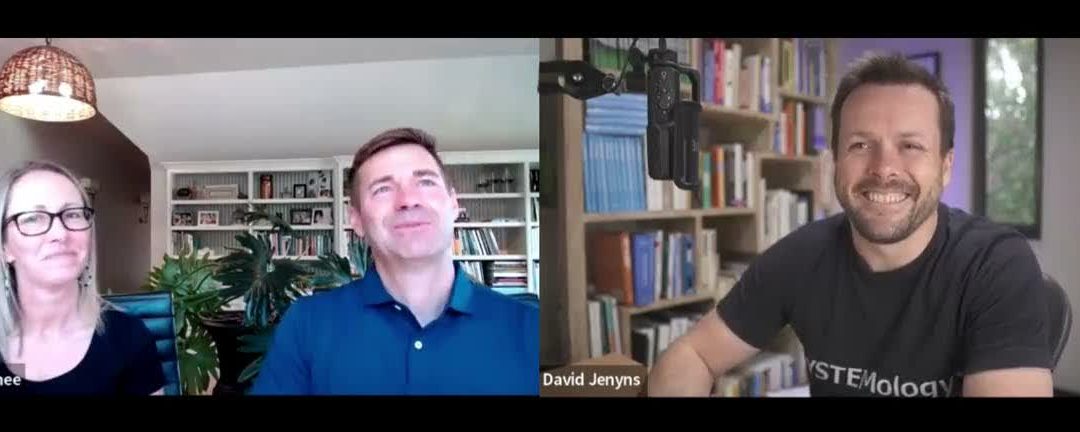
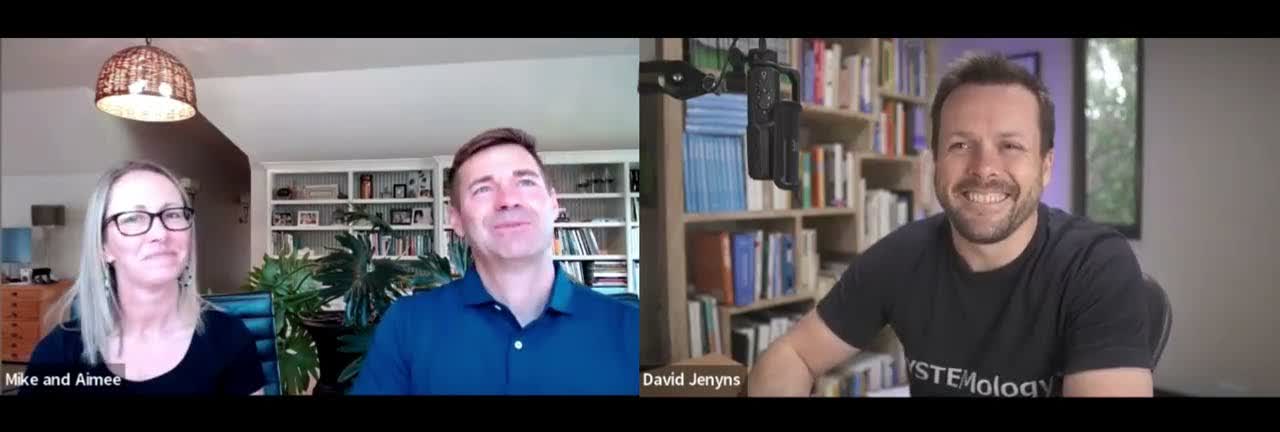
My full conversation with Mike and Aimee on the other side of the deal: how systems built Inception, and how systems sold it.
I’ve sat with Mike and Aimee twice. The first time was 2015, on a video call when they’d just crossed 500 clients and were tracking every job on a corkboard. The second was 2024, after they’d sold to PracticeTek and walked away. Same couple, two very different conversations. What follows is the part of their story I most want every agency owner to hear.
In 2012, Mike and Aimee Hamilton were broke.
They had run a chiropractic practice in Wisconsin that grew to 500 patient visits per week in two years, then collapsed when the 2008 economy turned. By the time they sorted out the wreckage, they were living in Mike’s parents’ basement with two cats and almost nothing else.
Mike had been studying SEO at night while still seeing patients. He could rank a chiropractor’s website. So could Aimee. From bed one night in that basement, he turned to her and said: let’s do this for other chiropractors.
Eleven years later, in May 2023, that conversation became a deal. Inception Online Marketing joined PracticeTek, a healthcare-software alliance that consolidates the operating tools chiropractors use to run their clinics. Mike and Aimee stepped away from operations. The company they started with no money was now part of one of the largest healthcare-practice service groups in the world.
This is what happened in between. It is, more than anything else, an agency exit case study about systems. Because the deal didn’t happen because Inception found a buyer. It happened because by the time the buyer arrived, Inception was the kind of agency a buyer could actually integrate.
Why a chiropractor-only niche made systems possible
The first strategic decision Mike and Aimee made was the one that made everything else possible. They only worked with chiropractors.
From a generalist agency owner’s view that looks like leaving money on the table. Plumbers need websites too. So do dentists, lawyers, accountants. Why turn them away?
Because a chiropractor in Tulsa and a chiropractor in Tampa want almost exactly the same thing. The same kind of website. The same patient-acquisition funnel. The same review-management workflow. The same Facebook ad creative. When every client’s job is a slight variation of the last, you can productize. You can write SOPs that actually apply. You can train a 22-year-old to deliver them. You can build a Salesforce automation around them.
A generalist agency can’t do any of that, because the work changes shape every time. The tradeoff Mike and Aimee made (smaller addressable market, repeatable process) is the tradeoff that gives you a sellable agency. PracticeTek didn’t buy a generic web shop. They bought a chiropractic-marketing system that happened to come with thousands of clinics already running on it.
Three systems eras: corkboard, Podio, Salesforce
Inception ran on three different platforms across its 11 years. Each one died at a growth inflection.
The corkboard era. Through 2015, Mike and Aimee tracked everything on a literal corkboard. Client names on pins, moved between columns as the work progressed. When I asked Mike on our first call what software they were using, he had to clarify it wasn’t software at all.
“Dave was like, ‘how are you guys organizing what you do?’ And we’re like, on a corkboard. And he’s like, ‘What program is that?’ And I’m like, ‘No, it’s a corkboard.’ But it worked. At that size.”Mike Hamilton

The Podio era. The corkboard hit a wall around 15 employees. They moved to Podio. It worked for years. Then it didn’t. By the time the team passed 30, Aimee describes it as “essentially breaking Podio,” the platform couldn’t hold what they needed it to.
The Salesforce era. When they hired their fractional CEO toward the end, he came in with a custom Salesforce build from a previous company and rebuilt Inception’s operations on top of it. Not because Salesforce was the right answer for every business, but because they needed to see what was actually happening across the company on one screen, in real numbers, in real time. That’s what unlocked the final years of growth.
The lesson hidden in this isn’t that everyone needs Salesforce. It’s that your systems must keep evolving with your stage. What runs a 15-person agency will choke a 30-person agency. What runs a 30-person agency will choke a 50-person one. If you build a system and assume it’s done, you’re building tomorrow’s ceiling.
“A system starts and it grows and matures like a tree. It just keeps evolving. What worked at 15 employees didn’t work at 30 or 50.”Aimee Hamilton
The 4-hour website that built the moat
By the time Inception was at scale, they could build a top-quality, ranking chiropractor website in four hours.
For comparison, most competitors needed twice the headcount and four times the build duration to ship the same thing. That gap wasn’t born of talent. It was born of systems. Inception had documented every step. They had templates, automation, decision points, handoffs. A new hire didn’t need three months of shadowing to ship a site. They had a runbook.
The financial result was that Inception was the most profitable company doing what it did. Not the biggest. The most profitable. And profit, in the agency-sale conversation, is the number that buyers multiply. Operational efficiency built through systems is what turns a $5M-revenue agency into a $5M-revenue agency that sells for a real multiple.
The fractional CEO who found 40% of their revenue
The single most important hire of the entire Inception story was a fractional CEO. An old friend named Mark, who Mike had worked with in a previous life, who had built and sold companies. He came in with fresh eyes.
The first night he sat in their house, having dinner, he asked a question.
“He’s like, ‘When you guys make a sale, what happens?’ I’m like, ‘Oh, well, we email paperwork to the client.’ He’s like, ‘What happens if it doesn’t come back?’ I’m like, ‘We don’t get the client.’ He’s like, ‘Why don’t you just take their credit card right on the phone?’”Mike Hamilton
Inception was losing roughly 40% of its sales because clients said yes on the call but never returned the paperwork. Nobody followed up because everyone was too busy. One change, processing payment on the call instead of after, recovered most of it.
Mark’s second move was less dramatic but more important. He had Aimee map every business process as a flow chart. Sales, onboarding, build, delivery, support, retention. The mapping itself surfaced what Mike calls dead ends: places where work could quietly stall and no one would know. A handoff that depended on a single person remembering. A status that no automation watched. Once they were drawn out, the team couldn’t un-see them.
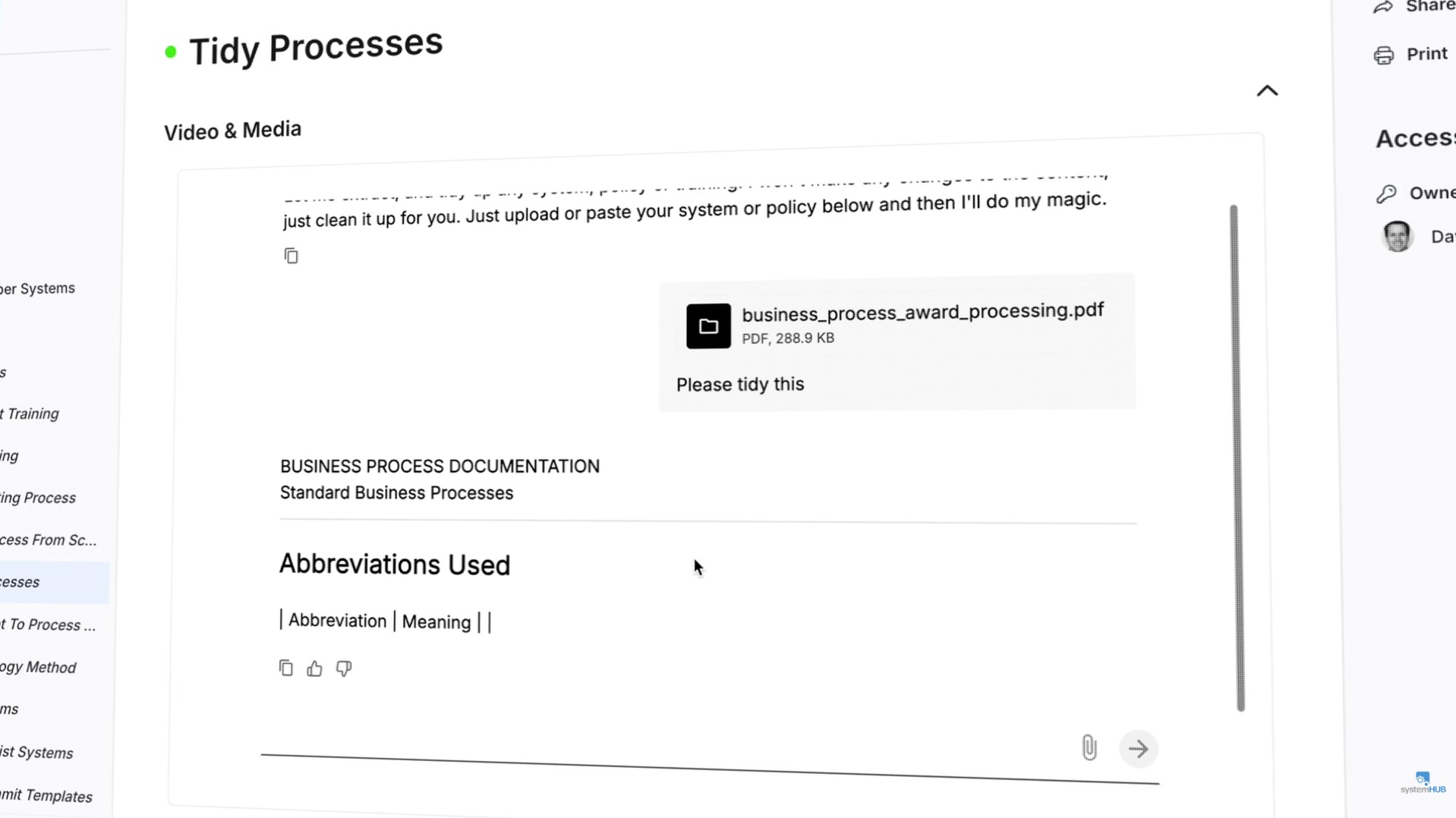
Those flow charts became the spec for the Salesforce build. The Salesforce build became the company’s nervous system. The nervous system was what made the eventual due diligence survivable. The lesson, in Mike’s words: you can’t see what you can’t see, because you’re in the box.
Visionary and Integrator
The founder split at Inception was clean. Mike was the visionary, Aimee was the integrator. Mike sold the work and saw where the business was going. Aimee built the systems that made what Mike sold actually deliverable.
Plenty of agency owners try to be both. Most stall at 10 to 15 staff because they have to. The founder who can sell can rarely also write the SOP, train the new hire, audit the QA process, and chase the broken handoff at the same time and at the same energy. One side gets neglected. Usually it’s the systems side, because no client is screaming for a documented process.
What made Inception scale past 15 was that Aimee owned the systems work, full-time, with Mike’s explicit permission to push back on him. That’s effectively a Systems Champion role. The person whose job is to defend the documented way of doing things even when the founder is in a hurry. (For more on that role and how to staff it without a co-founder, see the Systems Champion role.)
The playbook the Hamiltons arrived at the hard way
SYSTEMology codifies what Mike and Aimee figured out in eleven years of trial and error. Same destination, far less pain.
The pre-sale window: building for a buyer who hadn’t arrived yet
Mike and Aimee never set out to sell Inception. There was no five-year exit plan in a drawer. What they did have was Mark, the fractional CEO, who saw the eventual sale from miles away.
“He said, if you ever are going to sell it, we got to start getting the accounting straight. We got to have unbelievable systems in place so they know they can walk in and just take over without any problems.”Mike Hamilton, recalling his fractional CEO
That conversation set off about a year of intense work. Tightening the books. Standardising every process. Putting the Salesforce build through its paces. Closing the dead ends. None of that work was reactive. It was done before there was a buyer at the table.
This is the part agency owners almost never get right. They wait until a buyer surfaces before getting the house in order. By then, the buyer is already discounting the price for everything they have to clean up after the fact. The systems work the Hamiltons did before any conversation became the lever that protected their valuation during the conversation.
Almost every agency that sells for less than it’s worth gets there because the founder waited.
Due diligence: when systems become the deal
The buyer surfaced almost by accident. A consolidator was buying chiropractic-software companies and needed a marketing piece to bolt on. People named Inception. The first attempt at a deal fell apart. Mike and Aimee weren’t desperate, the numbers were strong, they walked away. Six months later the buyer came back, and the second attempt held.
What followed was four straight months of due diligence on top of a 36% growth year. New employees being hired weekly. A new office being built because every wall in the old one had a desk against it. Systems being maintained while the buyer’s team asked for documentation going back to month one.
“They ask for everything you can’t even imagine. The stuff that happened in our first six months of business, what’s this, where did that go? We need the records for that. The amount of documents that Amy compiled is unimaginable.”Mike Hamilton
The Podio years were the part that nearly killed it. The platform didn’t store data the way an acquirer’s analysts wanted to see it. Aimee had to manually reconstruct numbers from records that weren’t designed to be reconstructed. Months of weekend work that better systems, earlier, would have made automatic.
The lesson is the one every agency exit broker eventually says, but rarely with a story attached: the buyer is not asking what your systems are. They’re asking what your systems can prove. If your accounting can’t produce a clean monthly P&L back to founding, the buyer assumes the worst. If your CRM can’t reconstruct churn cohorts, the buyer discounts the multiple. Systems are not just operational. They are the evidence base for the deal.
The buyer’s verdict
The most quietly satisfying moment in the whole story happened in a conference room. The buyer’s top systems people came in to walk through Inception’s operations. The plan, going in, was to assess how much of Inception’s process would need to be replaced with the buyer’s standard playbook. Aimee walked them through every system, in detail, for several hours.
“They turned to each other at the end of the meeting and said, ‘These guys are better than everyone we have right now. Nobody’s systems are as good as theirs. We need to get the other people up to this speed.’”Mike Hamilton, recalling the buyer’s integration assessment
The plan was reversed. Instead of replacing Inception’s systems with the parent company’s, the parent company began moving toward Inception’s. The public framing of the deal, when it was announced, was just as complimentary.
“Inception is clearly the market leader in attracting new patients to chiropractic clinics.”
Eric Leaver, CEO, PracticeTek (May 2023 alliance announcement)
That kind of language, market leader, best in portfolio, doesn’t come from financials alone. It comes from buyers walking through the operation and being unable to find the cracks. Buyers who can’t find cracks pay closer to the asking price.
What every agency owner can take from this
If you’re running an agency now and the back of your mind is starting to think about what comes next, three things from the Hamilton story translate directly.
1. Pick your niche so the systems can compound. If your work changes shape every client, you can’t productize, you can’t train juniors quickly, you can’t write SOPs that hold. Inception’s chiropractor-only stance felt limiting in 2012. By 2023 it was the entire moat.
2. Hire someone with the standing to push back on you. Mike and Aimee had each other. When that wasn’t enough, they hired a fractional CEO who could see what they couldn’t. Almost every breakthrough in the back half of Inception’s story came from someone outside the founder’s head, asking the obvious question the founder had stopped seeing.
3. Build for the buyer five years before there is one. The Hamiltons did the hard sale-prep work because their fractional CEO whispered in their ear about it. Most agency owners do that work in the final 90 days, after a buyer has surfaced, and pay for the rush in the deal price. The systems that survive due diligence aren’t built during due diligence. They’re built years before, when there’s no deadline pressure and no one is watching.
For more on how this plays out in other industries, see the Lime Therapy case study, a 40-person allied health practice that ran the same playbook on the clinical side. Or Ryan Stannard’s home-building business, which scaled to $15M with the same systems-first approach in a completely different industry.
Systemise Your Business In Weeks, Not Years.
Whether you’re selling in two years or twenty, the systems work is the same. systemHUB is the platform the Hamiltons wished they’d had on day one. Free trial, no credit card.
Frequently asked questions
How long before selling should an agency start preparing?
Two to five years, ideally. The Hamiltons did roughly a year of intense pre-sale work after their fractional CEO raised the topic, but the systems foundation that made that year possible had been compounding for over a decade. Buyers can tell the difference between an agency that has always been systemised and one that was rushed into shape in the final 90 days, and the deal price reflects it.
What systems do acquirers look for in due diligence?
Three things, in order. First, financials: a clean monthly P&L going back to founding, with backup detail an analyst can reconstruct independently. Second, CRM and operations data: client lists, churn cohorts, lifetime value, contract terms, support history. Third, documented processes: what happens when a sale is made, what happens when a client cancels, what happens when a server goes down. If any of these can’t be produced quickly, the multiple drops.
What multiple do well-systemised digital agencies sell for?
Generalist digital agencies typically trade at 4 to 6 times EBITDA. Niche, high-margin, recurring-revenue agencies with strong operational systems and low founder dependency can trade meaningfully higher. Strategic acquirers sometimes pay above the financial multiple because the operational fit is worth the premium. Systems are how you move from the bottom of that range to the top, or above it.
Can a small agency under 30 staff attract a PE-backed buyer?
Yes. PE-backed alliances and roll-ups buy small operators all the time, especially when the small operator owns a defensible niche with a repeatable process. What buyers care about is unit economics, the niche, the systems, and the founder’s willingness to step away. Headcount is a much weaker signal than operational maturity.
What kills an agency sale in due diligence?
The most common deal-killer is data the seller can’t produce: missing financials, undocumented client agreements, disputed IP, unrecorded changes in shareholding. The second is founder dependency, when the buyer realises the agency only works because the founder is in every key meeting. The third is a hostile employee base. All three are systems problems, fixable with enough lead time.
Key takeaways
- Niche is the foundation. Inception only worked with chiropractors. That’s what made every other system possible.
- Systems must evolve with stage. Corkboard, then Podio, then custom Salesforce. What runs you at 15 chokes you at 30.
- Hire someone with the standing to push back. The fractional CEO found 40% of their revenue in his first week.
- Visionary plus Integrator beats founder-as-everything. Aimee owning the systems work was the difference between scaling and stalling.
- Build for the buyer years before there is one. Sale-readiness was the lever that held their valuation through due diligence.
- Buyers buy what your systems can prove, not what you say they are.
Where to start on your own systems
If you’re reading this and quietly wondering whether your agency would survive a real due diligence process today, you already have your answer. Most wouldn’t. The good news is that the gap between “wouldn’t survive” and “walks the buyer through the operation in six hours and gets a verdict like Inception’s” is closable. It just takes time and a method.
The method we teach is in SYSTEMology. Mike and Aimee arrived at it independently, the slow way. You don’t have to. If you’d rather work through it with a coach, the SYSTEMologist Academy trains the integrator role on your team.
Whatever path you pick, start with the document everyone skips: a flow chart of how a client moves through your business from first call to renewal. That’s where the dead ends live. That’s where Mark started with Mike and Aimee. It’s where every real systems story starts.