Performance is hollow if it only happens when you’re in the room. Plenty of business owners find this out the hard way. They come back from a week away and discover the team has drifted, clients have been handled inconsistently, and small problems have quietly grown teeth. The instinct is to blame motivation or hiring.
Usually, neither is the real issue.
Systematic leadership solves this at the root. Instead of depending on the owner’s personality, energy, or daily presence, it builds the team’s performance into the structure of the business itself. The result is a team that performs the same whether the owner is running the Monday meeting or hiking in Patagonia for a month.
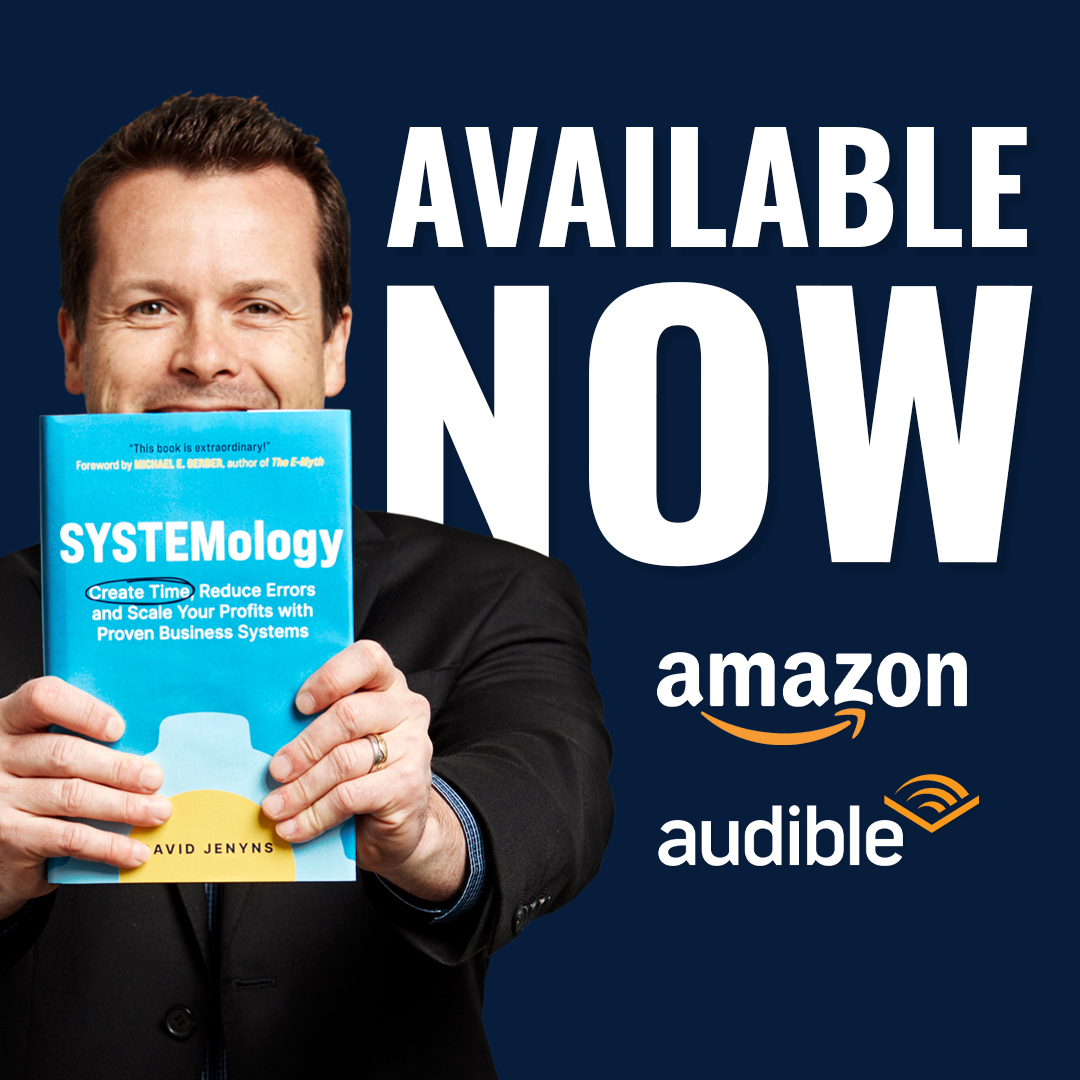
SYSTEMology founder David Jenyns has spent the last decade helping business owners make this shift. The pattern he sees is consistent: teams don’t need a louder cheerleader. They need a better system to lead within.
This article walks through what that looks like, why it works, and where to start this week.
Why Traditional Leadership Breaks at Scale
Most leadership advice is about who you are. Vision. Charisma. Presence. Executive posture. That advice isn’t wrong. It’s just incomplete. It works well enough for a founder with five people. Somewhere around ten staff, it quietly stops working.
The symptoms are familiar. Decisions pile up on the owner’s desk. Quality dips whenever the owner is unavailable. Training a new hire drags on for months because no one has written down what “good” looks like. High performers plateau because the systems beneath them haven’t been built to let them climb.
According to Gallup’s State of the Global Workplace report, only around 23% of employees worldwide are actively engaged at work [VERIFY stat]. The default state of most teams is disengagement. Charismatic leadership can lift that number for a while, but it can’t hold it, because the charisma has to be reapplied every day. What does hold is structure: clear expectations, documented processes, and a culture that rewards following them.
As business leadership author Robin Sharma puts it, leadership is “about impact, influence and inspiration.” The question most owners skip is what carries that inspiration when the leader isn’t in the room. The honest answer is: a system, or nothing.
“Leadership isn’t a personality trait. It’s an operational system that keeps working after you leave the building.”
The Equation Behind Team Performance
Leadership thinker Ron Carroll frames team performance as a simple equation:
Performance = Desire × Capability
The equation is useful because of the multiplication sign. You can’t make up for a zero on one side with a high number on the other. A motivated team that lacks the skills, tools, and documented processes to do the work will produce frustrated effort and inconsistent results. A capable team that has lost faith in the direction will coast at half output.
Most leadership programs over-invest in one side and under-invest in the other. Motivational retreats and inspirational away-days push desire upward. Training budgets and new software push capability upward. Both feel productive. Neither, on its own, produces lasting team performance.
What David and the SYSTEMology team have observed across thousands of implementations is that both sides respond to the same underlying structure. Build the right structure, and desire and capability rise together. Skip the structure, and no amount of motivation or training holds. That structure is what SYSTEMology calls the Three Pillars.
The Three Pillars of Systematic Leadership
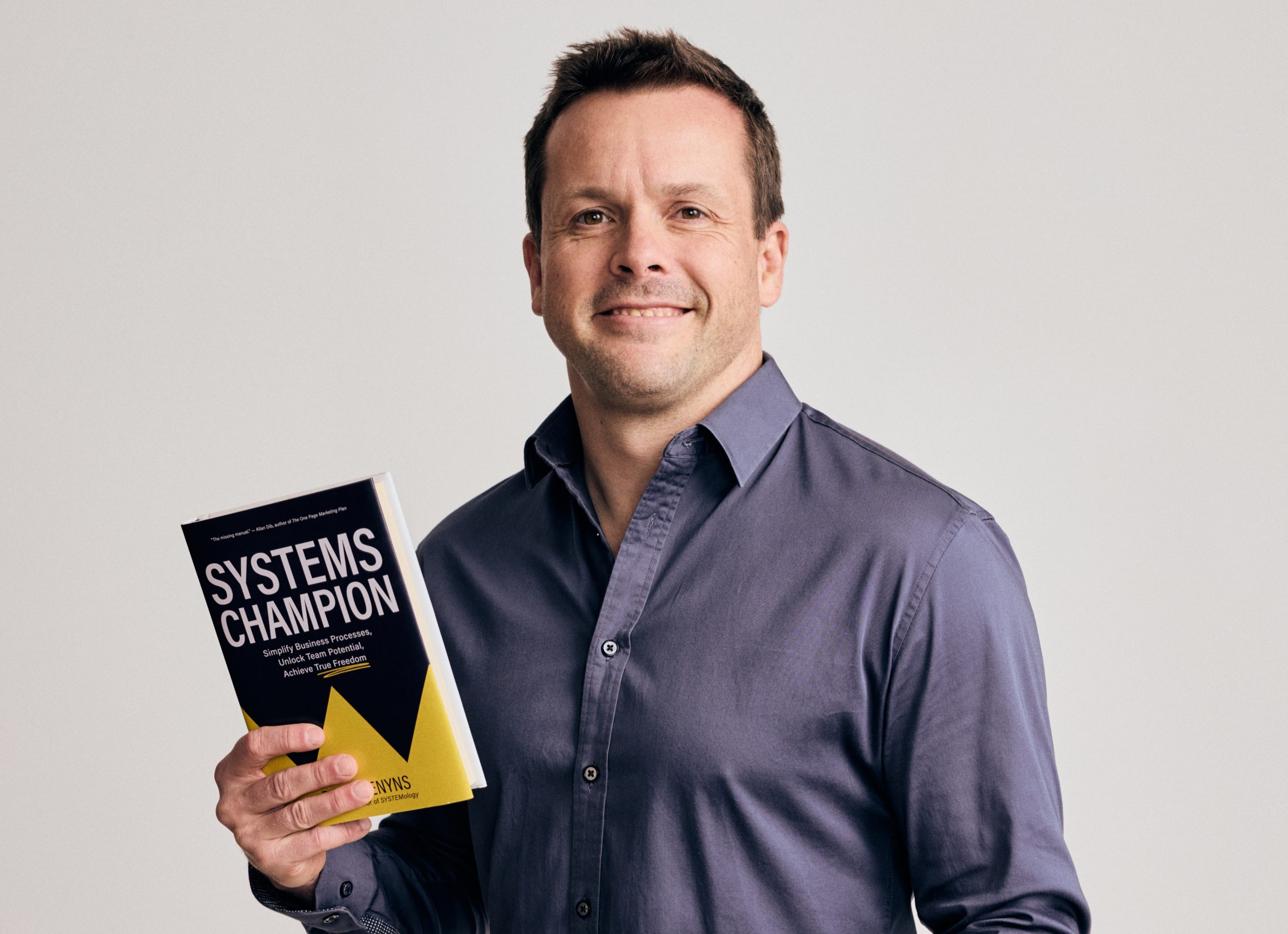
David’s Systems Champion book lays out the three pillars every systemised team rests on: Documentation, Tools, and Culture. Together, they translate Carroll’s equation into something a business owner can actually build.
Pillar 1: Documentation
Documentation answers the question every team member asks, spoken or not: “How am I supposed to do this?” When the answer lives only in the owner’s head, the team can never fully act without checking in. When it lives in written, accessible systems, capability scales.
SYSTEMology’s approach here is pragmatic. You don’t document everything. You document the Minimum Viable Systems, roughly seven per department, that cover the work actually keeping the business running. A single Critical Client Flow, showing how one client moves through one product journey, is usually the first step. Starting with free SOP templates gives teams a head start rather than a blank page.
Documentation removes the “I didn’t know how” excuse. It shifts the conversation from “ask the owner” to “check the system.”
Pillar 2: Tools
Documentation without the right tools is a stack of Word files no one reads. Tools are what make systems findable, followable, and accountable. Most teams need four categories: a systems repository, a project manager, a recording tool for capturing processes on the fly, and an office suite. A centralised systems repository pulls the first category together so the team stops hunting for the latest version of anything.
Tools also make progress visible. When every team member can see which systems exist, who owns them, and what’s been updated, accountability becomes structural rather than personal. The owner stops being the enforcement mechanism.
This is where capability gets built at scale. The combination of Pillar 1 and Pillar 2 covers Carroll’s capability side of the equation.
Pillar 3: Culture
Culture is the pillar most business owners underestimate. You can document every process and buy every tool, and a team that doesn’t believe in the approach will route around it within a month. Culture decides whether the systems get used, improved, or ignored.
A systems culture has a specific feel. When something breaks, the first question isn’t “whose fault is it?” but “what in the system allowed this?” When something works well, the team documents it rather than keeping it in one person’s head. New hires don’t get an orientation tour; they step into an environment where using systems is clearly how things are done.
This is where Carroll’s desire side of the equation gets built. Not through speeches. Through the daily reinforcement of what the team sees praised, corrected, and modelled.
TIP: If your team keeps asking you questions that are already answered in an existing system, the problem isn’t the team. It’s that your culture hasn’t made “check the system first” the default. Next time someone asks, point them to the SOP instead of answering. Do this consistently for two weeks.
How strong are your three pillars right now?
Most owners assume their weakest pillar is the one they’ve thought about least. The free System Strength Test gives you a three-pillar diagnostic in under ten minutes, built on the same framework David uses with SYSTEMology clients.
The Systems Champion: Leadership’s Missing Role
The three pillars don’t install themselves. In theory, the business owner can do the work. In practice, the owner is already the bottleneck the team is trying to move around. This is why SYSTEMology treats the Systems Champion role as the single most important hire for a business trying to systemise.
A Systems Champion is not a senior operations executive. They’re often a newer team member with three traits: natural organisation, genuine curiosity about how things connect, and enough fresh-eyes perspective to ask “why do we do it this way?” without political baggage. Technical mastery of the industry actually works against the role. Experienced hires tend to defend how things are; Systems Champions need to question them.
David’s observation after watching hundreds of implementations is that the best candidates are usually already on the team. They’re just not being used this way. When given protected time and a clear mandate, they turn leadership from a personality into a process. Businesses that want faster results can train a Systems Champion through a structured program rather than hoping the right instincts show up.
“She’s not just documenting processes. She’s understanding how everything fits together.”
— Ryan Stannard, on his daughter Eryn
What It Looks Like in Practice
Three businesses. Three industries. The same pattern.
Stannard Family Homes: from 7 to 15 staff
CASE STUDY: Stannard Family Homes (Ryan & Eryn Stannard)

Ryan Stannard runs a $15 million custom home building business in Adelaide. He started as a carpenter and built the company from the ground up. By the time he hit seven staff, the growth had trapped him. Every day was a blur of “Ryan, how do I…?” interruptions. He knew he needed to clone himself, and the only way to do that was to write the business down.
The twist is who picked up the pen. Ryan’s daughter Eryn joined the business as an interior designer. Her curiosity and question-everything approach were initially disruptive. The existing interior designer resigned within her first four weeks. But that same questioning was exactly what the systems needed. Within six months, she had rewritten the interior design processes and was handling twelve client selections simultaneously.
She kept going. Every system she touched deepened her understanding of how the business worked. She moved from interior design to assistant manager. Today, as Ryan prepares to launch a new venture, Eryn is positioned to run the existing operation. The business has doubled from seven to fifteen staff. Ryan takes extended holidays. The team runs the play without him.
Lime Therapy: a tenfold cut in invoicing time
CASE STUDY: Lime Therapy (Renee Kelly & Kaleb)
Renee Kelly started as a solo occupational therapist on her family farm in Mildura. Fifteen years later, Lime Therapy is an allied health practice with forty team members. The growth had produced the familiar problem: too much quality depending on one person’s head.
Renee and her husband Matt resisted the instinct to become the systems builders themselves. Instead, they appointed Kaleb, an occupational therapist only two years out of graduation, as their Systems Champion. Kaleb wasn’t the most senior person. He was the most organised, the most curious, and the most willing to protect his systems time.
The practical wins came quickly. One invoicing process was cut to roughly a tenth of its previous time. But the deeper win was cultural. Team members started saying things like “I want to do what Kaleb’s doing. I don’t know what it is, but it looks fun.” As Renee puts it: “SYSTEMology has become part of our language. Every problem, every opportunity, we now see it as a system.”

Ecosystem Solutions: a first-ever holiday
CASE STUDY: Ecosystem Solutions (Gary McMahon)
Gary McMahon founded Ecosystem Solutions in 2005. The ecological consulting firm grew fast. Gary grew tired. He was working 100 to 110 hour weeks, watching his health and his family life erode, and hiring more staff didn’t help. He was the bottleneck, and every tool he’d tried had failed to move him out of the way.
Systemising the business worked where everything else hadn’t. Profitability climbed by approximately 80 per cent. More importantly, Gary took a three-week holiday with his family, the first of his entire working life. “It’s like I’ve lost fifty kilos,” he said later. “And I’ve got a life.”
Three businesses, one pattern: leadership stopped depending on the founder’s presence and started running on documented structure.
Found someone on your team who “gets” systems? Give them the playbook.
The Systems Champion book is the exact manual David wrote for the role these three businesses built around. It walks a team member through how to extract, document, and reinforce the systems that hold your leadership together.
How to Start Systemising Your Leadership This Week
Four actions, in order. None of them require hiring anyone new.
- Map your Critical Client FlowOn one page, show how a single client moves through a single product or service, from first contact to completion. Keep it simple enough that someone outside the business can follow it.
- Pick your first Minimum Viable SystemChoose one process that runs often, has a clear outcome, and isn’t too sensitive. Document it. Don’t aim for perfect. Aim for usable.
- Identify your Systems ChampionNot the most senior person. The most organised, curious, and willing. Ask yourself who asks the most useful “why do we do it this way?” questions.
- Protect their timeBlock two to four hours a week on their calendar, marked as protected as a client meeting. Without ring-fenced time, the role collapses back into regular work.
TIP: Start with the system currently causing the most friction, not the most impressive-sounding one. The process people complain about is the one the team will most value seeing fixed. Momentum comes from visible wins, not theoretical ones.
Every one of these steps has a template. Free SYSTEMology resources cover the Critical Client Flow, Minimum Viable Systems, and Systems Champion position description.
What’s every disruption, retrain, and rework costing you right now?
The owner-dependence, the patchy handovers, the quality dips when you step away, they all carry a price tag. The free Cost of Chaos Calculator puts a real dollar figure on what systemless leadership is draining from the bottom line each year.
Measuring Whether It’s Actually Working
The leading indicators of systematic leadership are linguistic and behavioural. Teams change how they talk before they change how they perform. Watch for phrases like “is it in the system?” replacing “who should I ask?” Watch for team members suggesting improvements rather than waiting for direction. Watch for a steady drop in repeat questions.
The lagging indicators follow. Staff retention climbs because good people stop burning out on avoidable chaos. Quality becomes consistent across clients because the process is the same regardless of who runs it. Onboarding shortens from months to weeks because new hires can learn from written systems rather than waiting for the owner’s next explanation.
The biggest indicator is the owner’s calendar. When a founder can be away for three weeks and the business runs normally, systematic leadership has taken root. When they’re still getting urgent messages by day two, a pillar is weak.
“SYSTEMology has become part of our language. Every problem, every opportunity, we now see it as a system.”
— Renee Kelly, Lime Therapy
Where to Go From Here
Systematic leadership isn’t a personality upgrade. It’s three pillars (documentation, tools, culture), a dedicated role (the Systems Champion), and a framework that builds both sides of the performance equation at the same time. The businesses that feel effortless from the outside are almost always the ones that invested here.
The fastest place to start is the pillar currently weakest. Ryan Stannard started with documentation. Renee Kelly started with culture. Gary McMahon started with a clear Critical Client Flow. All three stories sit among the documented client transformations SYSTEMology has captured over the years, and the pattern is consistent: pick one pillar, build it properly, and the next one becomes easier.
Systematic leadership rewards patience. The first system takes longer than it should. The third one feels natural. By the time your team is rewriting and improving systems without being asked, the leadership you used to carry on your shoulders is running on its own.
Ready to work through the full 7-stage methodology?
SYSTEMology is the book that started it all. It walks through every stage of the proven framework, from defining your Critical Client Flow to scaling the business beyond you. If the three pillars resonated, this is where the complete playbook lives.
Frequently Asked Questions
What is systematic leadership in simple terms?
Systematic leadership is running a team through documented structure rather than personal charisma. Instead of the owner’s daily presence and energy driving performance, the work is carried by written processes, shared tools, and a culture that reinforces both. The practical test: would your team perform the same way if you were away for a month?
How is systematic leadership different from traditional management?
Traditional management relies on a manager’s personality, relationships, and availability. Systematic leadership builds those outcomes into the structure of the business itself, so performance holds even when specific individuals are unavailable. Traditional management scales with headcount; systematic leadership scales with documented systems.
Can systematic leadership work in creative or custom businesses?
Yes. Creative businesses often benefit most because systemising the repeatable work frees creative energy for the parts that actually need it. Ryan Stannard’s custom home building business is a clear example: every home is bespoke, but the process of delivering a bespoke home is systemised. Standards protect the craft rather than replacing it.
How long before we see results?
Most businesses see the first practical wins within 30 to 60 days of appointing a Systems Champion and protecting their time. Cultural change takes longer, usually six to eighteen months, because it depends on team members seeing repeated proof that systems make their work easier. The compounding benefits show up around the eighteen to twenty-four month mark.
Who should be the Systems Champion?
Not the most senior person, and usually not the industry expert. The best Systems Champions are naturally organised, genuinely curious about how things connect, and willing to ask “why do we do it this way?” without political baggage. They’re often newer to the business. Protected time matters more than title or experience.
What if my team resists?
Resistance usually means the team expects systems to mean more bureaucracy and less autonomy. The fix is proof, not argument. Start with the system currently causing the most friction, and let the team feel the relief of having it fixed. Cultural adoption follows visible wins, not top-down mandates.
Can I do this without hiring anyone new?
Almost always, yes. The Systems Champion is usually already on your team; they just haven’t been given the role, the time, or the mandate. Most businesses can start with their existing staff and only consider external help, such as a certified SYSTEMologist, if they want faster implementation or lack internal capacity for the work.