Every business owner has heard the same message by now. AI is here, it’s moving fast, and you need to get on board. The problem? Most are stuck. Not because they don’t believe it, but because they don’t know where to begin.
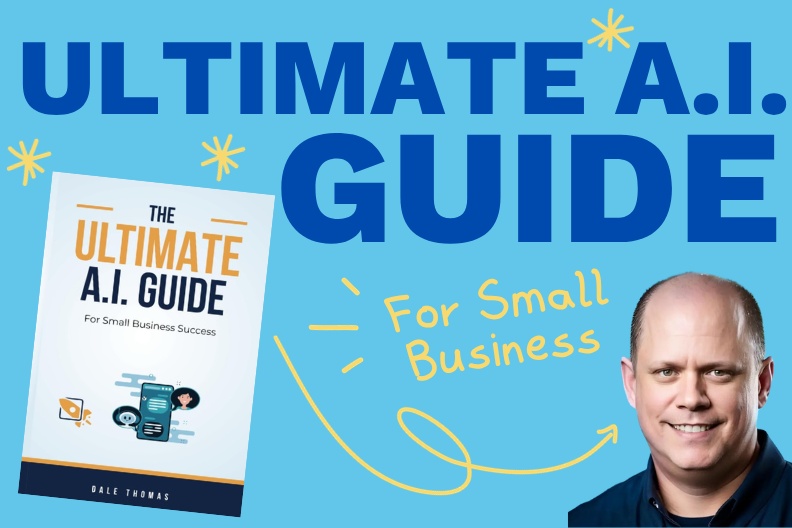
Dale Thomas, founder of Actionable Ops and author of The Ultimate AI Guide for Small Business Success, works with business owners on exactly this. His approach is refreshingly practical. Don’t start with the technology. Start with the work.
Here’s how to cut through the noise and figure out how to start using AI in your small business without getting buried in options.
Key Takeaways
- Start by listing the tasks you want done, not the AI tools you want to use.
- AI needs documented processes to run on top of. Systems come first.
- Low-hanging wins include knowledge bases, AI email tools, sentiment analysis, and content agents.
- Get your team involved early. Education and gradual rollout build confidence.
- AI should never replace human review. Use it to free your team for higher-value work.
Why Systems Come Before AI
Dale’s first question when working with a new client isn’t “what AI tools are you using?” It’s “what are the jobs you want done?”
That’s it. List the tasks. Don’t think about AI yet. Just get clear on what your team does every day, what takes too long, and what falls through the cracks.
AI needs instructions. It needs documented processes to run on top of. If your workflows live in people’s heads, there’s nothing for AI to work with. You need to understand the systems the data comes from, the systems it goes back into, and the process that connects them.
This is the same foundation SYSTEMology teaches. Before you automate anything, you need to define how the work gets done and get it out of people’s heads. Once that’s in place, AI becomes a tool that runs on your playbook, not a shiny distraction.

Where do you start with business systems?
SYSTEMology lays out the 7-step framework used by thousands of business owners to create time, reduce errors, and scale profits. Grab your copy and start building.
The Easiest AI Wins to Start With
The best place to start isn’t a massive transformation project. It’s the low-hanging fruit.
Knowledge bases. Take your HR policies, customer support docs, or team training materials and feed them into a chatbot. Your team (or your customers) get instant, accurate answers without waiting for someone to reply. Dale sees this as one of the fastest wins for any business.
AI-powered email. Tools that draft replies, summarise threads, and schedule appointments save minutes per email. Dale uses an AI email client that lets him type “schedule appointment for Thursday at 8 a.m.” and it goes straight to his calendar. Simple, but the kind of thing that adds up fast across a whole team.
Survey and sentiment analysis. Instead of reading hundreds of responses manually, AI can analyse free-text answers and surface patterns you’d never catch on your own. Employees might use different words to describe the same frustration, and without AI, those signals get missed. One of Dale’s clients in financial services used this during negotiations and it saved them significant time and money, because they finally understood what their people were actually saying.
SEO content agents. Dale has built agents that research keywords, write content following Google’s guidelines, and publish directly to WordPress. The business owner provides a few topics. The system handles the rest.
Each of these starts small. None require a full-scale AI automation rollout.

Need one place for all your business systems?
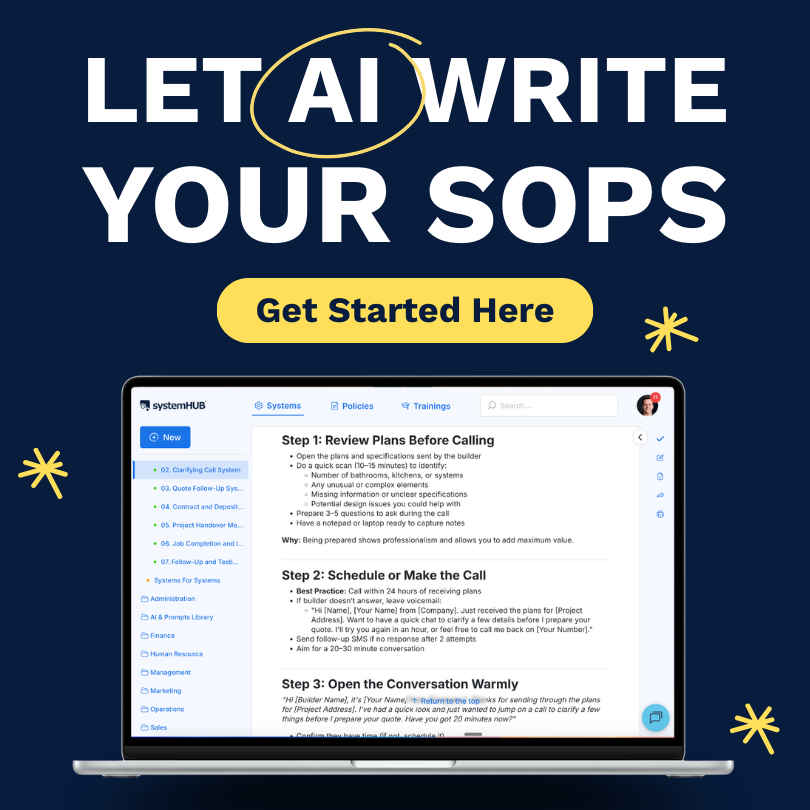
systemHUB is purpose-built to store, organise, and share your SOPs, policies, and training materials with your whole team.
Getting Your Team on Board With AI
The technology is the easy part. The harder part is getting people comfortable with it.
Dale recommends starting with education. Run short workshops. Demystify what AI actually is. Most people think AI begins and ends with ChatGPT, but that’s just one small piece of a much bigger picture. Show them real examples of where AI has made a difference. Once people see it solving a problem they recognise, the fear starts to drop.
Then involve your team directly. Ask them what tasks are boring, repetitive, or time-consuming. They know better than anyone where the bottlenecks are. When the team is part of the conversation, adoption goes from something imposed to something invited.
Roll things out gradually. Start with low-risk projects. Let the wins build confidence. And before you go too far, set clear policies around responsible use. What data can go into AI tools? What can’t? Where do the guardrails sit?
Dale is clear on one point: AI should never replace human review. Hallucinations happen. Bias exists in models. Every output needs a human set of eyes before it goes anywhere. The goal isn’t to replace your team. It’s to free them for higher-value work.


Ready to systemise your business yourself?
The Business Systems Accelerator gives you systemHUB, step-by-step training, and 90+ templates in one DIY package. Built for teams of 3–40.
You don’t need to overhaul your business to start with AI. Pick one process. Document it. Test an AI tool against it. The technology is only getting better, and the businesses that get the most from it won’t be the ones that moved fastest. They’ll be the ones that had their systems in place first.