Key Takeaways
- You can document business processes fast by recording the task, transcribing it, and letting AI (like systemHUB) turn it into a structured SOP in minutes.
- There are three methods: draft from scratch with AI prompts, tidy an existing process, or use the transcript-to-process method.
- A quality SOP includes a trigger, step-by-step instructions, supporting notes, and completion criteria. systemHUB builds this structure automatically.
- The real win isn’t the document itself. It’s the principle: document once, delegate forever.
- Systems compound. One documented process frees you up to document the next, building momentum across your team.
You can document business processes fast by recording your team doing the task, transcribing the video, and letting AI convert that transcript into a finished SOP. What once took hours now takes minutes.
Here’s the problem most business owners face: you know you need systems. You’ve probably said it a hundred times. But the moment you sit down to actually document something, the whole thing grinds to a halt. Writing SOPs is tedious. It takes forever. And you’ve got a business to run.
The good news is that AI has completely changed how this works. Tools like systemHUB now let you skip the blank page entirely. You no longer need to spend hours typing out every step, formatting documents, and revising drafts. There’s a faster way. Actually, there are three.
Why Process Documentation Stalls (And How AI Changed Everything)
The traditional approach to documentation was brutal. You’d sit down with a blank document. You’d try to remember every step of a process you do on autopilot. You’d write it out, realize you forgot something, go back, and rewrite. Then you’d format it, add screenshots, and hope it made sense to someone else.
No wonder most business owners never finish.
But AI flipped this entirely. The SYSTEMology method has always been about extracting knowledge from the people already doing the work. But the documentation step used to be the bottleneck.

Now, instead of writing from scratch, you can record a task being done, transcribe it, and feed that transcript into an AI tool. Within seconds, you get a structured SOP with a title, overview, trigger, steps, and completion criteria. All you have to do is review it and make small tweaks.
Think of it this way: you’re not just creating instructions for humans anymore. You’re building the foundation for how your business operates. Every documented process becomes training material for your team and, eventually, for AI assistants that can help run your business.
3 Ways to Document a Process in Minutes
There are three main methods for fast process documentation. Each works best in different situations.
Method 1: Draft from Scratch with AI Prompts
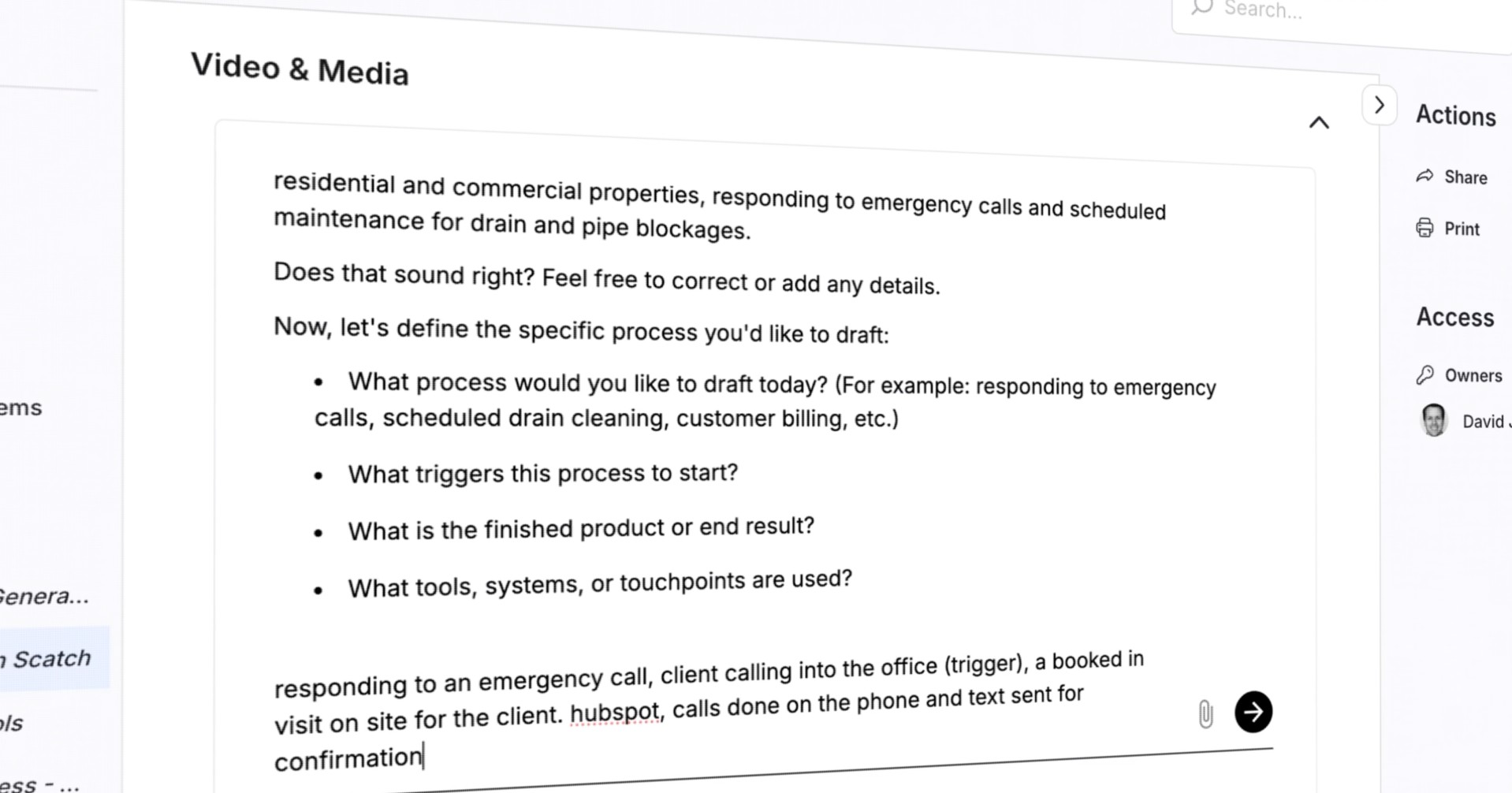
This is the simplest approach. You answer a few guided questions about what the process is, who does it, and what steps are involved. The AI builds out the structure for you.
This works best for straightforward, repeatable tasks you can describe off the top of your head. Think “how to process a refund” or “how to respond to a support ticket.” If you can explain it in a conversation, AI can turn it into a documented system.
Method 2: Tidy an Existing Process
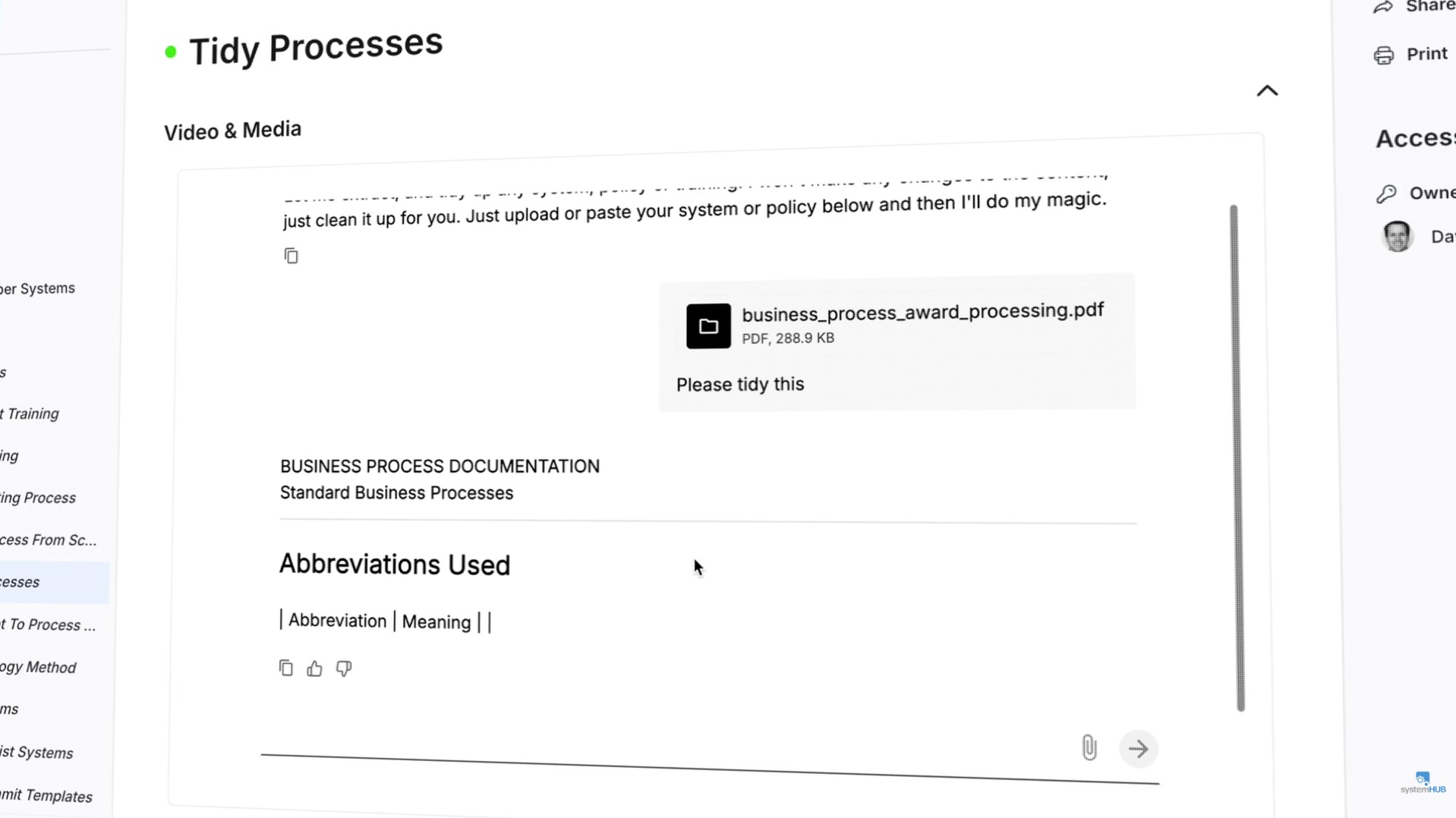
Already have messy notes? Maybe a half-written SOP sitting in a Google Doc somewhere? This method takes what you have and cleans it up.
AI fills in the gaps, adds structure, and formats everything so it’s actually usable. This is perfect for processes that exist in some form but never got finished properly.
Method 3: Transcript to Process (The Fastest Method)
This is where things get interesting. And it’s the method that saves the most time.
Here’s how it works: You record your knowledgeable worker doing the task. For computer work, use screen recording software. For tasks in the field, use your phone. Have them narrate what they’re doing as they go.
Then transcribe the recording. Most modern tools have built-in transcription, or you can use a dedicated service.
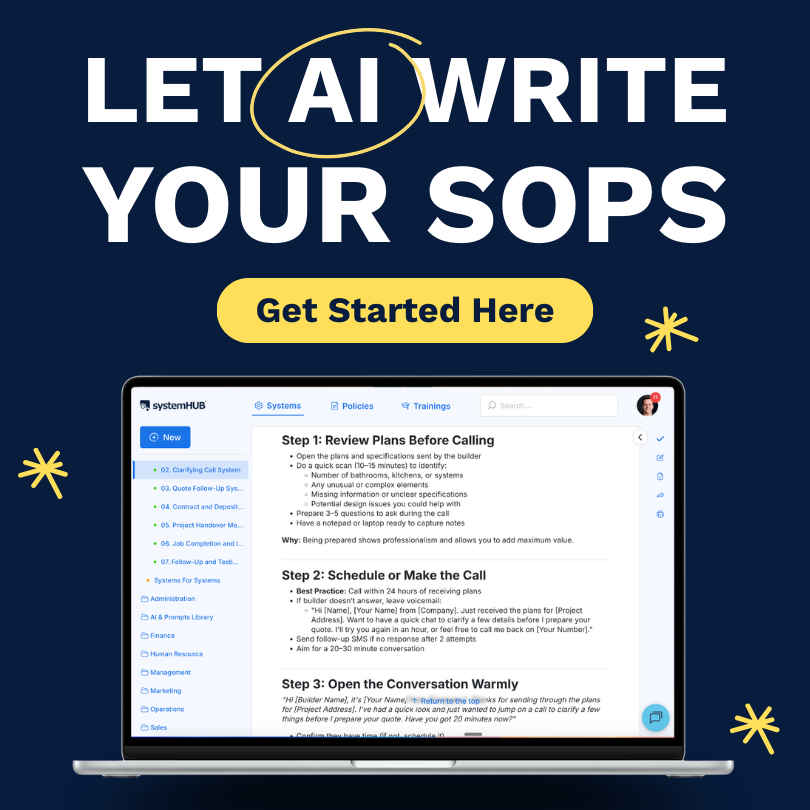
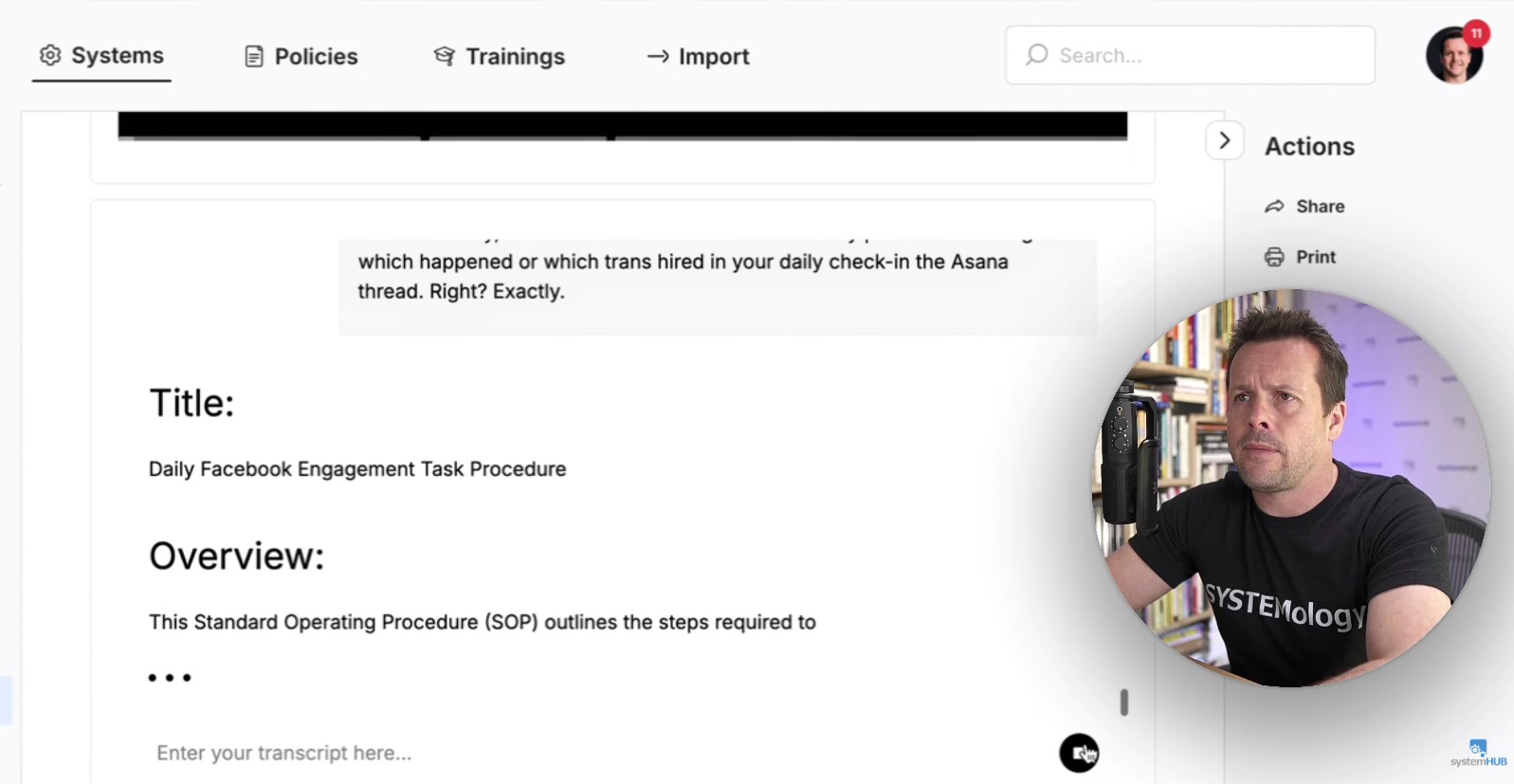
Finally, feed that transcript into systemHUB’s AI assistant. Within seconds, you get a complete SOP. The AI identifies the trigger, walks through each step, adds supporting notes, and includes completion criteria so your team knows when the job is done.
What a Quality SOP Looks Like (Automatically)
When systemHUB’s AI builds your SOP, it follows best practices automatically. You get a clear trigger that defines what kicks off the process. You get step-by-step instructions in logical order. You get supporting notes that add context. And you get completion criteria so there’s no confusion about when the task is finished.
You can also attach the original video directly to the system. That way, visual learners on your team can watch it while following along. systemHUB even lets you generate a shareable link or QR code, so field workers can scan and access the process from their phone when they need it most.
The “Document Once, Delegate Forever” Principle
Every hour you spend answering the same question is an hour you don’t get back. Every time someone asks “how do I do this?” you’re pulled away from the work only you can do.
But when you document a process once, you can delegate it forever. That’s the real win. It’s not about having a nice manual. It’s about getting your time back.
And here’s the thing: systems compound. Document one process, and you free up time to document the next. Build momentum with quick wins, and your team starts to see the value too. Before long, you’ve got an operations manual that actually works.
If you want to go deeper, the SYSTEMology book walks you through the complete framework for building a systems-driven business. And if you’re ready to see how fast this really works, give systemHUB a try.