Hats off to you, entrepreneur.
You set out to grow your business on your own terms. Independence. A better income. The freedom to build something meaningful.
Then reality hit.
The U.S. Small Business Administration reports that roughly 500,000 businesses launch every year, and about the same number close their doors. One in three won’t make it past two years. Half are gone within four.
But here’s what the statistics miss: most of those failures aren’t caused by bad products or weak markets. They’re caused by a lack of systematic infrastructure. Smart entrepreneurs with great ideas fail because they never stop working in their business long enough to build the systems that let them work on it.
This 10-step blueprint, based on the SYSTEMology methodology, shows you how to grow your business without burning out. These aren’t theories. They come from real businesses that made the shift from owner-dependent chaos to scalable, profitable operations.
What’s in this article:
- What Growing a Business Really Means
- Step 1: Get Off the Treadmill
- Step 2: Map Your Critical Client Flow
- Step 3: Assign the Right People
- Step 4: Extract Knowledge
- Step 5: Organise Your Systems
- Step 6: Get Team Buy-In
- Step 7: Track the Right Numbers
- Step 8: Hire for Systems Fit
- Step 9: Scale Beyond the Core
- Step 10: Keep Improving
- The Systems Champion Role
- Your 90-Day Action Plan
- FAQ
What “Growing a Business” Really Means (And Why Most Owners Get It Wrong)
Growing a business doesn’t mean more hours and bigger problems. It means building systematic capacity that lets you scale without a proportional increase in chaos.
Gary McMahon learned this the hard way at Ecosystem Solutions, his ecological consulting firm. Despite growing demand, Gary found himself working 100 to 110 hours per week. His health suffered. Family time vanished. Work quality dipped.
“I was the quintessential bottleneck,” Gary explained. “I hired staff and tried to expand, but I was still going at the same rate.”
Gary’s business was successful by revenue standards. But success without systems just creates bigger problems, not sustainable growth.
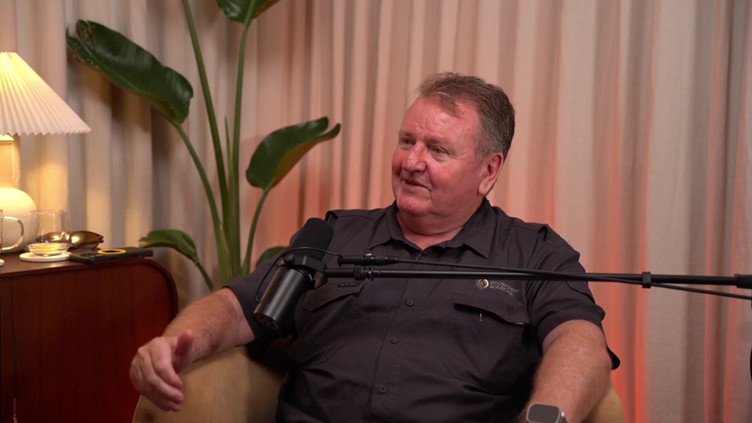
The shift happened when Gary discovered SYSTEMology. Through step-by-step implementation of its seven-stage framework, his profitability increased by approximately 80 percent. And he took his first three-week holiday in his entire working life.
“Peace of mind,” Gary said when asked what running a systemised business feels like. “It’s like I’ve lost fifty kilos! And I’ve got a life. It’s bizarre.”
Systems don’t limit growth. Missing systems do.
Step 1: Get Off the Treadmill
The biggest growth constraint in most businesses isn’t the market. It’s the owner. When every decision runs through you, growth hits a ceiling.
Mike and Aimee Hamilton experienced this at Inception Websites, their digital marketing agency serving chiropractors. Growth spiked from 3 to 4 new clients per month to 30. They had to pause advertising repeatedly because they couldn’t keep up. “We would be losing business just because we couldn’t handle the customers properly,” they explained.
The solution wasn’t working harder. It was building systematic capacity that could scale with demand. Once they documented their processes the SYSTEMology way, they kept advertising running for an entire year without stopping.
Action: Map every decision and task that requires your personal involvement. Those are your biggest improvement opportunities.
💡 Tip: Write down every question your team asks you over the next five working days. The most repeated questions point directly to the first systems you need to build.
Step 2: Map Your Critical Client Flow
Before you can grow your business, you need clarity about how it creates value today.
The Critical Client Flow (CCF) is a SYSTEMology concept that maps every step from customer inquiry to final delivery, for one target client and one core product. This single exercise reveals where bottlenecks hide and where growth typically stalls.
Most business owners think they know their process. They don’t. When the actual journey is documented on paper, the gaps become obvious. Mike and Aimee’s CCF revealed exactly why scaling to 30 new clients per month had created chaos. Onboarding, project management, and delivery weren’t designed for volume.
As David Jenyns explains: “One client, one product, one journey. Document that and you have a CCF.”
Action: Download the Critical Client Flow template and map your primary revenue source. Capture what you’re currently doing, not what you wish you were doing.
Step 3: Assign the Right People
Here’s an uncomfortable truth David Jenyns emphasises: the business owner is usually the worst person to document systems. This isn’t a criticism, it’s a liberation. Owners are visionaries, built to chase the next strategic move, not write procedures.
The SYSTEMology approach calls this Stage 2: Assign. Identify which team members already do specific tasks well, and assign them the responsibility of documenting those processes. The owner’s role is to approve and oversee.
Ryan Stannard, owner of Stannard Family Homes (a $15 million custom home builder in Adelaide), learned this first-hand. Ryan started as a carpenter and built the business from the ground up. The real shift came when his daughter Eryn took over as the company’s Systems Champion.
“I’m just a knock-about bloke,” Ryan says. “I got expelled from school when I was 14. Started banging nails that day with my dad.” His systems-driven approach turned a hands-on trade business into a scalable operation that runs while he takes seven-week holidays.

How much is the chaos in your business actually costing you?
Owner bottlenecks, repeated mistakes, and inconsistent delivery all carry a real dollar figure. The free Cost of Chaos Calculator puts a number on the waste we just described, so you can see where systems will have the biggest financial impact.
Step 4: Extract Knowledge from Your Best Performers
Every business already has great systems. They just exist inside people’s heads instead of on paper.
Stage 3 of SYSTEMology is Extract. Find the person who does a task to the highest standard, then record how they do it.
Kane, a Systems Champion at PorterVac (a gutter cleaning company), faced a tricky challenge: how do you document processes that happen two stories up in the air when you don’t have any hands free? His solution? A GoPro strapped to his head. He followed tradespeople on their rounds, capturing safety checks, client conversations, and equipment setup on raw video.
As David Jenyns notes in the Systems Champion book: the extraction doesn’t need to be polished. It needs to be real. A video recording of your best performer is worth more than a formatted document nobody follows.
Action: Pick your most important revenue-generating process. Ask the team member who does it best to record themselves completing it. That raw recording becomes the foundation of your first documented system.
Tip: Don’t try to perfect the system during extraction. Capture how things are done right now. Improvement comes later, in the Optimise stage.

Step 5: Organise Your Systems in One Place
A system that nobody can find is a system nobody follows.
Stage 4 of SYSTEMology is Organise. Once knowledge is extracted, it needs a central home every team member can access. This could be a shared drive, a wiki, or a dedicated platform built for the purpose. The key principle: make following the system easier than working around it.
David Jenyns recommends organising systems by department (marketing, sales, operations, finance, HR, management) and linking each documented process to the task where it gets used. When someone is assigned a task, the relevant system sits right there.
Action: Choose your systems management tool. Even a shared Google Drive folder works to start. Browse systemHUB’s free SOP templates if you want a head start.
Step 6: Get Your Team to Follow the Systems
Documentation without adoption is just paperwork.
Stage 5 of SYSTEMology is Integrate, where many businesses stall. Alison Rogers, founder of Vocal Manoeuvres Academy, initially resisted. Working through her Critical Client Flow, she pushed back on the simplicity: “It’s too simple. It’s just collecting money.”
Once Alison committed and brought on a dedicated Systems Champion, results followed. Within six months, profitability improved measurably. “We all talk CCF and DRTC and SAS and MBS now,” Alison shared. “I’m able to replicate successful processes for every service we offer. Fast, functional, and fun.”
The goal isn’t robotic compliance. It’s consistent excellence, delivered by anyone on your team.
Integration requires three things: clear communication about why systems matter, training on how to follow them, and visible accountability so the new way sticks.
Action: Introduce your first completed system to the team. Have someone who wasn’t involved in creating it try to follow it. Their feedback becomes your revision list.
Step 7: Track the Numbers That Predict Growth
You can’t grow your business by gut feeling. Systems-driven businesses measure what matters.
David Jenyns highlights six key growth indicators: marketing reach, inquiry conversion rates, sales conversion rates, average transaction value, repeat purchase frequency, and profit margins. Here’s where the maths gets interesting. According to the Systems Champion book, a 10 percent improvement in each of these metrics compounds dramatically. A business earning $250,000 in annual profit can reach over $400,000 (a 61 percent increase) with modest, systematic improvements across all six areas. No single dramatic change required.
Action: Identify your six key growth metrics. Establish baseline measurements this week. Build a simple dashboard that tracks progress monthly.
Where do your business systems stand right now?
Before you can grow, it helps to know your starting point. The free System Strength Test scores your current level of systemisation and shows you exactly where to focus first.
Step 8: Hire for Systems Fit
Growing your business means growing your team. And the people you hire will either reinforce your systems or undermine them.
One business owner who implemented SYSTEMology shared her hiring shift: “I’m actually only hiring tech-savvy people now. Most of my support staff are under thirty because they’re adaptable, they’re used to change, and they don’t know what they don’t know.”
Rather than trying to change people who resist process-driven work, select people who naturally fit that culture. Update your position descriptions to include language about “following documented processes” and “thriving in structured environments.” Ask interview questions that reveal systematic thinking: “How would you approach learning a new process?” or “Tell me about a time you improved an inefficient workflow.”
Action: Rewrite one position description to attract candidates who value structure and process. Test new interview questions on your next hire.
Step 9: Scale Beyond the Core
Stage 6 of SYSTEMology is Scale. Once your Critical Client Flow systems are in place, it’s time to widen the net.
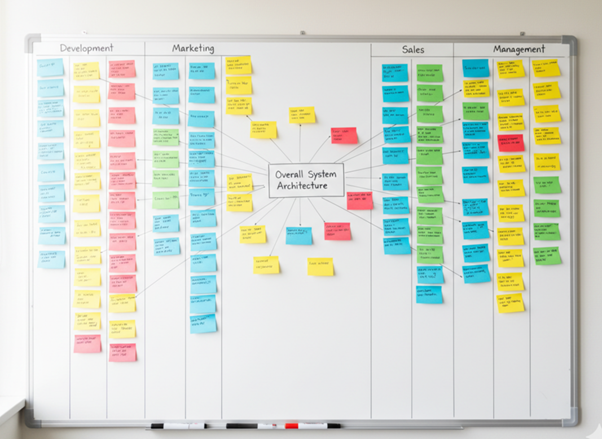
Every business has supporting systems outside the core revenue process: finance, HR, management meetings, reporting, quality assurance. David Jenyns recommends identifying 15 to 20 mission-critical systems across all departments, then working through them using the same Define-Assign-Extract-Organise process.
As Mike Hamilton from Inception Websites puts it: “When we have time to be creative, we grow ten times faster than when we’re stuck in the everyday jobs.”
Action: List the top 3 to 5 systems outside your CCF that, if documented, would free up the most time or prevent the most errors.
Step 10: Keep Improving
The final stage of SYSTEMology is Optimise. Growing your business isn’t a one-time project. It’s an ongoing discipline.
This stage requires counterintuitive thinking. You must slow down to speed up. Systematic implementation takes time before showing results, and the real payoff comes when multiple systems layer together, each saving time and compounding efficiency. That lag is where most business owners lose focus and slip back into firefighting.
Alison Rogers from Vocal Manoeuvres Academy experienced this directly. After initial resistance, she committed. “I’m watching that profitability climb up and I’m able to tweak a few things that are going to see significant improvements in our productivity,” she shared. “There’s been a significant improvement in our financial profitability even in the six months of doing the program.”
Action: Commit to 90 days of systematic implementation before evaluating results. Document small wins along the way.
Ready to stop being the bottleneck and start building a business that runs without you?
The SYSTEMology book lays out the complete seven-stage framework Gary, Ryan, Alison, and hundreds of other business owners have used to reclaim their time and grow profitably.
The Systems Champion Role
Most owners know systems-driven businesses are better businesses. Yet systemisation efforts stall all the time. The missing piece? The right person driving implementation forward, day after day.
David Jenyns calls this role the Systems Champion: a dedicated team member (or hire) who owns the documentation process, freeing the owner to focus on vision and growth.
Alison Rogers resisted the idea at first. “I’ve got to recruit and I’ve got to interview. I don’t have time for this.” After a few more weeks of trying herself, she gave in and used SYSTEMology’s plug-and-play job ad template. “I swiped it completely,” Alison admits with a laugh. “I just filled in the blanks with my business name, and it snagged me the most incredible Systems Champion.”
Eryn Stannard at Stannard Family Homes tells a similar story. Starting in the selections department, she grew into the Systems Champion role and eventually became assistant manager, all by building and maintaining the company’s systems.

Qualities to Look For
- Exceptional organisational ability
- Natural systematic thinking
- Strong communication skills
- Ability to extract knowledge through questioning
- Persistence with diverse team personalities
You don’t need to do this alone. In fact, you probably shouldn’t.
Your 90-Day Action Plan to Grow Your Business
Days 1 to 30: Foundation
Map your Critical Client Flow for your primary revenue source. Select the first system to document, something that directly impacts customer experience or profit margins.
Deliverable: Completed CCF map and first system identified.
Days 31 to 60: Build
Document your chosen system with input from your best team member. Use video for complex processes, checklists for routine tasks. Train your team. Measure baseline performance.
Deliverable: One fully documented system, trained team, and baseline metrics.
Days 61 to 90: Expand
Begin documenting secondary systems. Identify a potential Systems Champion within your team (or plan to hire one). Create a roadmap for next quarter.
Deliverable: Multiple documented systems, an identified Systems Champion, and a plan for continued growth.
Want to uncover $50,000+ in hidden business savings?
Our proven process has helped hundreds of business owners identify and reclaim thousands in lost annual profits.
FAQ: Growing Your Business with Systems
What’s the difference between regular business growth and systematic business growth?
Regular growth often creates bigger problems and more complexity. Systematic growth builds capacity that scales without proportional increases in chaos or owner dependency.
How long does it take to see results from systemising a business?
Foundation systems typically show results within 90 days. Full cultural transformation takes 12 to 18 months. Gary McMahon at Ecosystem Solutions achieved an 80 percent profitability increase through sustained commitment.
Can small businesses really implement systems without creating corporate bureaucracy?
Yes. SYSTEMology was built for small businesses with 3 to 50 team members. The approach starts with just 10 to 15 core systems, not hundreds.
What if my team resists following documented processes?
Start with naturally organised team members who will embrace the change. Use early wins to demonstrate benefits before expanding to resistant members. For future hires, recruit for systems-minded thinking from the start.
Should I hire a Systems Champion or try to build systems myself?
David Jenyns recommends that business owners avoid leading the documentation effort personally. A dedicated Systems Champion accelerates the work while letting owners stay focused on vision and strategy.
How do I know if my growth strategies are actually working?
Track both leading indicators (system adoption, process improvements completed) and lagging indicators (profit margins, customer satisfaction, owner time freedom).
What’s the biggest mistake businesses make when trying to grow with systems?
Trying to document everything at once instead of starting with revenue-generating processes first. The Critical Client Flow narrows your focus to the systems that matter most.