Why do most business owners start systemising with great energy, only to stall a few weeks later?
It’s not a lack of tools. It’s not a lack of motivation. It’s a missing role.
Every business that has successfully implemented the SYSTEMology framework has one thing in common: a dedicated Systems Champion. This is the person who extracts what your best people are doing, turns it into documented processes, and gets the rest of the team following them.
Without a Systems Champion, systemisation stays on the to-do list. With one, it actually gets done. This guide covers what the role involves, the five qualities that separate a great champion from a poor fit, where to find one, and proof from real businesses that have made it work.
What Is a Systems Champion?
A Systems Champion is the person responsible for extracting, documenting, organising, and managing your business systems. They bridge the gap between the owner’s vision and the team’s daily execution.
This isn’t an operations manager. It’s not a project manager. And it’s definitely not the business owner wearing another hat. The Systems Champion is a dedicated role focused entirely on systemisation.
Their job is to sit down with the people who know how things work (your knowledgeable workers), capture what they do, turn it into repeatable steps, and store it where the whole team can access it. Then they make sure everyone actually follows the process.
Why the Business Owner Shouldn’t Create Systems
This is where most systemisation efforts go wrong.
Business owners are visionaries. They think about how things should be, not how they are. When they sit down to document a process, they don’t capture what’s currently working. They try to redesign it. And that’s a completely different project.
SYSTEMology starts by capturing what your best people are already doing and making it consistent. McDonald’s doesn’t make a better burger. They deliver the same burger every time. That consistency is what your clients crave, and it comes from documenting reality, not redesigning it.
There’s also the intensity problem. Business owners read a book, listen to a podcast, watch a few videos, and get fired up. They start strong. But after a few weeks, the intensity fades and the project stalls. Systems don’t need intensity. They need consistency. A steady rhythm of documentation, week after week.
“I needed to clone myself. Without proper documentation, the business would always depend on me.”
— Ryan Stannard, Stannard Family Homes
Think of it like bookkeeping. At some point, every business owner hands off invoicing, bill payments, and reconciliations to a bookkeeper. Not because they can’t do it, but because it’s not the best use of their time. Systems work the same way.
Ready to define the role in your business?
Download the plug-and-play Systems Champion position description. It includes the key responsibilities, and the essential qualities to look for.
What Does a Systems Champion Actually Do?
Most owners assume the Systems Champion just writes SOPs. In reality, the role spans extraction, documentation, training, storage, and culture change. Here’s the full breakdown:
Extracting knowledge from team members. Systemisation is a two-person job. The knowledgeable worker performs the task while the Systems Champion captures it, usually via screen recording or video. The champion then turns that recording into documented steps.
Documenting and organising processes. Every system needs a home. The Systems Champion builds and maintains your central library of SOPs, checklists, and training materials in a tool like systemHUB.
Driving accountability and adoption. Documentation without adoption is just paperwork. The champion makes sure systems are visible, accessible, and actually being followed across the team.
Training team members. When a new system is created or an existing one is updated, the champion runs training sessions and supports the team through the transition.
Building a systems-thinking culture. The “champion” part of the title matters. This person advocates for systems across every department and gets buy-in from people who might resist change.
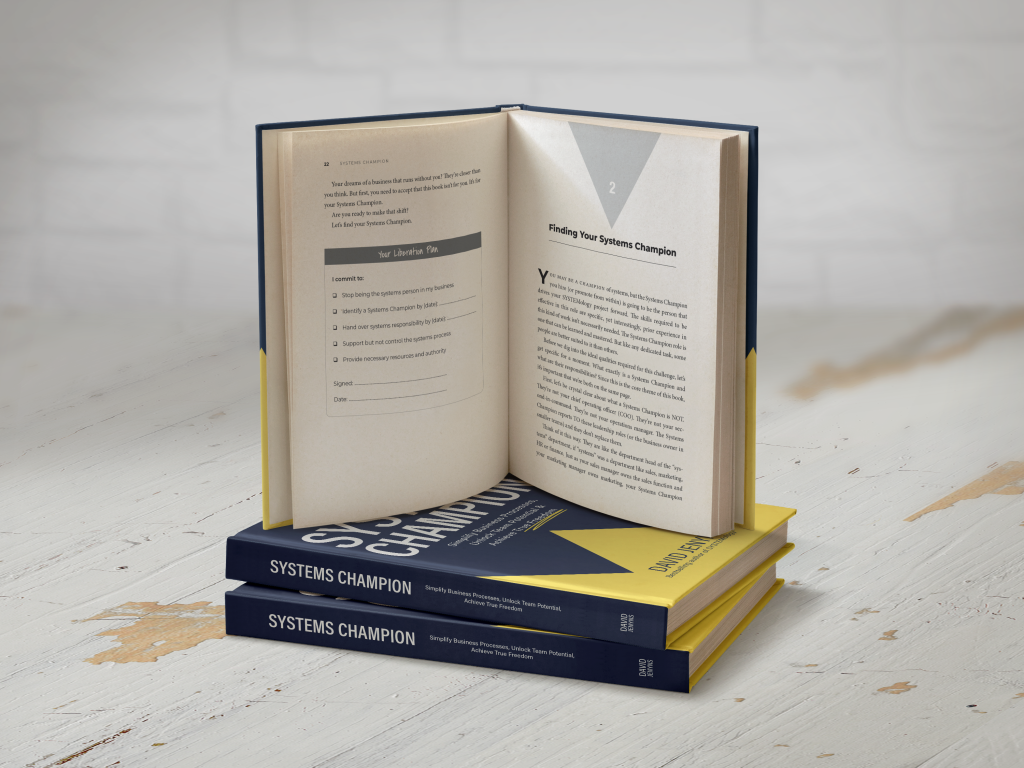
The complete guide to the Systems Champion role.
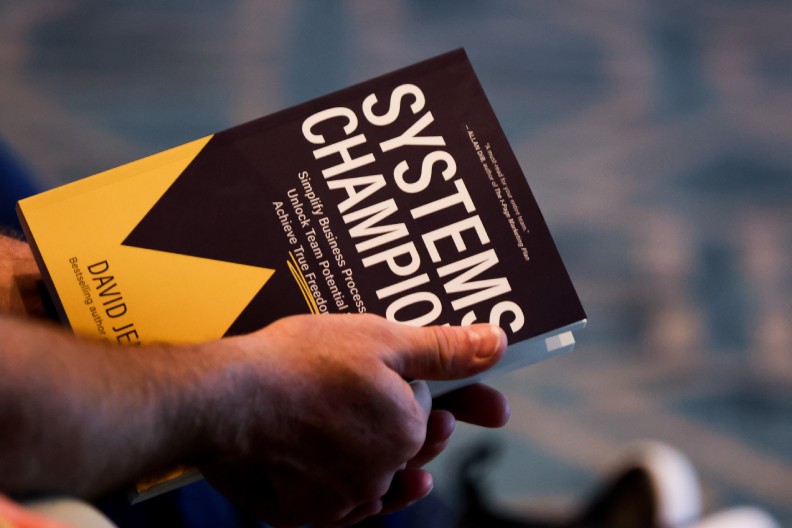
Systems Champion by David Jenyns covers everything from finding and hiring your champion to the step-by-step extraction process, now supercharged with AI. The book that turns the role into a career path.
Five Qualities to Look For
1. Organisational Skills and Detail Orientation
Order and structure are the foundation. A Systems Champion needs to be naturally organised with a sharp eye for detail. There’s no room for shortcuts in this role.
2. Strong Communication and Interpersonal Skills
They’ll work with everyone from senior leadership to entry-level staff. They need to be comfortable in both conversations and confident enough to gently push back when needed.
3. Curiosity and Problem-Solving Ability
During extractions, they need to ask the right questions to draw out the details. When roadblocks appear (and they will), they need to find creative solutions rather than waiting for someone else to step in.
4. Adaptability and Tech-Savviness
Screen recording tools, AI-assisted documentation, project management platforms, systems management software. The role touches technology at every step. Comfort with learning and using new tools is non-negotiable.
5. Leadership Potential (Without Needing a Title)
A Systems Champion doesn’t need to be a formal leader. But they do need the confidence to bring people along and convince reluctant team members to engage. There’s an almost entrepreneurial quality to the best champions.
Kaleb Grant at Lime Therapy is a great example. He started as a new-graduate occupational therapist with no systems background. His attention to detail and willingness to ask questions from a beginner’s perspective made him the ideal Systems Champion for the allied health practice.

Where to Find Your Systems Champion
You might already have the right person on your team. Look for whoever naturally keeps lists, organises shared files, and tidies up processes without being asked. That instinct matters more than experience.
If you don’t see that person internally, consider part-time or return-to-work hires. Parents returning to the workforce often bring corporate-level organisational skills and are looking for meaningful part-time work. This role can start at 10 to 15 hours per week.
Junior hires with fresh eyes can also be surprisingly effective. Inexperience becomes an advantage when the job is to document processes exactly as they happen, without the baggage of “how we’ve always done it.”
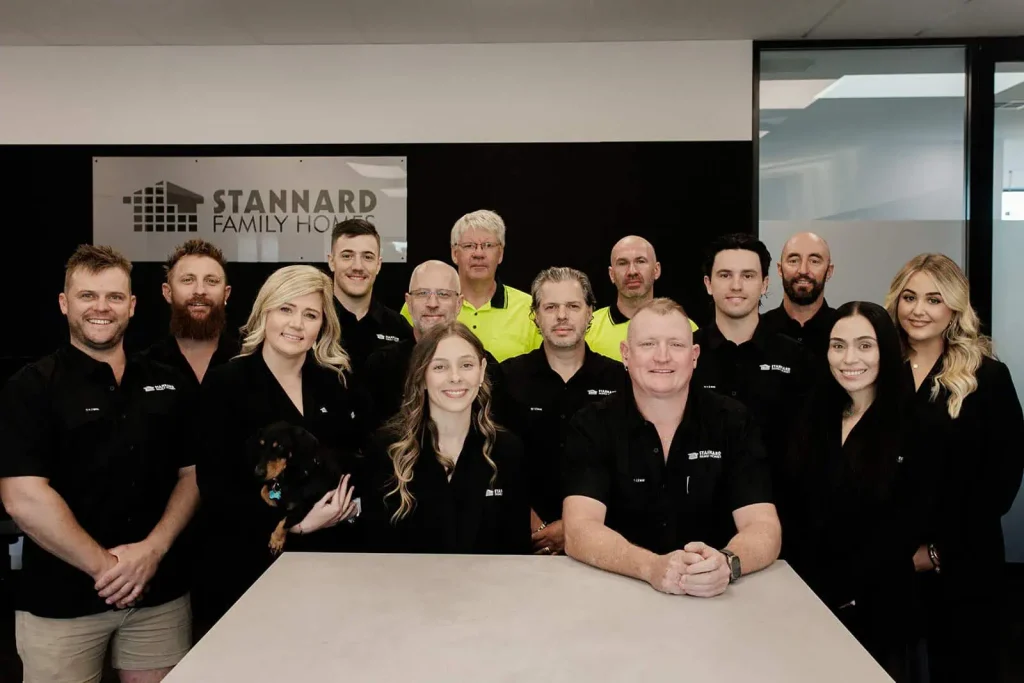
Eryn Stannard at Stannard Family Homes proves the point. She joined the family building business at 17, was left alone after her supervisor departed within three weeks, and took it upon herself to rebuild the systems from scratch. By 20, she had documented processes across selections, accounts, and HR as the company grew from 7 to 15 staff.
At minimum, allocate half a day per week to get started. A full-time champion drives faster results, but consistency matters more than hours.
“She now knows every intricate bit of the business because she’s been rewriting the systems manual. She’s not just documenting processes. She’s understanding how everything fits together.”
— Ryan Stannard on his daughter Eryn’s growth as Systems Champion
Systems Champions in Action
From property management to law to allied health, Systems Champions are producing measurable results. Here are five real examples.
Maddie Todd at Real Property Management Express (property management) inherited a business with 114% employee turnover and scattered documentation across multiple regions. Through systematic process standardisation, she cut turnover to 56% and brought consistency to the client experience.
Callie Saulsburry at Crow Estate Planning (law) helped scale the firm from 2 people to 15 across three locations in Tennessee and Kentucky. With documented systems in place, the firm is now positioned for multi-state expansion.
Alison Rogers at Vocal Manoeuvres Academy (music education) hired a Systems Champion using SYSTEMology’s plug-and-play job ad and position description. Within six months, the academy was performing at nearly every premier venue in Australia without the rest of the business grinding to a halt.
Kane at PorterVac (roof maintenance) started as an apprentice working out of the office. He became the Systems Champion and completely transformed the company’s operations.
“You don’t need someone with documentation experience. You need someone who’s open-minded, a good listener and a go-getter. The Systems Champion role can be a viable career path for ambitious employees.”
— Ryan Stannard, Stannard Family Homes
Common Objections (And Why They Don’t Hold Up)
“I don’t have the budget.” Start with half a day per week. The cost of not having systems (rework, mistakes, lost clients, owner burnout) is far greater than the investment in a part-time role.
“My business is too small.” If you have even one team member doing work you need replicated, you need a Systems Champion. The earlier you start, the easier it is.
“My business is too complex.” That’s exactly why you need someone dedicated to untangling it. Complex businesses benefit the most from documented processes.
“It’s too late. We’ve been running for years without systems.” It’s never too late.
Jeanette Farren at diggiddydoggydaycare started systemising two years before selling the business and credited documented systems as the key to getting top dollar from corporate buyers.

Ready to get your business systemised in 90 days?
Our team extracts, documents, and implements your core systems for you. No SOPs to write. No project to manage.
How to Get Started
- Identify your Critical Client Flow: the steps your business follows to attract, serve, and retain a client.
- Look at your current team for someone who fits the five qualities above.
- Give them protected time each week. Start with half a day and build from there.
- Equip them with the SYSTEMology framework and a tool like systemHUB to store everything in one place.
- Download the plug-and-play position description to make the role official.
Find Your Champion
Need one place for all your business systems?
systemHUB is purpose-built to store, organise, and share your SOPs, policies, and training materials with your whole team.