Shannon Smit founded SMART Business Solutions in 2007 with systems baked in from day one. Eighteen years later, her son Ryan walked in, automated his first eight-hour-a-week task, and asked the question every owner needs to plan for: “Have I just made myself redundant?” The answer shows why systemising has to come before AI.
systems-first
accounting, advice, lending
on a single automated task
“So what do I do now?”
Ryan Smit was twenty years old, three days a week into his second year of accounting, and he had just shown his mother the bot.
For weeks his job had been file noting. Every client call, every meeting, every action on behalf of a financial planning client had to be logged into three separate systems: FYI, Xplan, and Dash. The same note. Typed three times. Roughly three to five minutes a note, twenty notes a day, across four advisers and the admin team that supported them. The kind of task everyone groans about and no one volunteers for.
So Ryan automated it. His first bot. The work still took three to five minutes, but the computer did it now, unattended, while a human did something else.
Then he stood up, looked at his mother, and asked the question he could not stop thinking about.
“So what do I do now? Is there not enough work for me? Have I just reduced my own work hours, and therefore my wage for the week?”Ryan Smit, recounted by Shannon Smit, SMART Business Solutions
Shannon laughed. Then she gave him the answer that has shaped the next two years of the firm.
“No. We’ll find more work for you. We’ll automate other things.”
That exchange, repeated quietly in offices everywhere as AI lands in small business, is the fork. Most owners are not ready for the question. Shannon was. The reason traces back to a teenage shift behind a fast food counter.
McDonald’s at fourteen and nine months
Shannon got her first job at Rosebud McDonald’s the week she turned fourteen and nine months. The legal minimum age. She did not wait.
What she found behind the counter was not greasy work. It was an operating system.
“I absolutely loved systems and process. Became a crew trainer, was training everyone, then became a manager while I was at uni. I loved how everything had a checklist, everything had a system. Great systems create that great outcome. You get the burger looking the same, the fries looking the same. No matter which manager was working that day, you’d get the same result.”Shannon Smit, Director, SMART Business Solutions
She worked Rosebud, then Mornington, then helped open a new store. By the time she had finished university and joined one of the big city accounting firms, the McDonald’s pattern was already wired into how she thought about every business she touched. Document the work. Make it repeatable. Take the genius out of the individual and put it into the procedure, so the next person who walks in can deliver the same standard.
Building SMART, system by system
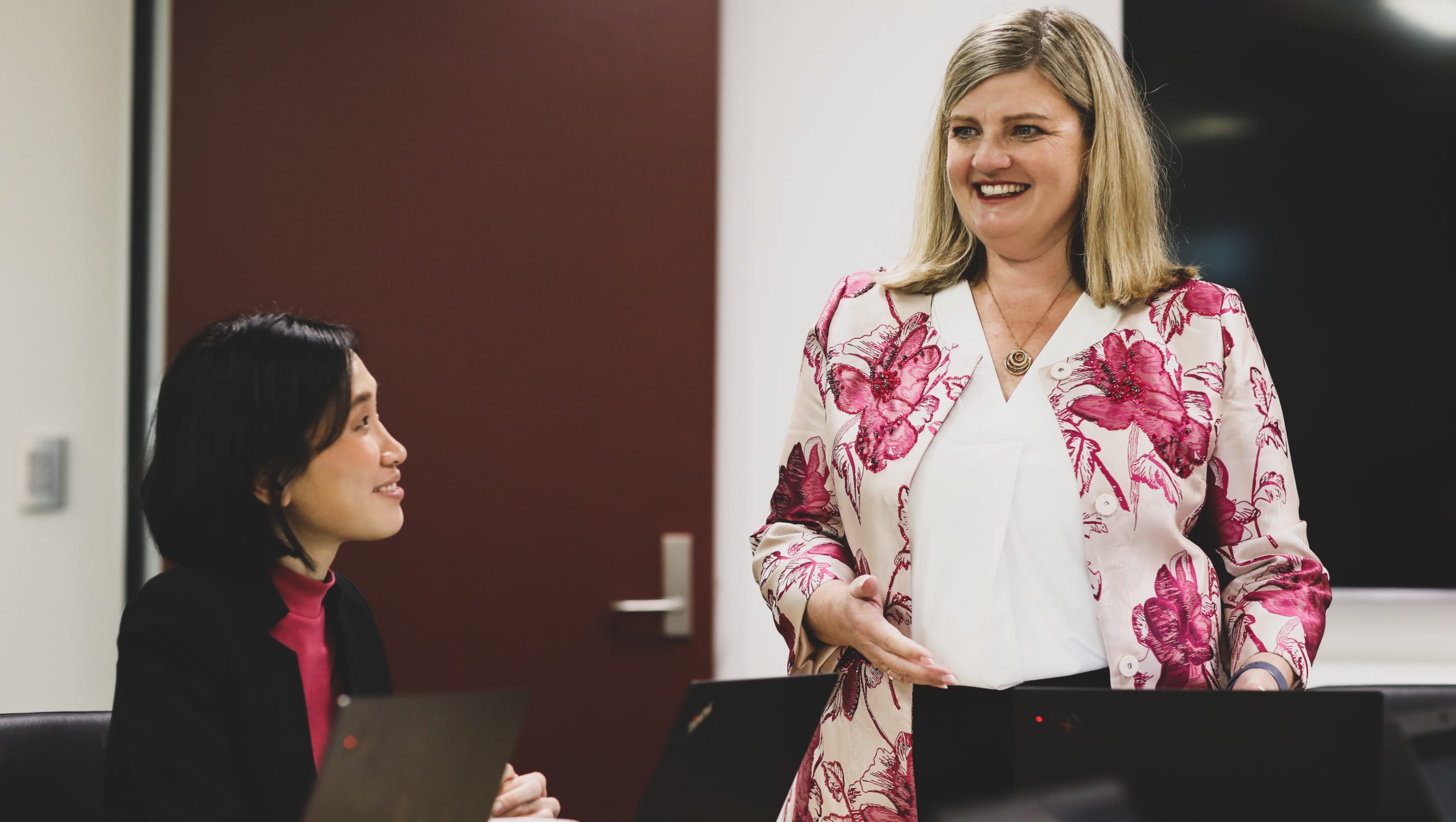
In 2007, two weeks after Ryan was born, Shannon left the big-firm corporate world and opened SMART Business Solutions from the spare room of her home. She started with accounting. Then she added financial planning, because clients kept asking her for advice she could not give without a separate licence. Then mortgage broking, because every time she referred a client out something fell through the cracks. Then SMSF, business consulting, estate planning, asset protection.
She never bought a practice. The firm grew organically, one client and one team member at a time, into the multi-service finance practice on the Mornington Peninsula that it is today.
Underneath the growth, the McDonald’s pattern was doing quiet work. Every new service got documented. Every new role got mapped. By the time she found systemHUB through a casual Google search around 2016, she had already been running her firm on checklists and walkthroughs for a decade.
“Once I document a process, there’s a sense of relief that comes across me. The process is now documented. Someone can follow it. If someone’s away, there’s a backup plan.”Shannon Smit
The Systems Champion they never planned to hire
Ryan was eighteen months into an aviation degree when he changed his mind. He came to his mum and dad and said he wanted to swap to accounting. He liked the logic, the maths, the way things stepped through a procedure.
Shannon was thrilled. But the Systems Champion role was not on the org chart.
He started in a support capacity around financial planning, three days a week alongside his university load. Within weeks, his analytical brain began to chafe against the way some of the firm’s processes were documented.
“Ryan would say to me, very directly, ‘This system isn’t good at all. This process makes no sense.’ And I’d say, ‘Okay, well if it makes no sense, go ask the person who runs it how they actually do it, and then update it.’ And he just kept doing that. Quizzing everyone. Saying, ‘I need to fix this.’ Eventually I said, ‘You are now the Systems Champion.'”Shannon Smit
Shannon tells her story at the Business Systems Summit, live in Melbourne, Australia.
The instinct turned out to be perfect. The skills business owners scramble to find in their first Systems Champion (the relentless questioning, the refusal to assume, the patience to step through a workflow click by click) were ones Ryan had picked up sideways. Some came from aviation, where you do not get to skip a step on a pre-flight checklist. Some came from a quieter and more controversial source.
“For years I dreamt about smashing his gaming computer, like most parents do. And now I’m like, you keep gaming. Those skills, after all these years, turn out to be really useful. Your gamers are going to be the best at automating your systems.”Shannon Smit
Ryan’s own view is that the defining trait of a good Systems Champion is one habit. “You really want to look for someone who’s asking ‘what if.’ A lot of people document what happens most of the time and stop there. But you have to include the edge cases, the things that go wrong. Otherwise the document falls over the first time something unusual happens.”
The first bot, and the question that came with it
Ryan picked file noting first because he hated it most. He had been doing it himself, manually, for the prior week’s client interactions. It was a job that scaled badly, that grew with every new planning client SMART signed, and that compounded across the four advisers and their support staff.
He used Microsoft Power Automate and Microsoft Copilot. (Security and compliance posture mattered more than the latest shiny tool from somewhere else.) The bot pulled the file note once, then pushed it into FYI, Xplan, and Dash without anyone touching the keyboard for the duration.
It saves roughly one hour per day per person on the planning team. Across a 20-person firm where multiple roles touch that workflow, that is over 1,000 hours a year reclaimed from one soul-destroying repetitive task. And it was Ryan’s first build. He has done many more since.
What stuck with Ryan was not the time savings. It was the question he could not stop asking: had he just made himself redundant? Most people who hand their boss a working automation carry that question silently. Ryan asked it out loud. Shannon’s answer is what made SMART different.
“I’m not trying to replace jobs. AI is not replacing people’s jobs. Someone using AI will replace someone’s job. That’s without a doubt. So we upskill everyone. I ask the team, what’s the most boring, tedious part of your job that you hate? Let’s automate it. Then you go and do something more exciting, like more client consulting, the work you actually trained for.”Shannon Smit
Plenty of firms put that line on a careers page. Meaning it requires holding the line in real time, the first moment a junior team member walks up holding a working bot.
When the team starts bringing tasks to the kid
Two team members opted out of the AI program after six months. Shannon trained the whole firm, sent people through external workshops, ran custom GPT training sessions internally, and flew a robotic process automation specialist over from Singapore to teach the team how to build their own bots. Even with all of that, two said the same thing in slightly different words: this is not for me.
Shannon does not dress that up. Change management at the firmware level of a business is hard. Some people do not want it. The fork is what happens with everyone else.
At SMART, what happened was that administrators, accountants, and advisers all started walking over to Ryan. Not to ask him to do their work for them. To ask him to look at the workflow they wanted automated next.
“Many of the team are saying, ‘Oh, Ryan, can you map out this process?’ Because they want to see what he thinks about the automation side. He’s gone in and automated things the administrators wouldn’t have thought to automate themselves. But that only works because we’d already documented those processes. You can’t automate something that you don’t fully understand.”Shannon Smit
Five or six SMART team members have been through (or are partway through) the Systems Champion Academy. None of that traces to a single decision. All of it traces to one habit that started behind a McDonald’s counter forty years ago.

Process first, then AI. In that order.
The thing every accounting firm owner wants to know right now is which AI tool to buy. It is the wrong question. Shannon’s answer is the one most consultants will not give them, because it does not sell software.
The reason Ryan could automate file noting is that the file noting process was already documented and standardised. The reason the team can now bring tasks to Ryan is that everyone agrees on what the task is in the first place. The reason a twenty-year-old can deliver a thousand hours of recovered capacity to a 20-person firm is that the foundation he built on was eighteen years of patient, unglamorous documentation work.
The biggest risk Shannon names is not the AI hype cycle. It is the one most owners refuse to plan for.
“The biggest risk a business owner has is a key person they’re heavily reliant on leaving tomorrow. Or, heaven forbid, getting hit by a bus. If you don’t have your business systemised, how much is your step back going to be while you build yourself up again? You need to systemise and document everything so that when you’re on leave, no one needs to call you. They follow the process.”Shannon Smit
That is the unglamorous case for systems. Then comes the glamorous one. “McDonald’s sells because of its systems and processes,” Shannon says. “Your business would be worth a lot more if you’ve actually got everything documented, so that maybe in retirement you can take holidays and the business is still running. You’ve got passive income. Start with the end in mind.”
The path between those two ideas (the bus risk, the saleable asset) is the same path: write it down, make it repeatable, then layer the automation on top. Not the other way around.
About SMART Business Solutions
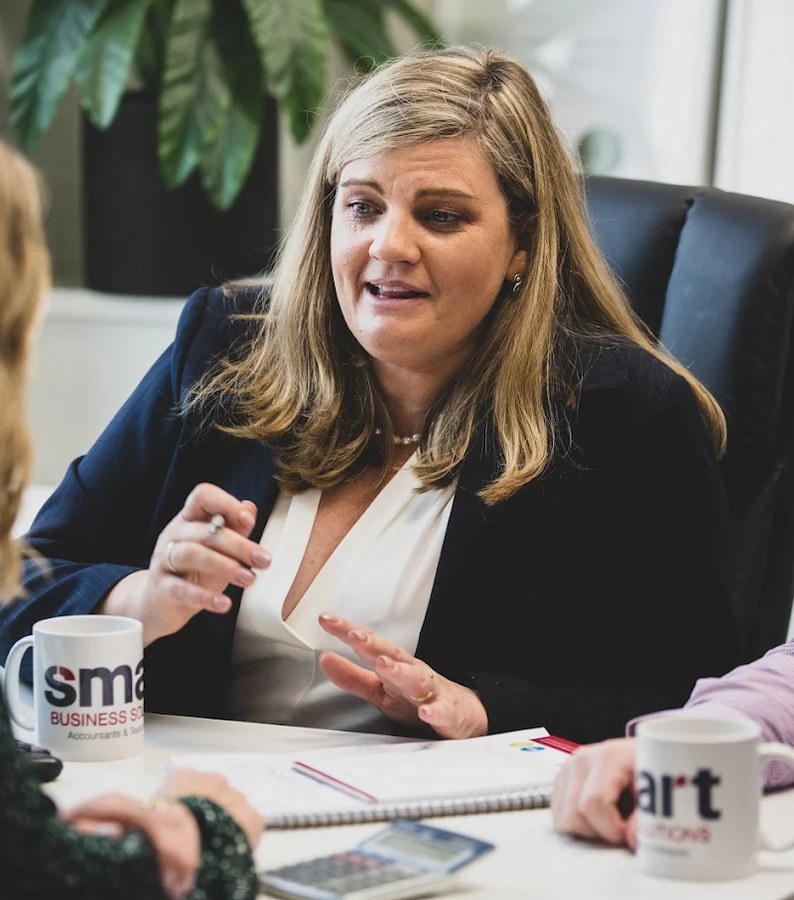
Founded by Shannon Smit in 2007, SMART Business Solutions is a multi-service finance firm on the Mornington Peninsula in Victoria, serving clients across accounting, financial planning, mortgage broking, SMSF, estate planning, and business advisory.
The firm was named 2024 Multiservice Firm of the Year at the Australian Accounting Awards, with earlier wins for Partner of the Year (Boutique Firm) in 2016 and Office Administrator of the Year in 2018. Shannon has been a systemHUB user since 2016, and the team runs the annual BITE finance and tech conference on the Mornington Peninsula. Visit smartbusinesssolutions.com.au.
(5+ graduates)

A closer look at SMART

Ready to build a business that runs the way SMART runs?
Shannon’s playbook is not exotic. It is decades of documenting one process at a time, hiring someone with the right questioning instinct, and then layering AI on top of work that was already standardised. The methodology she used is the same one taught inside the Systems Champion Academy.