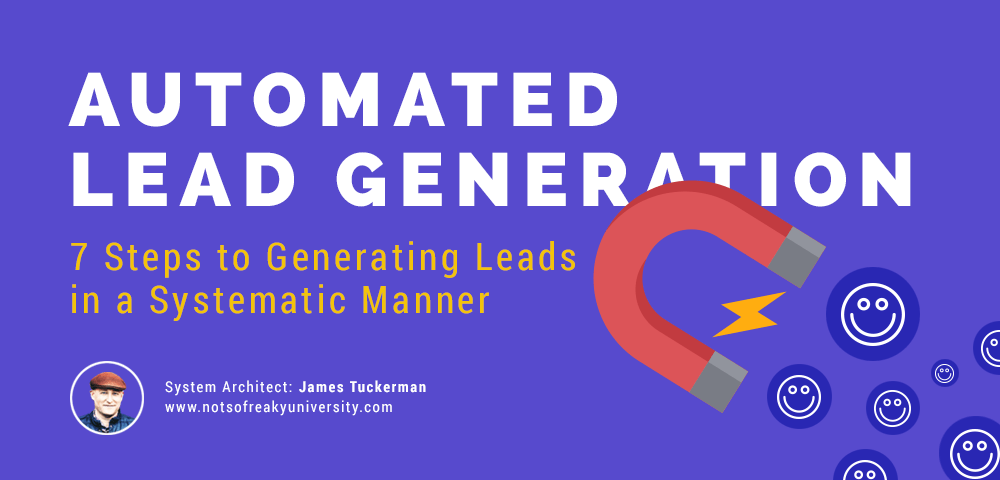
By James Tuckerman, SYSTEMology System Architect
James Tuckerman walks through the automated lead generation framework.
In one line: Automated lead generation uses software, sequences, and AI to do the manual work of attracting, qualifying, and nurturing leads, so your time goes into closing deals instead of chasing cold ones.
Leads are the lifeblood of any business. Generating them manually is where most owners get stuck, burning hours on outreach that never converts while their best work sits untouched. The fix is not more hustle. It is a system that runs whether you are working or not.
This is a 7-step framework for building one. You can roll it out in a fortnight with tools you probably already pay for, and it scales the same way whether you are a solo consultant or a 50-person team.
What is automated lead generation?
Automated lead generation is the process of using software, content, and AI tools to attract, capture, score, and nurture potential buyers with little or no manual effort per lead. Instead of you cold-calling or individually emailing prospects, an automated system handles the repetitive work and only involves a human at the moments that actually matter: the conversation, the proposal, the close.
A working automated lead generation system does five things without you touching it:
- Attracts the right type of prospect via content, ads, or partnerships
- Captures their details through a form, chatbot, or tool
- Qualifies them using logic or AI scoring
- Nurtures them with an email or SMS sequence
- Notifies your team (or routes to a calendar) when a lead is ready to buy
Why automate lead generation?
1. It gives you back the hours you would have spent chasing
Automating the top of the funnel frees the business owner from the most time-hungry, least strategic part of sales. Those hours go back to closing, delivery, or building the business.
2. It improves the buyer’s experience
Good automation is personalised, timely, and useful. Leads get the right information at the right moment, not a generic pitch. Done well it feels less like being marketed to and more like being helped.
3. It lets you test, learn, and compound
Manual outreach cannot tell you why something works. Automated systems do. Every subject line, landing page, and nurture sequence becomes a data point, and your results compound week over week as you improve them.
Manual vs Automated Lead Generation
| Area | Manual | Automated |
|---|---|---|
| Time per lead | High. Every touch is hand-crafted | Low. Sequences do the repetitive work |
| Consistency | Variable, depends on who is doing it | Consistent by design |
| Scaling | You hire more people | You refine the system |
| Lead scoring | Gut feel | Rules or AI scoring against defined criteria |
| Nurture | Follow-up falls through the cracks | Every lead gets the same high-quality follow-up |
| Data | Lives in a rep’s head or a spreadsheet | Central, measurable, improvable |
| Cost per qualified lead | Tends to rise as you grow | Tends to fall as you optimise |
| Owner involvement | Required daily | Required weekly to review and tune |
The 7-Step Automated Lead Generation System
Build these in order. Each step depends on the one before, and skipping ahead is the reason most automation projects fail.
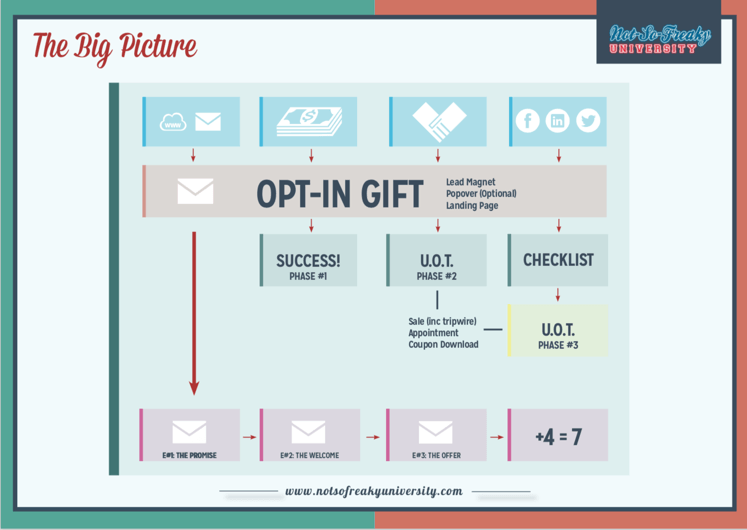
Define the lead you actually want
Get painfully specific about who you are trying to attract. Industry, company size, role, revenue, location, urgency. This is not a branding exercise. It is the filter every other step in the system uses. If you cannot describe your ideal lead in three sentences, you do not have an automation problem yet, you have a positioning problem.
Build a magnet worth opting in for
A lead magnet is anything of value your ideal lead will hand over their contact details to receive. Checklists, calculators, templates, scorecards, short video trainings, and interactive tools all work. The test is simple: does this solve a real problem my ideal lead is searching for this week? If yes, it will pull leads. If no, swap it.
Drive traffic to the magnet
No traffic, no leads. The three durable channels are SEO, paid ads, and partnerships. Pick one and go deep before adding a second. Social organic is worth running in the background, but do not rely on it as your main traffic engine. It is too unpredictable.
Capture with a form that does the right work
Keep the form short. Ask only what the next step of qualification needs. Five fields beats fifteen. Every extra field cuts conversion without proportionally improving lead quality. If you need deeper information, collect it in a follow-up rather than at the gate.
Qualify automatically
Use lead scoring or AI classification to sort new leads into buckets: ready-to-buy, needs-nurture, not-a-fit. Most CRMs will do this with simple rules based on form answers plus behaviour signals (opens, clicks, pages viewed). AI tools can now read responses and categorise them with surprising accuracy. The point is that humans should never touch not-a-fit leads.
Nurture with a sequence that sounds like a person
Set up a 5 to 9 email sequence that delivers the lead magnet, explains how you solve the lead’s problem, and builds trust. Length depends on deal size: a $200 product needs 3 emails, a $20,000 engagement probably needs 9 plus supporting content. Write each email so it could stand on its own, as if a person wrote it to one lead, because eventually one will open only one.
Hand to sales or to a calendar
When a lead scores high enough, the system should notify a human or, better, drop a calendar link straight into the lead’s inbox. Reduce friction to zero between intent and conversation. This is the single biggest leak point in most lead generation systems, and the easiest to fix.
Where AI changes the game
A lead generation system from a few years ago looked like forms, sequences, and a CRM. Today’s system uses all of that plus a layer of AI that simply was not possible before:
- Conversational capture. Chatbots now qualify leads through natural conversation instead of static form fields, raising completion rates and collecting richer context.
- Semantic scoring. AI reads open-ended form answers (what is your biggest challenge?) and scores intent based on language, not just keywords.
- Personalised sequences. Instead of one sequence for everyone, AI writes custom nurture emails that reference the specific problem a lead described at opt-in.
- Research pre-enrichment. Tools like Apollo, Clay, and ZoomInfo pull company and person data the moment a lead opts in, so your team never wastes time on cold research.
You do not need to rebuild the 7 steps. You just need to upgrade specific bits of each step with AI tools that already plug into the stack you have.
Start with the Critical Client Flow
Before you automate anything, you need a clear picture of how a lead becomes a delighted client. Our free Critical Client Flow template gives you the canvas. Half an hour, total clarity.
Automated Lead Generation FAQ
What is the difference between lead generation and automated lead generation?
Lead generation is the broad activity of attracting potential buyers. Automated lead generation narrows it to the systems that do this work without a human performing each step. You still design it and improve it, the software just runs it.
Can you fully automate lead generation?
You can fully automate the top of the funnel (attract, capture, qualify, nurture) and the first notification to sales. You should not automate the final human conversation, the proposal, or the close. That is where trust is built and deals are signed.
How do I automate lead generation?
Follow the 7-step system above: define your ideal lead, build a magnet, drive traffic to it, capture details with a short form, qualify with scoring, nurture with a sequence, and hand ready leads to a human or a calendar link. Build each step before moving to the next.
What tools do I need for automated lead generation?
A CRM (HubSpot, Pipedrive, ActiveCampaign), an email sequence tool (often the same), a landing page builder, a form or chatbot, and optionally an AI enrichment tool. Most businesses already pay for three of these and can consolidate rather than buy more.
How long does it take to set up an automated lead generation system?
A working version in 2 to 4 weeks. A mature, optimised system takes 90 days of weekly review cycles after launch. The idea is to launch imperfect, then improve, not to wait for perfect.
Does automated lead generation still work now that everyone is doing it?
Yes, more than ever. Buyers expect fast, personalised responses, and businesses that cannot deliver this manually are losing leads to ones that automate thoughtfully. The bar has shifted toward better automation, not away from it.
What is the best automated lead generation system for small business?
Whichever one you will actually operate. For most small businesses that means a platform that combines forms, CRM, email sequences, and basic automation in one bill. Fewer tools that you use daily beats a sophisticated stack you never tune.
How is AI changing automated lead generation?
AI is adding a layer of personalisation, semantic scoring, and conversational capture on top of the existing 7 steps. The framework has not changed. The tooling inside each step has. Every business should audit whether an AI tool now handles a step better than their current setup.
How long does an automated lead generation system take to set up?
A working version in 2 to 4 weeks. A mature, optimised system takes 90 days of weekly review cycles after launch. Launch imperfect, then improve. A running system always beats a theoretical one.
Key Takeaways
- Automated lead generation hands the repetitive top-of-funnel work to software so your time goes to closing and delivery.
- The 7 steps are sequential: define lead, build magnet, drive traffic, capture, qualify, nurture, hand off.
- Skipping steps is the most common reason automation projects fail. Build in order.
- AI adds semantic scoring, conversational capture, and personalised sequences. It augments the framework, it does not replace it.
- Launch imperfect in 2 to 4 weeks, then improve weekly. A running system beats a theoretical one every time.