Why are so many businesses pouring money into AI and getting nothing back?
A recent report from MIT’s NANDA initiative found that 95% of enterprise AI pilots fail to deliver measurable results. The problem isn’t the technology. It’s the gap between AI tools and actual business goals. Companies are chasing shiny objects without a plan for how AI fits into what they already do.
If you’re a business owner wondering where to start with AI examples and business use cases that actually work, the answer might surprise you. It’s not a new tool. It’s not a fancy workflow. It’s the process you’re already running today.
Key Takeaways
- 95% of AI pilots fail because they skip the most important step: connecting AI to a documented process.
- Your Critical Client Flow is where the real AI opportunities hide.
- Custom GPTs are the lowest-hanging fruit. Non-technical people can set them up in an afternoon.
- One accounting firm saved 1,000+ hours per year from a single automated process built on top of documented systems.
Why Most AI in Business Fails
Think of AI right now like a bubble. Money floods in, everyone chases the next big thing, and most of it goes to waste. Only a handful of businesses come out the other side with something that actually works.
The MIT report makes it clear. The issue isn’t AI itself. It’s that businesses skip the most important step: connecting AI to a specific goal. Without a clear process to improve, AI is just an expensive toy.
So where do you start?

Start With What You Already Do
The fastest path to AI ROI is right under your nose. Before you test another tool or sign up for another platform, look at how your business already makes money.
In the SYSTEMology methodology, this is called the Critical Client Flow. It maps out the journey your business follows to deliver value: how you get attention, handle inquiries, convert prospects, onboard clients, deliver your product or service, and get people to come back.
Every business has this flow. Most just haven’t written it down.
Map Your Process Before You Pick a Tool
Here’s the practical starting point. Pick one core process and record it. Use Loom, Zoom, or even a voice memo. Get it transcribed. Then feed that transcript into an AI tool like Process Pal to turn it into a documented, step-by-step procedure.
That’s it. No coding. No consultants. Just capture what’s already working.
Once you can see your process clearly, the AI opportunities jump out.
How much is it costing you NOT to systemise?
Use our free Cost of Chaos Calculator to put a dollar figure on the time, mistakes, and missed growth your business loses every year without documented systems.
Real AI Use Cases Across the Client Journey
This isn’t a list of generic tools. These are real applications tied to each stage of your client flow.
Lead Generation and Qualification
Use a custom GPT to help your team generate content faster, from social posts to blog outlines. Then set up a simple lead qualification workflow. When a new inquiry comes in, AI can analyse the prospect, score them, and give your team a brief before the first conversation even happens.
Proposals and Sales
After a discovery call, feed your notes into a custom GPT that drafts a tailored proposal. It pulls from the goals the prospect shared and positions your services against their specific pain points.
You can also use AI to analyse recorded sales calls. Get the call transcribed, run it through a prompt, and receive coaching notes on performance. What went well. What to improve. Even a draft follow-up email ready to review and send.
Onboarding and Delivery
AI can draft onboarding emails based on the client’s profile and package. After delivery, it can analyse the work completed, quantify the wins, and suggest next steps. This turns your handover from a loose conversation into a structured, repeatable process.
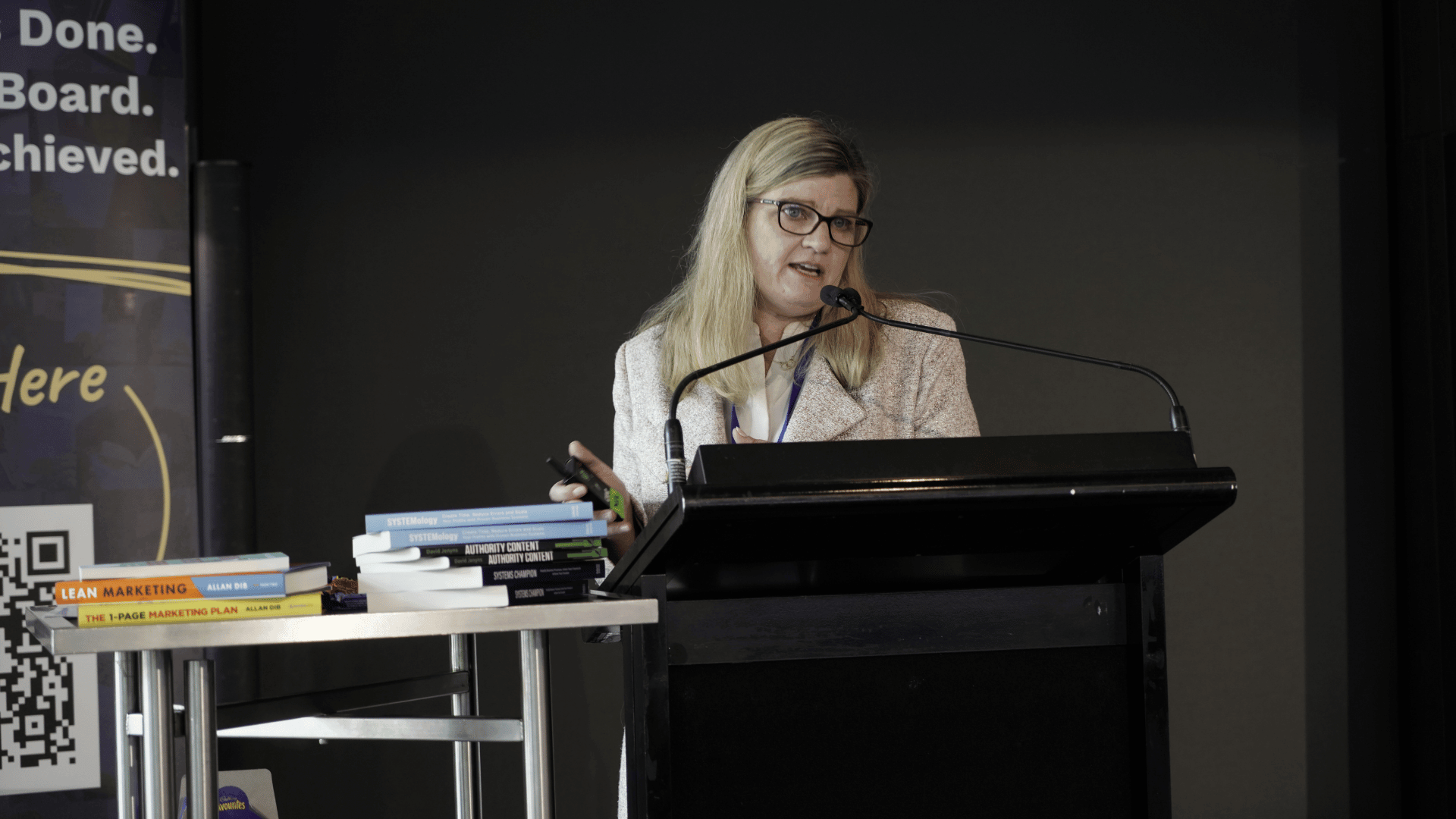
Shannon Smit, Smart Business Solutions, is a perfect example of this approach in action. Her accounting firm had documented every core process in systemHUB over several years. When AI and automation tools matured, she was ready. One single automated process, pulling weekly communications from the Australian Tax Office for every client, went from roughly 1,000 hours per year down to about six. That’s more than a part-time role saved from just one task. Her team now actively looks for these opportunities themselves. Watch the full case study here.
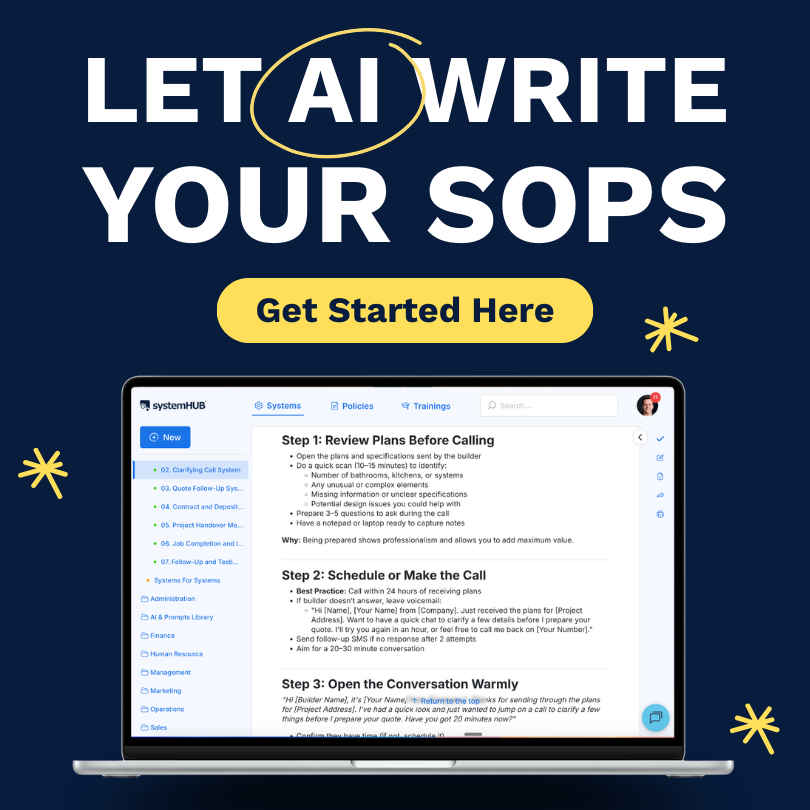
See how systemHUB makes process documentation simple.
Store, share, and manage your business systems in one place, with built-in AI tools that write your SOPs for you.
How to Find Your First AI Opportunity
You don’t need to be technical to get started. Here’s the process:
- Map your Critical Client Flow. Write down every step from first contact to repeat business.
- Identify the pain point. Where does work stall? Where does your team spend the most time on repetitive, low-value tasks?
- Start there. Build a custom GPT (or a Gemini Gem if you’re in the Google ecosystem) with clear instructions based on your documented process.
The lowest-hanging fruit is always a custom GPT with a clear, specific prompt. A non-technical person can set this up in an afternoon with the right guidance.
The key insight: don’t chase AI across your whole business at once. Pick one process. Document it. Find the AI opportunity inside it. Get a win. Then move to the next.

Need a head start on your process library?
Browse over 100 ready-to-use SOP templates created with world-class entrepreneurs, designed to drop straight into your business.
Frequently Asked Questions
What is the easiest AI tool for small business owners?
Custom GPTs are the simplest starting point. You don’t need coding skills. Just write clear instructions based on your documented process, and the GPT handles the rest. Google’s Gemini Gems work the same way if you prefer that platform.
Do I need to document my processes before using AI?
Yes. AI without a clear process just speeds up chaos. When you document what you’re already doing, AI has a blueprint to follow. That’s what separates the 5% of businesses getting results from the 95% that aren’t.
Start With One Process
AI isn’t about chasing the latest tool. It’s about making what already works in your business faster, cheaper, and better. Document one process this week. Look for the AI opportunity inside it. That’s your fastest path to real results.
Ready to map your Critical Client Flow?
Download the free CCF template and identify the core systems your business needs to run without you.