How many systems does a business need before it can actually run without the owner holding everything together? Most business owners assume the answer is hundreds. That belief alone is why most never finish.
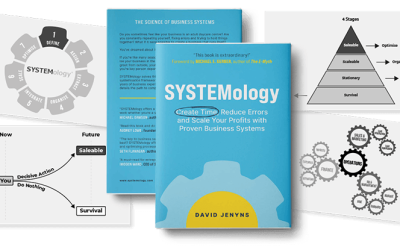
The real number is much smaller. In the SYSTEMology framework, it is 42. That is six core business departments with seven systems each. Hit that number and your business reaches what is called Minimum Viable Systems (MVS), the point where systemisation shifts from a project you are pushing to a culture that runs on its own.
Key Takeaways
- You do not need hundreds of systems. Most businesses need just 42 to operate without key person dependency.
- The number comes from six core departments (marketing, sales, operations, finance, HR, management) with seven essential systems each.
- Start with your Critical Client Flow to document your first 10 to 12 systems, then fill in the remaining departments.
- Focus on systems that are essential, repeatable, and possible to hand off to someone else.
Why Most Business Owners Never Finish
The biggest trap in systemisation is trying to document everything. A business owner sits down, starts listing every process they can think of, and the list grows to fifty, then seventy, then a hundred. Within a week, the whole effort stalls. The task feels too big, and nothing gets finished.
This is where the 80/20 rule applies. Just 20% of your systems will deliver 80% of the operational results. The challenge is knowing which 20% to focus on.
That is exactly what Minimum Viable Systems solves. Instead of documenting everything, you identify only the systems that are essential (critical to the department running), repeatable (performed regularly with little variation), and able to be handed off (so someone else can own them).
How much is it costing you NOT to systemise?
Use our free Cost of Chaos Calculator to put a dollar figure on the time, mistakes, and missed growth your business loses every year without documented systems.
Where the Number 42 Comes From
Every business has six core departments, even if they are not formally structured that way. These are marketing (generating leads), sales (converting those leads), operations (delivering the product or service), finance (managing money in and out), HR (recruiting, onboarding, and managing staff), and management (leadership, direction, and goals).
Each of those departments needs roughly seven documented systems to function. Not seventy. Not seventeen. Seven. Multiply six departments by seven systems and you land on 42. That is your Minimum Viable Systems target.
A sales department, for example, might need systems for handling incoming enquiries, running sales calls, generating proposals, following up leads, entering details into the CRM, handing off new clients to operations, and tracking pipeline metrics. Seven systems that keep one department alive. Repeat the same thinking for the other five.

How to Find Your 42 Systems
Start With Your Critical Client Flow
Before you tackle all six departments, start with the Critical Client Flow (CCF). This is the linear journey a prospect, client, and your business go through to deliver the core product or service. Map the steps from first enquiry through to delivery and follow-up. Most businesses end up with 10 to 12 systems from this exercise alone.
The CCF covers the revenue engine of your business. It is the most important 20% of your MVS, and getting it documented first creates the biggest impact.
Fill In the Remaining Departments
Once the CCF is documented, work through each remaining department. For each one, ask: “If I had to pick seven essential, repeatable tasks that this department must get right, what would they be?” If you have department heads, do the exercise with them. They are closest to the work and will spot the critical systems faster than you will.
Do not aim for perfection. Your first draft will not be exactly right, and that is fine. You just need a working list so your Systems Champion can start capturing each process using simple recordings.
From there, tools like systemHUB can turn those recordings into documented SOPs.
Need one place for all your business systems?
systemHUB is purpose-built to store, organise, and share your SOPs, policies, and training materials with your whole team.
What Happens When You Hit 42
Reaching 42 documented systems is a tipping point. It is the moment systemisation stops being a side project and starts becoming the way your business runs.
Your team becomes more confident because they have a documented reference for the most important things they do. New hires get up to speed faster. Mistakes drop because people are following a shared standard, not making it up as they go. And the business owner can finally step back from day-to-day operations without everything falling apart.
With the right focus and tools, most businesses can reach MVS in less than 90 days. You do not need more time to systemise your business. You need a clear target and a place to start. Now you have both.

Ready to get your business systemised in 90 days?
Our team extracts, documents, and implements your core systems for you. No SOPs to write. No project to manage.