Short answer: SYSTEMology is the methodology. systemHUB is the software. They aren’t competitors. SYSTEMology is the framework you follow to systemise a business; systemHUB is the platform you use to actually do it. Most businesses that try one without the other end up disappointed. Use both. This page shows how they fit together.
On this page
What is SYSTEMology?
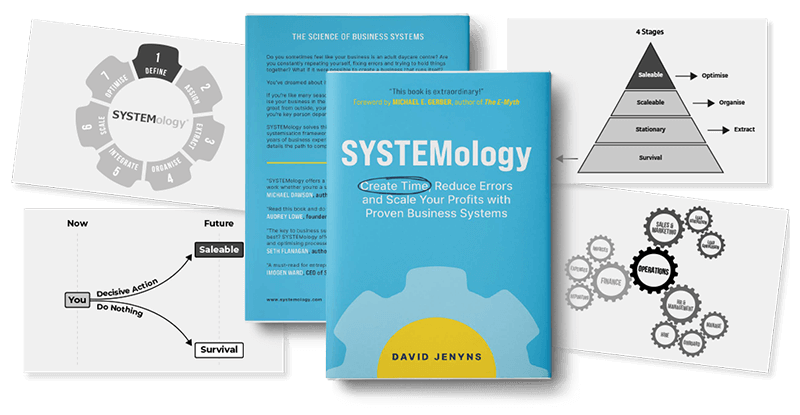
SYSTEMology is the methodology. It’s the training, the education, the seven-step framework, the book, the certification, and the community of practitioners.
It started as my answer to a problem most growing businesses hit somewhere between 5 and 30 staff. The owner is buried in the day-to-day. The team works from tribal knowledge. New hires take six months to get productive. Holidays become impossible. The business runs on the owner, and the owner can’t get out.
SYSTEMology walks an owner through seven stages: Define, Assign, Extract, Organise, Integrate, Scale, Optimise. Each stage gets the work out of people’s heads and into a documented system the team can follow. It’s been tested across thousands of small and mid-sized businesses in dozens of industries. The same seven steps work for law firms, dental practices, construction companies, marketing agencies, manufacturers, allied health clinics. The methodology is industry-agnostic.
You can engage with SYSTEMology at four levels:
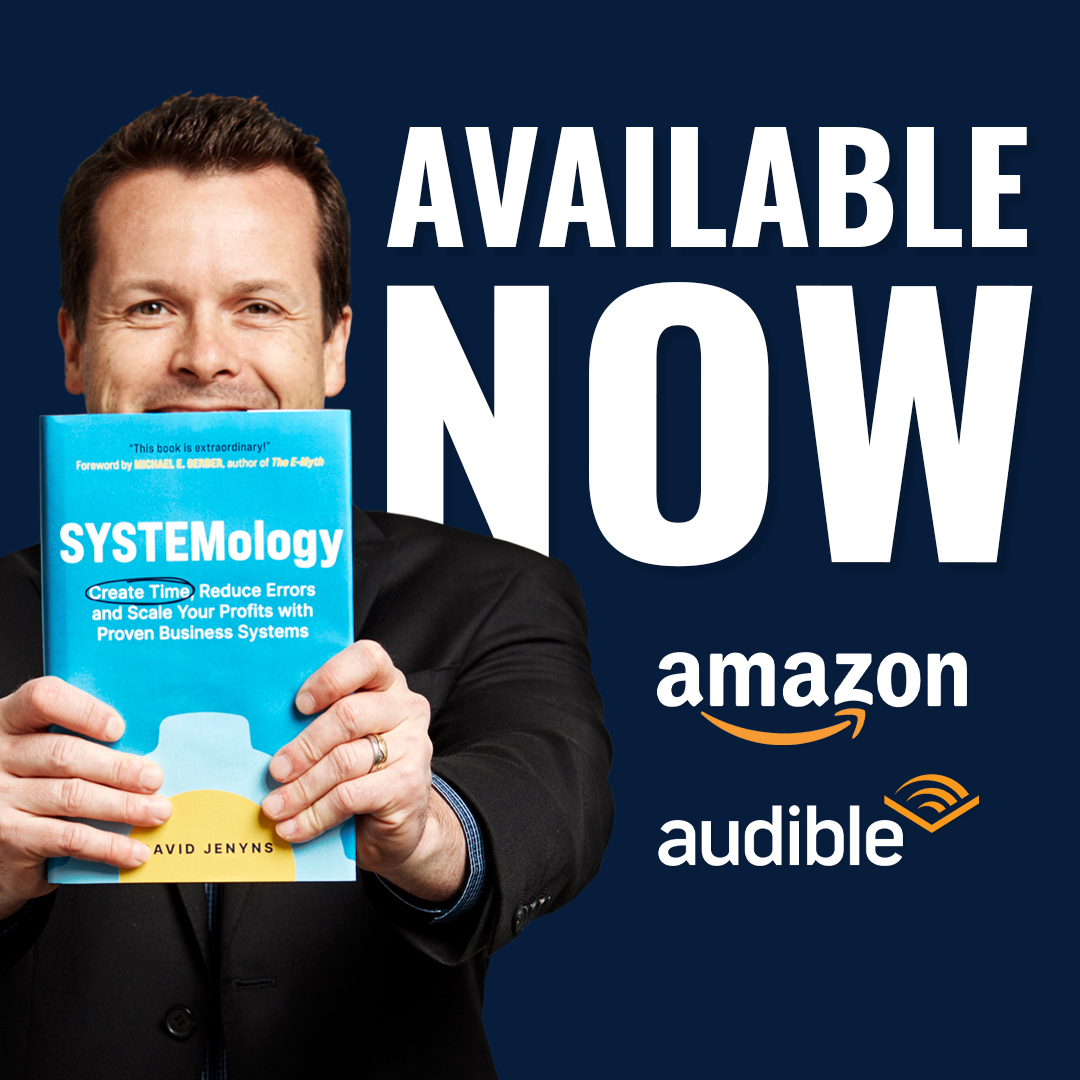
- Read the book (~$30 paperback or audiobook)
- Take the foundational training (included in some Programs)
- Go deep with the Systems Champion Academy (trains the integrator role on your team)
- Hire a certified SYSTEMologist to implement it with you
Underneath all four levels is the same framework. That’s the consistent thread.
What is systemHUB?
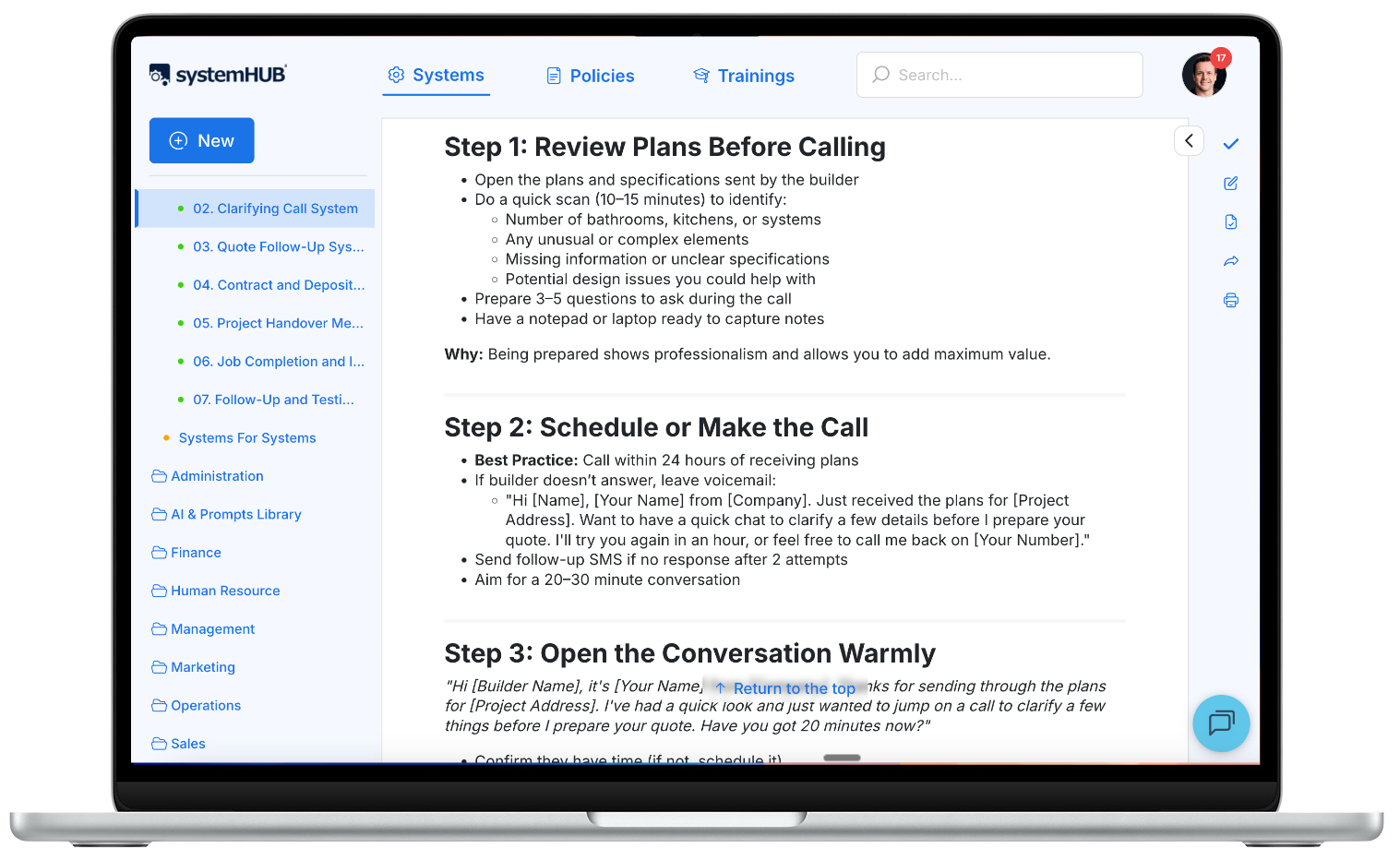
systemHUB is the software. It’s the SaaS platform we built specifically to operationalise the SYSTEMology framework once you’ve decided to follow it.
The job of systemHUB is to be the central home for every system your business runs on. Every SOP, every process, every checklist, every training module. It’s where new hires go to learn how something is done. It’s where existing team members go when they’re not sure. It’s the single source of truth so nobody has to ask Sally how the invoice approval works because Sally always knows.
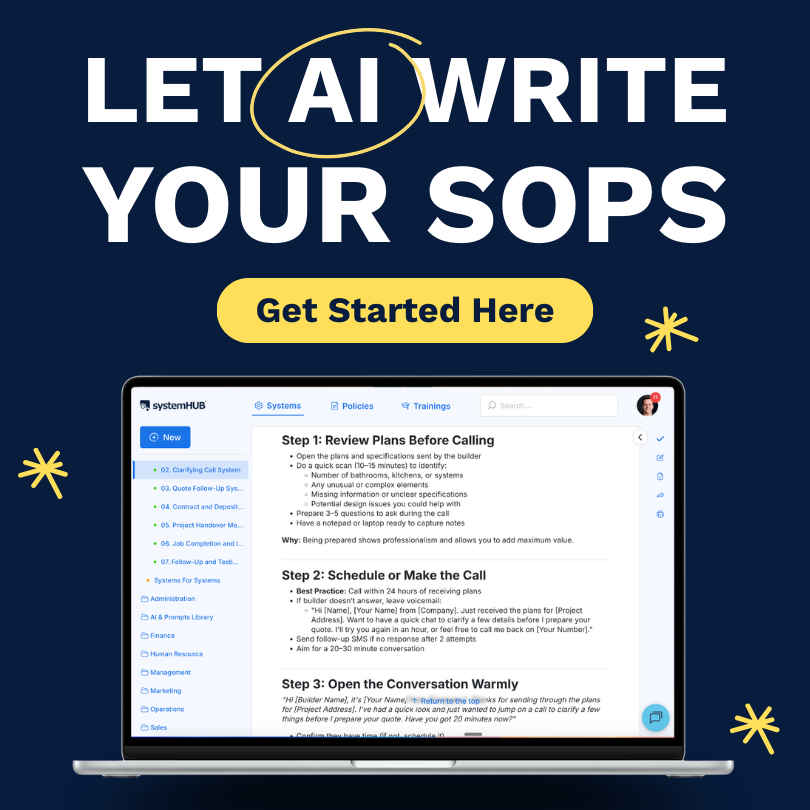
The core features are deliberately focused: documented systems with rich media, role-based permissions, sign-off so people can’t say “I didn’t know,” AI-assisted SOP creation, 100+ ready-made templates across sales, ops, HR, finance, and marketing, and integrations with the project management tool you already use (Asana, Trello, Monday, etc.).
It pairs with a separate project management tool by design. We chose not to build SOPs and project management into one mega-platform because the two jobs are different and combining them tends to compromise both. For more on that thinking, see how to choose SOP software.
SYSTEMology vs systemHUB: side by side
| Dimension | SYSTEMology | systemHUB |
|---|---|---|
| What it is | Methodology and training | Software platform |
| What it does | Teaches you the framework for systemising a business | Stores and runs the systems you create |
| How you consume it | Book, courses, Academy, certified consultants | Web app, daily team workflow |
| Who uses it | The owner, the Systems Champion, the leadership team | The whole team, every day |
| Primary output | A defined Critical Client Flow and a list of priority systems | A central library of working systems the team actually follows |
| Cadence | Read once, return to as you scale | Daily use |
| Pricing entry point | ~$30 for the book | $95/month for Starter (10 users) |
| Independent of the other? | You can read the book without the software, but you’ll need somewhere to store what you create | You can use the software without the methodology, but you’ll struggle to know what to systemise first |
They’re not competitors. They’re a pair.
This is the part that confuses prospects most. People search “SYSTEMology vs systemHUB” expecting to find a comparison where one wins. The honest answer is neither wins because they were designed to work together.
Think of it like a recipe and a kitchen. SYSTEMology is the recipe. It tells you what to cook, in what order, with what ingredients, to get a meal at the end. systemHUB is the kitchen. It’s where the cooking actually happens. You can read a great recipe in your living room, but you can’t cook there. You can stand in a beautiful kitchen, but without a recipe you’re just staring at the bench.
That’s the relationship. The methodology is the recipe. The software is the kitchen. Get one without the other and the meal doesn’t show up.
The methodology-only option
You don’t have to use our methodology. There are other good ones. Five worth naming:
- The E-Myth Revisited by Michael E. Gerber. The book that made the case decades ago that the business owner has to stop being the technician and start being the systems-designer. Foundational. Required reading for anyone serious about systemising. Gerber wrote the foreword to SYSTEMology.
- Work the System by Sam Carpenter. A practical, no-nonsense treatment of treating your business as a collection of small repeating processes. Useful, written by someone who lived it.
- Clockwork by Mike Michalowicz. The four-week-vacation test as a forcing function for systemisation. Easy to read, motivational, lots of practical exercises.
- Built to Sell by John Warrillow. Written from the angle of making your business sellable, but the whole argument is that sellable businesses are systemised businesses. Strong on the “owner-out” outcome.
- Buy Back Your Time by Dan Martell. A newer take focused on freeing up the owner via documented playbooks and delegation. Popular with the modern small-business crowd.
All three are great books. All three give you a methodology. None of them ship with software. If you read one of them and decide to act, you’re on your own to figure out where the systems will live, how the team will access them, how new hires will onboard, and how you’ll know anyone actually read the SOP. You’ll end up cobbling together Google Docs, Notion, or a wiki. And six months later you’ll be exactly where most businesses end up: documented systems nobody can find and nobody uses.
That’s the methodology-only trap. Great thinking, no operational layer.
The software-only option
You also don’t have to use our software. There are good tools out there. Six worth naming:
- Trainual. Strong onboarding-and-training focus. Solid for medium-sized teams who want a structured curriculum. Pricier than most.
- Process Street. Workflow execution and recurring checklists. Best for teams whose processes are run-on-rails routines.
- SweetProcess. Purpose-built SOP software with a focus on simplicity. Often the first dedicated tool small teams move to from Google Docs.
- Scribe. Fast capture of step-by-step screen recordings. Brilliant for documenting software-driven tasks quickly.
- Tango. Similar to Scribe in the capture category. Clean output, lightweight, free tier available.
- Notion. Flexible, cheap, can be bent into shape for almost anything. Many small teams start here.
All four are good software. All four can hold systems. None of them ship with a tested methodology. If you sign up to one of them without a framework, you’ll face the harder question first: what do I document, in what order, and how do I get the team to use it? Most businesses freeze at this step. The subscription ticks over. The dashboard stays empty. The owner blames the software. The software wasn’t the problem.
That’s the software-only trap. Great tool, no plan for what to put in it or how to roll it out.
Why the combination is unique
Here’s where the pair becomes interesting.
None of the methodology-only options above ship with their own software. Gerber, Carpenter, Michalowicz, Warrillow, Martell never built a platform to operationalise what they teach. None of the software-only options above ship with a proven methodology developed across thousands of businesses. Trainual, Process Street, SweetProcess, Scribe, Tango, Notion never wrote the book.
That gap is the gap SYSTEMology and systemHUB were built to close. The framework was developed in the field, tested across industries, refined by certified practitioners. The software was built specifically to operationalise that framework. Every feature in systemHUB exists because the SYSTEMology framework needs it. Every step in the framework has a place to live inside systemHUB.
That coupling is the thing nobody else has. Whether it’s worth the trade-off of being committed to one vendor for both halves is your call. But the symmetry is real.
“Great software is not enough. Great methodology is not enough. The magic lives in the combination.”David Jenyns, founder of SYSTEMology and systemHUB
A case in point
Ryan Stannard, Stannard Family Homes. Built a $15M custom home-building business that runs without him. Now takes seven-week holidays. The combination of the SYSTEMology framework and systemHUB as the operational layer is what got him out of the day-to-day. Read the full case study →
How they work together
The practical setup looks like this.
Read the book
The owner (or the Systems Champion) reads SYSTEMology. Two to four weeks. Understands the seven stages. Maps the Critical Client Flow for the business.
Set up systemHUB
The team sets up systemHUB. Folders for each department, role-based permissions, the 100+ templates imported as starting points. About a day of admin.
Extract the systems
The Systems Champion starts extracting systems. Interviews the knowledgeable workers, captures the way each task is currently done, drafts it into systemHUB as a working system. Two to three systems a week is a healthy pace.
Run the work through the systems
The team starts following the systems. Project management software links to the relevant systemHUB system at the point each task is assigned. Sign-off captured. New hires onboarded through the documented flow.
Keep evolving
The framework keeps progressing. SYSTEMology guides the work through the Integrate, Scale, and Optimise stages over the next six to twelve months. systemHUB grows with it.
That’s the ground-level integration. The framework and the platform never compete for attention because they do different things. The framework tells you what and why. The platform handles where and how.
The practical setup in action
Shannon Smit, SMART Business Solutions. Ran the exact five-step setup above in an international tax and accounting firm. The result: 998 hours saved per year by combining SYSTEMology with AI-driven systems documented in systemHUB. One automation alone freed $60K of labour cost. Read the full case study →
What each one costs
The financial picture also makes the case for using both.
SYSTEMology pricing
The book: ~$30 paperback, $25 audiobook. The full framework is in the book. Many businesses start (and stop) here.
Accelerator program: included in the systemHUB Accelerator tier. Self-paced training plus templates.
Champion Program: custom pricing. Bi-weekly coaching, advanced training, private community, quarterly masterclasses.
SYSTEMologist certification: ~$7,000 for the full certification program (Academy + assessment + listing in the consultant directory).
systemHUB pricing
Starter: $95/month, 10 users. Software, unlimited storage, basic templates.
Accelerator: $195/month, 20 users. Adds AI-powered documentation, SYSTEMology book/audiobook, 100+ process templates, 50+ policy templates, masterclass library.
Champion: custom pricing, 20+ users. Adds Systems Champion book, advanced training, bi-weekly coaching, private community.
Larger teams: Accelerator scales to 250 users.
The natural entry point for most owners is the book (~$30) plus the Starter or Accelerator tier of systemHUB. Total monthly investment under $200 for a 10-20 person team. Cheaper than most teams spend on incidental SaaS that delivers a fraction of the return.
Where to start
If you’ve made it this far you’re probably trying to decide which one to engage with first. Three honest answers depending on where you sit.
Start with SYSTEMology if
- You don’t yet have a clear framework for systemising your business
- You’re not sure which systems to document first
- You want to understand the philosophy before committing to monthly software
- You have time to read a book and absorb a framework before rolling anything out
Where to begin: the SYSTEMology book. Two to four weeks to read and apply the early stages. Then add systemHUB when you’re ready to start storing what you create.
Start with systemHUB if
- You already have systems documented somewhere (Docs, wikis, file drives) and need a better home for them
- You already know what needs to be done and just need the tool
- You have a team waiting for a central platform now
- You’d rather learn the methodology while using the software than read a book first
Where to begin: the 14-day free trial on Starter or Accelerator. The Accelerator tier includes the SYSTEMology book and foundational training in the platform itself, so you can learn the framework as you go.
Start with both if
- You have an upcoming growth inflection (hiring, new location, new product line) and need to systemise before you scale
- You’re preparing the business for sale in the next 2-5 years and need both the framework AND the documented body of work
- You’re tired of working without either and want a complete solution now
Where to begin: Accelerator tier of systemHUB (includes the book + training in the same plan). Best value, fastest setup.
When both arrived at the right time
Renee Kelly, Lime Therapy. A 40-staff allied health practice that started with the SYSTEMology framework and built it out inside systemHUB. The combination embedded culture into every system. Onboarded seven new starters in a quarter with zero of the previous “dread.” The business was eventually acquired by Genshare because the systems made the deal possible. Read the full case study →
See systemHUB in action
Systemise Your Business In Weeks, Not Years.
The framework and the platform, working together. Free trial, no credit card.
FAQ
Do I have to use both SYSTEMology and systemHUB?
No. You can read the book and apply the framework using whatever software you like. You can also use systemHUB without ever reading the book and store SOPs in it. Both will work to a point. But the combination is what we built and what we’ve seen produce the strongest results across thousands of businesses. Use one if it’s all you can do. Use both if you want the full effect.
Is systemHUB included with the SYSTEMology book or vice versa?
The Accelerator and Champion tiers of systemHUB include the SYSTEMology book and audiobook as part of the subscription. If you buy the book on its own (~$30), it doesn’t include systemHUB software. You can trial systemHUB free for 14 days regardless.
How is systemHUB different from Trainual, Process Street, or Notion?
Feature-wise, systemHUB sits in roughly the same category. Dedicated SOP and systems management software. The real difference is that systemHUB was built specifically to operationalise the SYSTEMology framework, and the framework was built specifically to be operationalised in the platform. They share a vocabulary, a structure, and an integration path. Other tools are great in isolation but require you to bring your own methodology.
Can I use SYSTEMology with a different SOP tool?
Yes. The framework is software-agnostic. You can apply the seven stages using Notion, Confluence, Google Drive, or anything else that holds documents and lets your team find them. The book doesn’t require systemHUB. We obviously prefer you use both, but the methodology stands alone.
Which book should I read first if I’m choosing between SYSTEMology and Systems Champion?
Read SYSTEMology first if you’re the owner deciding whether to systemise the business. It’s the framework. Read Systems Champion next (or have your operations lead read it). It’s the playbook for the role that actually does the work. The two books are designed as a pair: SYSTEMology for the why and what, Systems Champion for the how and who.
If I’m an EOS or Scaling Up business, where does SYSTEMology fit?
SYSTEMology runs at the operational layer; EOS and Scaling Up run at the leadership layer. They don’t conflict. They complement. Most EOS businesses eventually need a process-level framework like SYSTEMology to make the “Process” component of EOS actually happen. We have separate guides comparing SYSTEMology vs EOS and SYSTEMology vs Scaling Up if you want to go deeper.
Key takeaways
- ✓SYSTEMology is the methodology, systemHUB is the software. Different jobs. Not competitors.
- ✓Methodology-only options exist (E-Myth, Work the System, Clockwork, Built to Sell, Buy Back Your Time). Great books. None ship with software.
- ✓Software-only options exist (Trainual, Process Street, SweetProcess, Scribe, Tango, Notion). Good tools. None ship with a tested methodology.
- ✓The combination is the wedge. Nobody else ships both a proven framework and a platform built to run it.
- ✓Where to start: book if you need the framework, systemHUB if you already know what to do, Accelerator tier if you want both in one move.