Customer service systems are documented processes that ensure every team member delivers consistent, high-quality customer experiences. They convert prospects into loyal advocates by removing dependence on individual “hero” employees and making exceptional service repeatable.
Most businesses rely on one or two naturally gifted people who handle customer issues effortlessly. Customers love them. They make problems disappear and close sales.
Then they get sick. Or overwhelmed. Or they quit.
Sandra Allars experienced this firsthand at Taking Care Mobile Massage. After building her business for nearly 20 years, serving elderly clients across Melbourne, she realized something critical was missing.
“I was still having to pour everything in my brain and have that same level of engagement for things that didn’t really need me to be involved,” Sandra explained.
The cost of depending on heroes goes beyond operational headaches.
Her customer care relied entirely on her personal involvement. This created a ceiling for both growth and quality consistency.
The cost of depending on heroes goes beyond operational headaches. Inconsistent customer experiences damage your reputation. In today’s online review culture, a single negative interaction can have a ripple effect, influencing multiple future buying decisions. When customer care relies on individual heroics rather than documented processes, you get unpredictable results, unpredictable referrals, and unpredictable profits.
Six Principles of Customer Service Systems That Work
Principle 1: Document the Personal Touch
Customers want to be served and educated, not sold. They prefer staff who listen actively and solve problems proactively. However, a personal connection without documentation creates inconsistent experiences.
The solution is capturing how your best team members create connections. What questions do they ask? How do they handle concerns? What language builds trust?
Lime Therapy mastered this across multiple health disciplines. Renee Kelly’s challenge was to ensure that physiotherapists, occupational therapists, speech pathologists, and exercise physiologists all delivered consistently personal experiences.
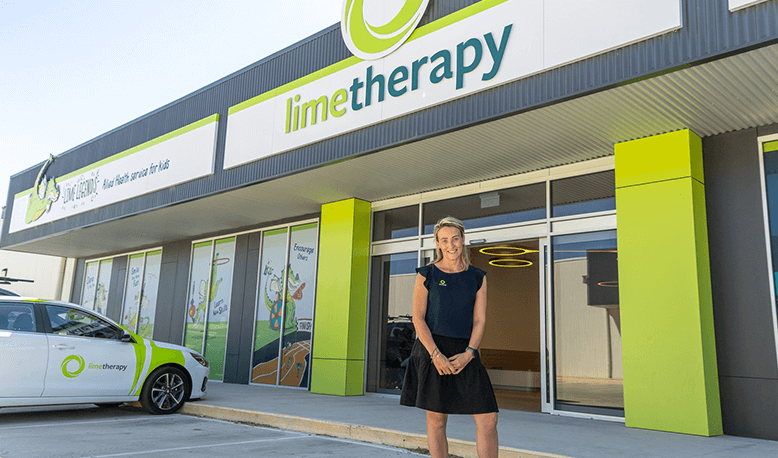
“We stood at the front of the team and said, ‘We’re all going to start systemizing,'” Renee shared. “We want you to use the word ‘SYSTEMology’, and ‘this is how we do it.’”
Kaleb, Lime Therapy’s Systems Champion, documented personal interaction protocols for each discipline while preserving the unique expertise each profession brings. He focused on “meeting with the people who do it best” to capture what actually worked.
To implement this: Record your best customer interactions. Document the questions, responses, and approaches that create a connection. Create guides that direct behavior without constraining natural personality.
Principle 2: Build Reliability Into Every Promise
Customers appreciate businesses that consistently keep commitments. Effective customer service systems handle contacts, order fulfillment, and problem resolution without errors. They empower representatives to solve problems quickly and turn frustrations into appreciation. This reliability is what converts prospects into first-time buyers and first-time buyers into repeat customers.
Consistency over time matters more than occasional promotions or grand gestures.
Taking Care Mobile Massage implemented this during their scaling phase. With over 40 massage therapists serving clients across Melbourne, keeping promises required coordinated effort.
Their solution included customer communication processes that track appointments, preferences, and special needs. Each therapist accesses the client’s history and care instructions through a centralized documentation approach. This allowed them to grow from 1,000 to 3,000 monthly massage hours while maintaining the intimate care quality that differentiated their service.
Customers appreciate businesses that consistently keep commitments.
Sandra’s daughter, Abby, stepped in as Systems Champion, building documentation that captured what made client relationships special. Instead of hoping each therapist would naturally provide exceptional care, they documented the specific practices that created loyalty:
- Client preference tracking and sharing
- Communication protocols for health updates
- Follow-up procedures for ongoing care coordination
- Guidelines for sensitive family interactions
To implement this: Map every customer promise your business makes. Create processes that ensure delivery without depending on individual memory.
Principle 3: Design Moments of Delight
Customers value reliability, but they also appreciate pleasant surprises and engaging experiences. Random “wow” moments happen accidentally. Designed “wow” moments occur predictably.
Stannard Family Homes applies this approach in the construction industry, where customer experience is often overlooked. Ryan and Eryn Stannard — father and daughter, and the business owner and Systems Champion, respectively — created deliberate surprise elements throughout project phases
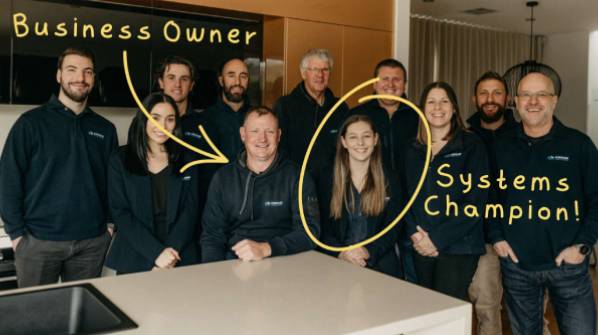
Construction projects create natural stress points: delays, budget concerns, quality expectations, and timeline pressures. Most construction companies handle these reactively. Stannard Family Homes built proactive customer communication that addresses concerns before they escalate:
- Regular project updates that prevent client anxiety
- Milestone celebrations at key construction phases
- Expectation management documentation throughout the build
- Quality verification processes that involve clients directly
Their approach creates a competitive advantage in an industry where customer experience differentiation is rare.
To implement this: Identify the stress points in your customer journey. Design specific interventions that turn potential frustrations into positive experiences.
Principle 4: Collect Feedback Continuously
Customers feel valued when you invite feedback regularly, not just when problems occur.
Ask questions that reveal actionable insights:
- What would improve your buying experience?
- What do you like or dislike about our product or service?
- What can we do that we’re currently not doing?
- What surprised, frustrated, or annoyed you?
- Would you recommend us? Why or why not?
Lime Therapy implements a consistent feedback collection across their allied health services. Each discipline utilizes standardized evaluation protocols while adapting to specific client needs. Their structured approach revealed improvement opportunities that individual disciplines missed when operating independently.
Customers feel valued when you invite feedback regularly.
To implement this: Build feedback collection into your regular customer interactions. Create brief, focused surveys. Develop analysis processes that identify patterns and drive action.
Principle 5: Measure What Matters
Some customer feedback is quantitative: return rates, satisfaction scores, and response times. Other information is qualitative: complaints, suggestions, and testimonials. Both require consistent collection, analysis, and action.
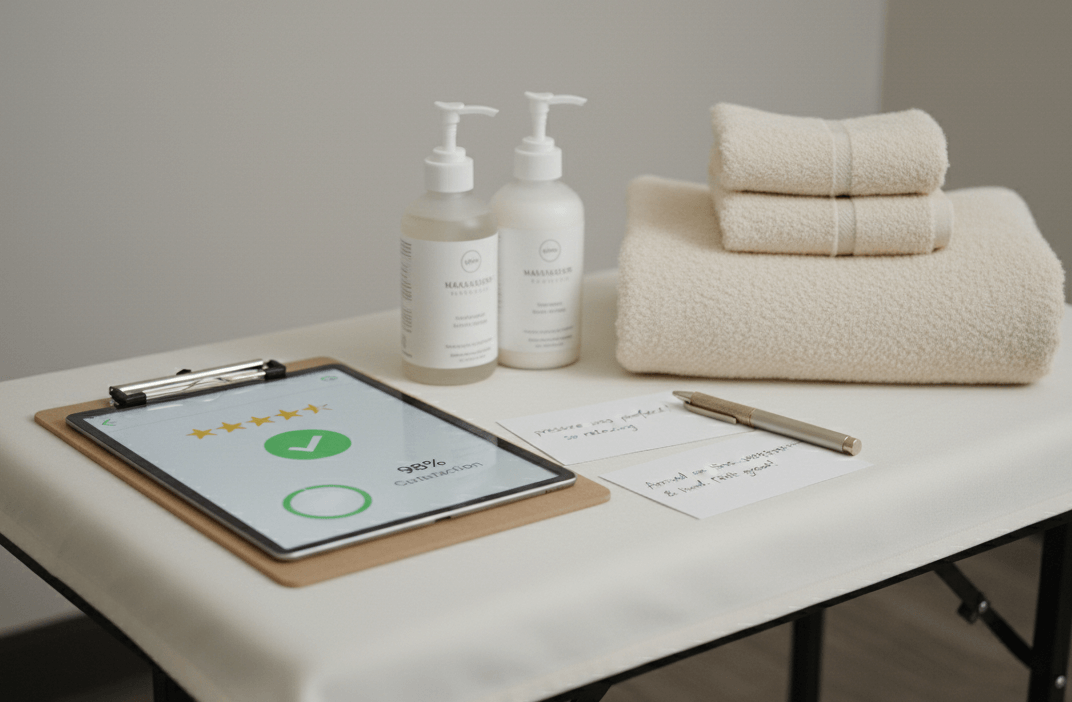
Taking Care Mobile Massage implemented customer experience measurement using digital tools. They track client satisfaction, therapist performance, and service delivery efficiency.
This measurement enabled confident scaling decisions based on data rather than assumptions.
To implement this: Identify 3-5 key metrics that indicate customer experience quality. Build consistent measurement processes. Review results regularly and connect them to improvement initiatives.
Principle 6: Practice the Golden Rule by Design
Customers want the same experience you want when you’re the buyer. The challenge is making this principle operational rather than aspirational.
When Golden Rule thinking becomes embedded in your business processes, you become remarkable. This requires more than telling people to be nice. You need structures that make exceptional customer care easier than mediocre service.
To implement this: Document what exceptional care looks like in your business. Create training that reinforces customer-first thinking. Build cultural practices that celebrate customer-focused behavior.

How to Convert Prospects Into Advocates
Customer relationships progress through predictable stages: Suspect → Prospect → First-time Customer → Repeat Customer → Client → Advocate.
Most businesses lose customers between stages because there is no support for progression. Here’s what moves people forward at each transition:
Suspect to Prospect
People become prospects when they recognize a need and see you as a potential solution. This transition requires visibility and credibility. Content marketing, referrals, and reputation all play roles.
What helps: Clear messaging about who you serve and what problems you solve. Social proof from existing customers. Easy ways to learn more without commitment.
Prospect to First-time Customer
Prospects convert when trust overcomes hesitation. This transition often stalls due to unanswered questions, unclear next steps, or friction in the buying process.
What helps: Transparent pricing and processes. Quick responses to inquiries. Low-risk entry points, such as consultations or trials.
Most businesses lose customers between stages because there is no support for progression.
First-time Customer to Repeat Customer
First purchases test whether your promises match reality. Many businesses lose customers here because the delivery experience disappoints or post-purchase communication disappears.
What helps: Delivery that matches or exceeds expectations. Follow-up communication that checks satisfaction. Easy paths to purchase again.
Repeat Customer to Client
Clients feel a relationship with your business, not just a transaction. This shift happens when customers experience consistent excellence over multiple interactions.
What helps: Recognition of their history with you. Personalized recommendations based on past purchases. Proactive communication about relevant offerings.
Client to Advocate
Advocates actively recommend you to others. They don’t emerge accidentally. They’re created through experiences worth talking about.
What helps: Experiences that exceed expectations. Easy ways to share feedback and referrals. Recognition and appreciation for their loyalty.
Taking Care Mobile Massage creates advocates through care documentation that ensures every interaction reinforces commitment to client wellbeing. Lime Therapy builds advocates by coordinating care across multiple disciplines, making complex health improvement feel connected and supportive.
Your 45-Day Customer Service Systems Implementation Plan
This plan draws from the specific approaches that worked for Taking Care Mobile Massage, Lime Therapy, and Stannard Family Homes.
Days 1-15: Map and Document Your Customer Journey
Week 1: Identify every touchpoint. List all interactions customers have with your business: inquiries, purchases, delivery, follow-up, problem resolution, and renewals. Don’t overlook small moments, such as automated emails or hold messages.

Week 2: Document current reality. For each touchpoint, capture what customers actually experience today. Where is service consistent? Where does it vary by team member? Conduct surveys of existing customers to gauge satisfaction levels and identify areas of improvement.
Deliverable: Complete customer journey map with current experience documentation.
Lesson from Taking Care Mobile Massage: Sandra discovered that her best client relationships included specific practices she hadn’t consciously recognized. The documentation process itself revealed what made service exceptional.
Days 16-30: Design and Document Improvements
Week 3: Create process documentation for common scenarios. Focus first on your highest-volume interactions. Document how your best team members handle inquiries, complaints, and complex situations. Build escalation procedures that ensure problems get resolved quickly.

Week 4: Design feedback collection and measurement. Create satisfaction surveys. Establish the metrics you’ll track. Build analysis processes that turn data into action.
Deliverable: Documented customer service processes, escalation procedures, and measurement approach.
Lesson from Lime Therapy: Kaleb focused on “meeting with the people who do it best.” The documentation captured existing excellence rather than inventing theoretical ideals.
Days 31-45: Train and Launch
Week 5: Train your team. Present the documented processes as tools that help them succeed, not restrictions on their judgment. Show how the approaches prevent common mistakes and handle difficult situations more effectively.

Week 6: Launch and monitor. Begin tracking your chosen metrics. Create recognition for exceptional customer care. Schedule weekly reviews to identify what’s working and what needs adjustment.
Deliverable: Trained team, active measurement, and ongoing improvement process.
Lesson from Stannard Family Homes: Ryan and Eryn found that construction industry customers responded strongly to proactive communication because it was so unexpected in their industry. Look for ways to differentiate through customer care where competitors underperform.
What Results Look Like
First 60 Days
Expect more consistent service delivery across team members as documented approaches replace individual improvisation. Customer complaints typically decrease as prevention catches issues before they escalate.
Team confidence often improves as people gain clear guidance for handling complex situations.
6-12 Months
Customer service systems become a competitive differentiator. You convert prospects more consistently because every team member delivers the same quality experience. Retention rates improve as service becomes reliably excellent. Referral generation increases as more customers have experiences worth recommending.
Customer care quality becomes a competitive differentiator.
Taking Care Mobile Massage scaled 4x while maintaining the intimate care quality that attracted clients originally. Lime Therapy successfully expanded into a new facility with a hydrotherapy pool and comprehensive gym, supported by customer experience processes that justified the investment.
Most importantly, customer lifetime value increases as deeper relationships generate more revenue over longer periods.
Frequently Asked Questions
Start Building Your Customer Service Systems Today
Customer service systems aren’t about removing the human element; they’re about making exceptional care repeatable.
Sandra, Renee, and Ryan didn’t succeed by finding more hero employees. They succeeded by capturing what already worked and making it teachable. Their documented processes turn prospects into paying customers and customers into advocates because any team member can now deliver experiences that once depended on one or two exceptional people.
Customer service systems aren’t about removing the human element from your business.
Your customers want to become advocates. They want to recommend you to friends and colleagues. They just need experiences consistent enough and remarkable enough to be worth mentioning.
Pick one customer touchpoint this week. Document how your best team member handles it. Train someone else to do it the same way. That’s where customer service systems begin.
The businesses that win long term aren’t the ones with the most talented individuals. They’re the ones that turned individual talent into organizational capability.