Could your business survive without you for a month? If the answer makes you uncomfortable, you’re not alone. Most business owners hit a ceiling not because they lack talent or ambition, but because the knowledge that keeps the business running is locked inside a few key people’s heads.
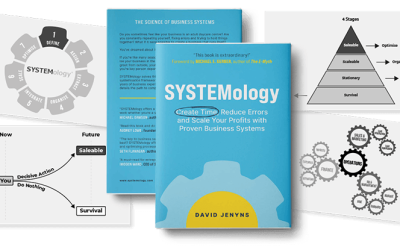
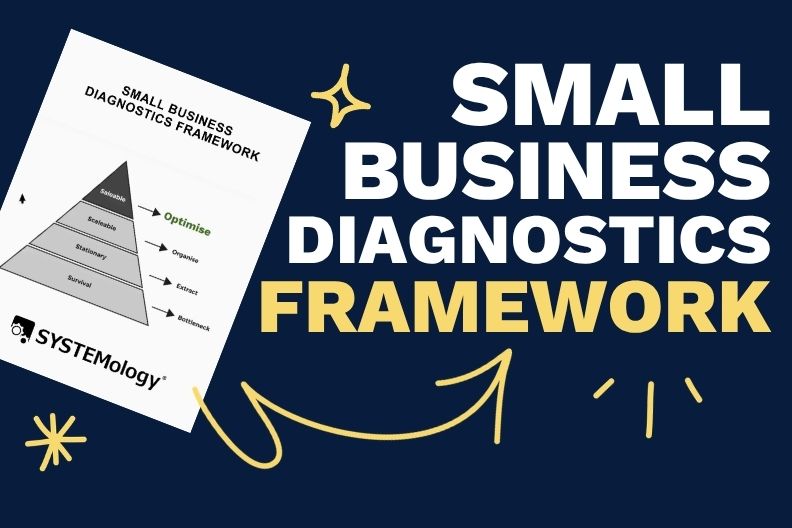
The stages of business systemisation give you a map. Developed by David Jenyns in the SYSTEMology framework, these four stages show you exactly where your business sits right now, what’s holding it back, and where to focus next.
Here’s the good news: you don’t need to fix everything at once. Each stage has one core move that pushes you forward.
Key Takeaways
- Every business sits in one of four stages of systemisation: Survival, Stationary, Scalable, or Saleable.
- Each stage has a specific blocker. Fix that one thing to move up.
- You don’t need hundreds of systems to start. Begin by extracting what your best people already know.
- The goal is a business that runs without you, whether you plan to sell or not.
Stage 1: Survival
In survival mode, the business owner is the business. Everything flows through you. Sales, delivery, hiring, problem-solving. Your team (if you have one) makes things up as they go, and every new client feels like starting from scratch.

The biggest signal? You’re firefighting every day. There’s no repeatable way of doing things. You’re chasing work, doing work, then chasing more work. It’s exhausting, and growth feels impossible.
At this stage, most owners don’t even recognise that systems are the answer. If you’re reading this article, you’ve already moved past that blind spot. That self-awareness is the first step. To understand what a business system actually is and why it matters, that’s your starting point.
Stage 2: Stationary
You’ve smoothed out some of the chaos, but your business is stuck. Knowledge lives in people’s heads. If your one bookkeeper calls in sick, invoices don’t go out that week. If your best salesperson leaves, their method walks out the door with them.

You might have a few scattered notes or rough procedures, but nothing your team can actually follow without asking you ten questions first. It feels like you’re running an adult daycare, constantly spinning plates and assigning tasks one person at a time.
Den Lennie, founder of a video production business mastermind, hit this wall. He was a creative at heart, drowning in daily tasks that killed his creativity. After implementing SYSTEMology, he found liberation in six months and saw revenue climb. One of his clients completely removed themselves from daily operations in just three months.
The fix at this stage is clear: start extracting knowledge from your best people. Get what they know out of their heads and into documented processes your whole team can access.
How much is it costing you NOT to systemise?
Use our free Cost of Chaos Calculator to put a dollar figure on the time, mistakes, and missed growth your business loses every year without documented systems.
Stage 3: Scalable
Things are looking better. You’ve started documenting, and your team has a rough way of doing things. But it’s clunky. Systems are scattered across Google Drive, Dropbox, people’s desktops, and a handful of different tools.
The telltale sign? You’re constantly reminding your team to follow the process. “Do we have a system for that? Where’s the system for that?” That constant nagging means you’re in scalable mode.

Here’s the trap: many owners reach this point and think they’re done. “Good enough” feels comfortable. But good enough is a ceiling. The biggest wins come from pushing through to the next level.
Gary McMahon at Ecosystem Solutions proved what happens when you push past “good enough.” He was working 100 to 110 hours a week despite growing demand. After applying the SYSTEMology framework and following the steps to grow his business through systems, his profitability increased by roughly 80 percent. He also took his first three-week holiday in his entire working life.
The move at this stage: pull your systems into one central, easy-to-access location. Remove friction. If it’s hard to find a process, your team won’t follow it. This is where a purpose-built system for storing your SOPs makes a real difference.
Need one place for all your business systems?
systemHUB is purpose-built to store, organise, and share your SOPs, policies, and training materials with your whole team.
Stage 4: Saleable
This is where it all comes together. Your departments are documented. Your operations run with precision. And your team doesn’t just follow systems because they’re told to. They say, “This is how we do things here.”
That sentence is the dead giveaway you’ve reached the saleable stage. Systems are no longer a project. They’re your culture.
“Saleable” doesn’t mean you have to sell. It means you’ve built a business that works beyond you. A business that a buyer would want because it doesn’t fall apart when the owner steps away.

Jeanette Farren, founder of multi-award-winning diggiddydoggydaycare, understood this from day one. After thirteen years of running a demanding operation, she used SYSTEMology to document her Critical Client Flow and stepped out of daily operations. When it came time to sell, corporate buyers looked at her accounts and her business documentation first. She sold the business on her terms.
David Jenyns did the same with his digital agency, Melbourne SEO Services. After systemising the business so thoroughly that it ran independently for three years, he sold it for a high multiple of annual earnings. The buyer’s number one reason for confidence? The systems.
Your Next Move
Identify where you are right now. Be honest about it. Then focus on the one action that moves you to the next stage. If you’re in survival, open your eyes to systems. In stationary, start extracting. In scalable, get organised. And if you’re approaching saleable, keep building the culture that makes your business run like clockwork.
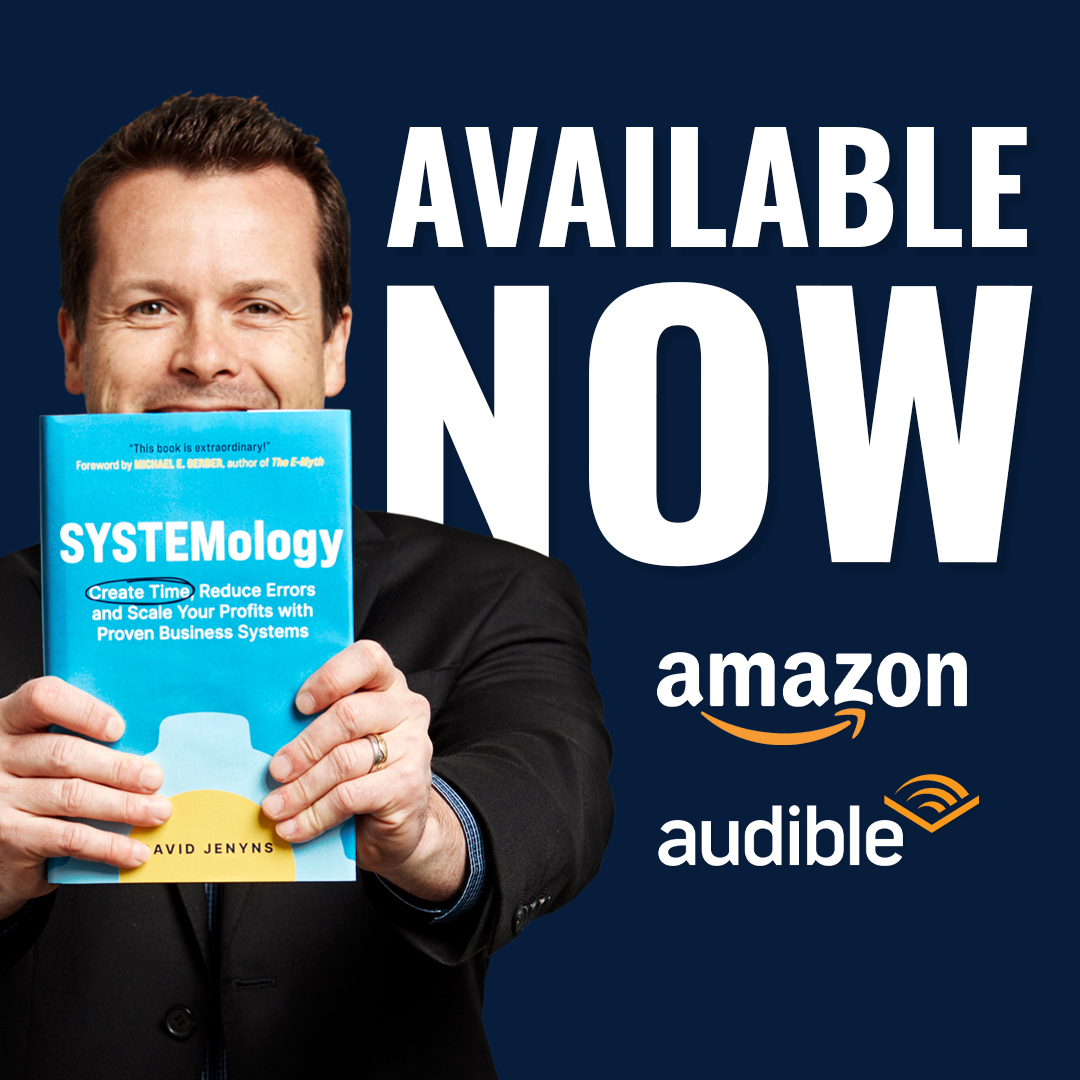
You don’t need to get there overnight. You just need to start. Pick up the SYSTEMology framework and take your first step today.
Where do you start with business systems?
SYSTEMology lays out the 7-step framework used by thousands of business owners to create time, reduce errors, and scale profits. Grab your copy and start building.