You meet a promising prospect at a networking event or connect on LinkedIn. You send an email. Nothing. You leave a voicemail. Nothing. So you move on to the next name on the list.
That's where most salespeople lose the deal. Not on the call, but in the follow-up they never made.
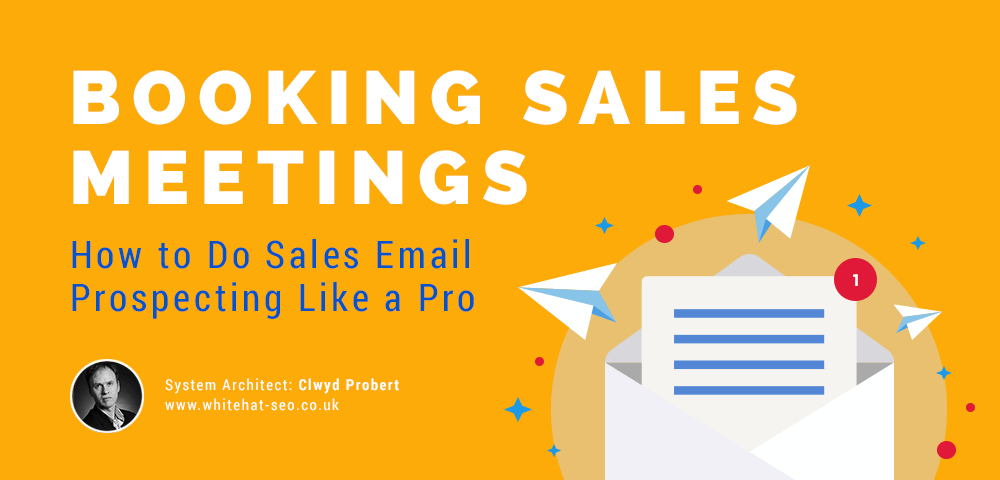
Clwyd Probert is the CEO and founder of Whitehat, a London inbound agency. He's also a guest lecturer in marketing at UCL and one of the first users of systemHUB. He has built systems into his business from day one, inspired by Michael Gerber's E-Myth. In this Business Systems Summit session, he walks through the simple, systemised sequence his team uses to book a sales meeting with prospects who don't reply the first time, without ever sounding like a pushy salesperson.
Key Takeaways
- One touch is never enough. Alternate emails with calls and leave a gap between each one.
- Spend five to 20 minutes researching every prospect so each message offers something useful, not a pitch.
- Put a calendar link in every email so the prospect picks the time and makes a small yes.
- The breakup email gets the most replies, because it gives the prospect three easy ways to answer.
- Write the sequence down, give it an owner and keep improving it, so a junior salesperson can run it from day one.
Why Most Sales Follow-Up Fails
Most businesses already have some way of finding leads. Maybe it's an automated lead generation system, maybe it's LinkedIn, a chamber of commerce or a BNI group. Clwyd's process doesn't touch any of that. It starts the moment a lead comes in, when all you have is a name, an email address, a phone number and not much else.
Here's the problem he sees again and again. The salesperson reaches out once. The prospect isn't at their desk or doesn't reply. The salesperson leaves one message, sends one email and moves on.
According to Clwyd, that's a very poor way of generating business. You need to be consistent and persistent. You need multiple touch points, with enough space between them for the prospect to read your email, hear your message and maybe look you up.
Inbound sales: lead with help, not with you
Whitehat is an inbound marketing agency. Inbound is about giving people a positive experience and building enough authority that they want to talk to you. It's the opposite of interruptive tactics like cold calling, spam emails and print ads that people have learned to tune out.
Sales is often seen as interruptive too, so Clwyd's team built an inbound sales method. Every outreach looks for a way to help the prospect, instead of talking about your business, your products or your services.
His rule is simple: nobody wants to be sold to. But plenty of people have problems in their business that need solving. Address those, not the wonders of your latest product.
Do Your Research Before You Reach Out
Templates sit at the heart of this sales system, but they only work when they're personal. You can't send the same email to everyone. If you do, it's spam. Your response rate will show it.
So every message in the sequence leaves blanks that only research can fill. You can't call someone you met at a networking group and say, "We're in the same industry, let's talk." You need a reason for the call. That reason should be timely and useful.
Clwyd recalls a large study of people receiving sales calls and emails. He wasn't sure who ran it (possibly HubSpot), but the finding stuck with him. Most people were happy to take a call from a salesperson, as long as that person had spent a little time researching them and their business. And about 98% of salespeople who make a call hadn't done any research at all.
Spend five or 10 minutes researching a prospect and you're already ahead of almost all of your competition.
What to look for
Whitehat sells digital marketing, so its team looks at the prospect's website, their social media profiles and industry best practice, then checks whether the site is doing what it should. They spend 15 to 20 minutes per prospect, using their own analysis tools. Clwyd says there's always something you can find to help with.
The most effective angle is to talk about what others in the prospect's industry have done. Prospects respond to stories of companies like theirs that solved the same problem, or ran into it and found a way through.
Research is a process in its own right. It deserves to be written down like every other part of sales. Whitehat has one system for lead generation, one for research and a three-step sales process for when a prospect says yes: a connect call, an exploratory sales call, then a planning and analysis call, each going deeper than the last.
The 5-Touch Sequence to Book a Sales Meeting
The sequence alternates emails with calls. Each touch adds something new and each one gives the prospect an easy way to say yes. Clwyd's team runs it in HubSpot, which reminds them when the next touch is due. Their example spaces the touches like this:
- First email, with your research and a calendar link.
- First voicemail, three days later if there's no reply.
- Second email, two days after that, with fresh research.
- Breakup voicemail, four days later.
- Final email, right after the voicemail, asking for a simple yes or no.
The gaps matter. Prospects have busy days and won't call you straight back. Give them time to read what you've said, look at your LinkedIn profile or website, then follow up again.
Touch 1: the research-driven first email
Some salespeople prefer to call first. Clwyd starts with an email, because if the prospect opens it, the later call feels familiar. They've had a reminder of who you are and they're half expecting to hear from you.
He's open about why he's getting in touch. Then he shares two or three things his research turned up.
Template: first email
Hi <Name>,
I'll be upfront about why I'm getting in touch. Based on some research I've done on <Company>, here's why I think we can help: <Reason 1>, <Reason 2> and <Reason 3>.
Interested in a quick chat? You can book a time that suits you on my calendar here: <Link>.
<Signature>
That calendar link is one of Clwyd's most useful tips. When you call or email, it's unlikely to be the right moment for the prospect. A booking link from a tool like Calendly lets them see your availability and choose a time that works for them. It's more convenient and it cuts out the back-and-forth.
It's also a micro-commitment. Booking a slot is the prospect saying, "Yes, I'd like to start a conversation about getting some help." Every one of those small yeses is another touch point. Early on, when they don't know or trust you yet, they add up.
Touch 2: the first voicemail
Clwyd has heard voicemails that go on for minutes without getting to the point. By the time the caller remembers to leave their name and number, the listener has lost the will to live. His fix is to write the message down before you pick up the phone.
Template: first voicemail
Hi <Name>, we connected through <LinkedIn or event>. I wanted to connect in person and see if I could be of any help. We have specific experience helping <role> in <industry> with <result 1>, <result 2> and <result 3>. Please give me a call. This is <Your name> from <Company>. My number is <Number>.
Notice where the name and number sit: at the end. In Clwyd's experience, people forget details given at the start and won't replay the message to find them. Keep it short and sweet. Don't list everything you could possibly do.
Touch 3: the second email adds new value
Here's where most salespeople stop. Clwyd goes back and digs further, then shares a couple of new findings. You keep giving without expecting an immediate reply.
Template: second email
Hi <Name>,
I wrote to you a few days ago about some research I'd done on your company, which leads me to think we can help you improve <Idea 1> and <Idea 2>. I didn't hear back, so I thought I'd dig a little further: <New finding 1>, <New finding 2>.
If that sounds interesting, book a quick exploratory call with me here: <Calendar link>. I promise not to waste your time.
<Signature>
One idea Clwyd has seen work well: link to a mini landing page that explains the exploratory call. Prospects can be nervous about what they're booking. A photo of you, a short summary of your work and links to a case study or two let them check you out before committing to anything.
Touch 4: the breakup voicemail
The last call tells the prospect you're about to stop. It's polite, it's not aggressive and it carries no expectation. They may simply be busy.
Template: breakup voicemail
Hi <Name>, I've contacted you a couple of times since we connected via <Channel> and I don't think I've had a reply. I'll send a follow-up email in case you'd like to get in touch. If I don't hear from you, I'll assume you don't need our help at this stage. I hope you found the information I sent useful. This is <Your name> from <Company>.
Touch 5: the final email
Clwyd calls his final email "Should I stay or should I go?" It asks for one thing: a reply with a single number.
Template: final email
Hi <Name>,
I don't want to give up on you without getting a yes or no. Hit reply, type one of these three numbers and I'll take it from there:
1. Thanks, but there's no interest.
2. I do want to talk, I've just been busy. Let's schedule a time.
3. The timing isn't right, but I'm interested in talking later.
<Signature>
Where does your follow-up sequence live right now?
Keep your templates, scripts and timings in one place your whole sales team can follow and improve with systemHUB.
Why the Breakup Email Gets the Most Replies
Interestingly, the breakup voicemail and email are the touches that get the largest response rates. Each of the three options matches a real reason people don't reply to outreach.
Option 1: no interest
They don't think you can help. Clwyd puts this one on the salesperson: you haven't shown enough value, or you didn't dig deep enough to find the problem that matters to them. That's fine. Now you know.
Option 2: "I've just been busy"
This is the common one. Clwyd says it gets about a 40% response rate. These prospects picked up on the value, put your email to one side and meant to come back to it. When you tell them you're about to go away, they reply.
Option 3: interested, but not now
They've seen the value, but they're tied up with other projects. That's useful too. Put a reminder in your calendar to call them in a couple of months, or send them nurturing emails with news from their industry. Plenty of clients come back months later, so you need a system for following up the follow-ups. If your list is already full of prospects who went quiet, here's how to start bringing dead leads back.
It clears your list, too
The breakup email also tells you who to stop chasing. Clwyd jokes about having 400 to-dos on his list. You might be able to help all of those people, but they don't all want or need your help right now. Prioritise the ones who do.
And don't take the "no" personally. Many salespeople can't cope with rejection. It usually just means it isn't the right time for you to work together. Stop, move on and find a better fit.
Five Touches Is the Minimum, Not the Maximum
Five emails and voicemails can sound like a lot. Clwyd sees it as the minimum. In practice, his team often adds a couple more emails when they come across something the prospect might find valuable, like a blog post or a research piece.
There is a balance between staying in touch and becoming annoying. What keeps you on the right side is value. Each touch is another attempt to hit the pain point that makes the prospect think, "That's exactly what we've been struggling with." The first couple of emails might miss. The report you send in the third might land.
That only works with real research. As Clwyd puts it, this isn't a marketing email system that goes out to everyone in the hope a percentage replies. It's a sales email system. Real people doing real work, talking to real prospects.

Systemise It So Anyone Can Run It
Clwyd's view is that sales, like anything else, can only scale when you have systems. Without them, you rely on the skills of your best people. When they leave, their skills leave with them.
Consistency is where most salespeople fall down. They know they need to call someone back, but they've got a long list and it slips. A written sequence fixes that. It's pre-written and pre-structured, so all you have to do is follow it. You still have to do the research and pick up the phone, but you're working inside a framework rather than from memory.
How the sequence runs in HubSpot
Clwyd's team uses HubSpot sequences. The software fills in the contact's first name, company, website and the calendar link. The salesperson still writes the research-driven reason for every contact by hand.
Each email carries a task: if there's no reply after three days, remind me to call. The reminder arrives with the voicemail script attached, ready to tweak. Best of all, HubSpot watches the inbox. The moment the prospect books a meeting or replies, yes or no, the sequence stops, so nobody gets an awkward follow-up after they've already answered. If a call happens that the system can't see, you stop the sequence by hand.
Process first, software second
You don't need HubSpot for any of this. Outlook and its tasks, Gmail, Google Docs and a shared drive will do the job. Clwyd agrees that the process has to exist, be tested and work before software comes in. Software and automation make a working process faster. They don't fix a broken one. Buying tools first is how you end up chasing shiny objects.
The same goes for length. Long, complicated processes don't get followed. Clwyd kept this one deliberately short and generic, so any business can fine-tune it. Start with a minimum viable system and improve it from there.
Hire for attitude and give them the system
A written sequence means you can hand it to a relatively junior salesperson and say, "This is how we do business here." This is the thinking Michael Gerber made famous in The E-Myth (and that SYSTEMology builds on in its modern take on E-Myth): build the system so you can slot people into it, rather than relying on stars who bring their own way of working.
Clwyd has had poor experiences hiring experienced salespeople. Even good ones, especially good ones, have their own methods. Those methods may not match your standards. Inbound sales is about finding problems you can help with. Plenty of salespeople trained to go in hard with a pitch aren't comfortable with that. It's very hard to untrain them.
His team gets far better results from people who are enthusiastic, willing to learn and not stuck on old sales methods. But they need something to follow, or they're working blind. A documented sales playbook gives them that.
Is your sales process still in your best salesperson's head?
The SYSTEMology book shows you how to get the way your business runs out of people's heads and into systems your team will follow.
Keep Your Sales System Alive
Writing the system down is the start, not the finish. Clwyd says what matters is that it's documented, followed and has a process for review, revision and testing.
Here's what happens without one. A salesperson spots a fault in the system, works around it and never goes back to fix it. Multiple people start from the same system and drift off on different tracks. Later you find one person doing well and another struggling. When you dig in, they're following different systems. Nobody held a central version.
Clwyd sees a system as a best guess at a good way of doing something. As soon as you use it, you find problems and better ways to do it. If someone thinks, "If only we added a fourth email here," and there's a way to suggest it, the whole company benefits. That's the system for creating systems that David Jenyns talks about.
Two things keep it fresh:
- One central home. Nothing is worse than a system printed out and put in a binder nobody opens. Clwyd likes systemHUB because it isn't just a place to store systems. People can update them, take ownership and comment, so the systems keep evolving.
- Clear ownership. At Whitehat, the people in charge of sales own their systems. The systems aren't imposed on them; they're the starting point. Maintaining and improving them is written into their job description and they're judged on it.
Even a simple team rule that comments and suggestions on systems are welcome goes a long way. What better way to get a team to follow a system than to have them own it? For more on that, see how to get your team on board.
You don't need a bigger list or a slicker pitch. You need five well-researched touches, a calendar link in every email and a breakup message that makes replying easy. Write it down, hand it to your team and keep improving it.
As David Jenyns likes to say, all business problems are systems problems. A follow-up that falls through the cracks isn't a people problem. It's a missing system.
Frequently Asked Questions
How do you book a sales meeting with a prospect?
Research the prospect first, then send a short email that names two or three ways you could help them, with a calendar link so they can pick a time. If they don't reply, alternate emails with voicemails, adding new value each time. Clwyd Probert's sequence uses five touches: email, voicemail, email, a breakup voicemail and a final email asking for a simple yes or no.
How many times should you follow up with a sales prospect?
At least five touches, alternating emails and calls, with a few days between each one. Clwyd Probert treats five as the minimum and often adds extra emails when he finds something useful to share. Most salespeople stop after one or two attempts, which is where they miss the opportunity.
What is a breakup email in sales?
A breakup email is the last message in a follow-up sequence. It politely tells the prospect you'll stop contacting them and asks them to reply with one of three numbers: no interest, busy but keen to talk, or interested later. It often gets the highest response rate of the whole sequence, because it makes replying easy.
What should you say in a sales voicemail?
Write it down before you call. Say how you connected, offer to help and name the specific results you've delivered for people in their role and industry. Keep it short, then finish with your name, company and phone number. Details at the end are easier to remember than details at the start.
Want your sales systems built in 90 days?
Work with a SYSTEMology coach to get your sales process documented, owned and running without you.